Why Your Traditional Capacitor Bank Fails to CompensateReactive Power In power systems, reactive power compensation is key to keeping grids stable and using electricity efficiently. Many businesses use traditional capacitor banks for compensation, only to find they don’t work well in real operation. This article explains simply why standard capacitor banks often fail to compensate reactive p...
Technical Article: Improving University Power Quality with SVG and AHF Systems The Modern Campus Power Landscape University campuses today operate as complex micro-grids. They integrate diverse loads ranging from high-performance computing centers to specialized medical imaging labs. These facilities rely heavily on power electronics, which are inherently non-linear. Such devi...
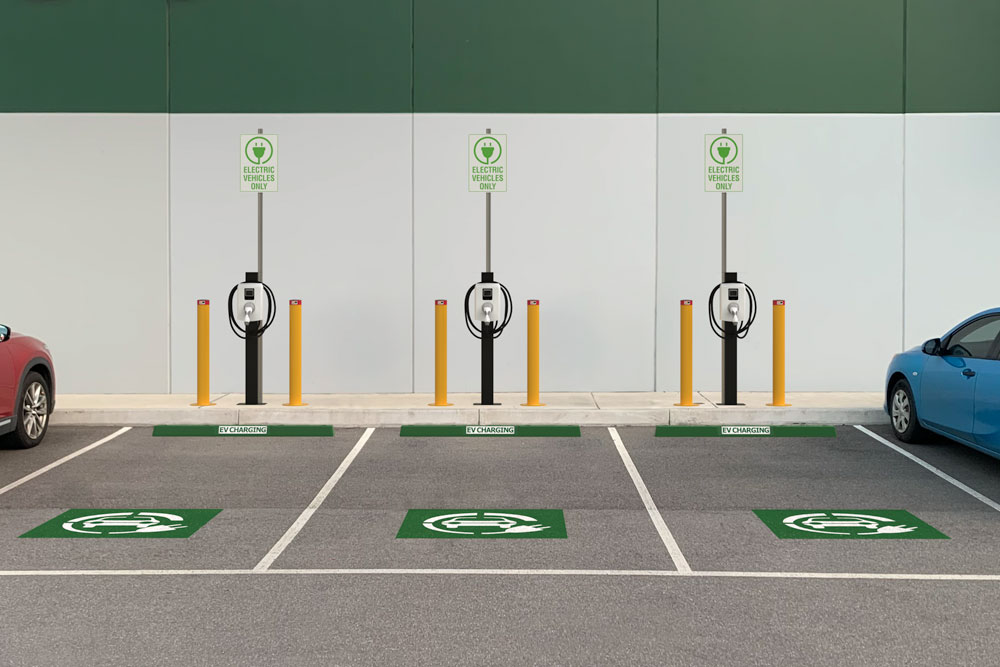
Why EV Charging Stations Need an Active Harmonic Filter EV charging stations are expanding quickly in commercial buildings, parking structures, fleets, and public infrastructure. As more fast chargers connect to the electrical system, power quality becomes a serious issue. Many charging stations use high-power electronic converters. These are nonlinear loads. While they improve charging efficiency...
Case Study Implementing AHF in Energy Industry The energy sector relies heavily on power electronics to maintain operational efficiency and control. However, the widespread use of non-linear loads, such as large variable frequency drives and rectifiers, creates significant electrical noise. This noise, known as harmonic distortion, can lead to catastrophic equipment failure and expensive downtime....
Solar Inverter Harmonics in South Africa Solar inverter harmonics South Africa is now a bigger issue on industrial and commercial sites. Many facilities have added rooftop PV to reduce grid dependence and control electricity bills. But solar inverters also add harmonic current to electrical networks. When that happens, the site may see overheating, unstable power factor, nuisance trips, and weak p...
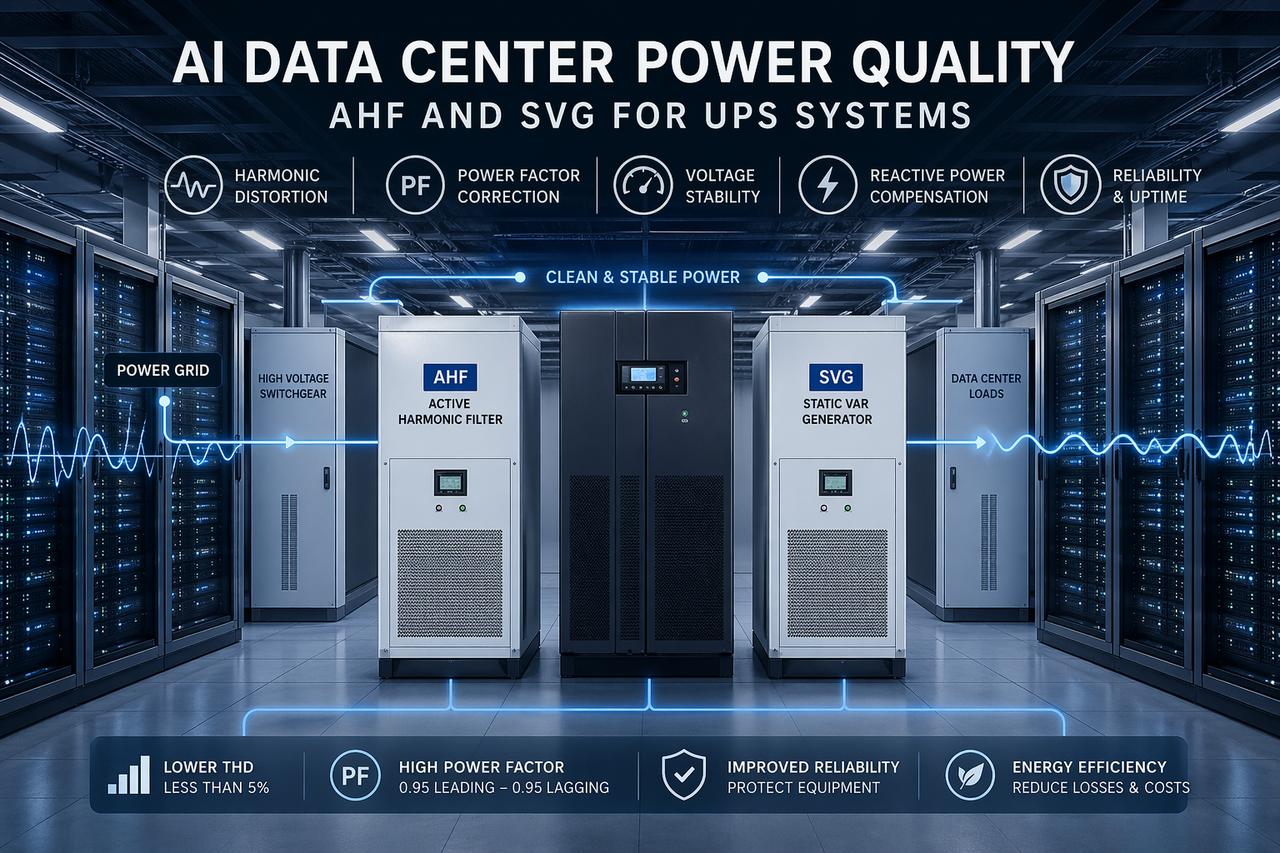
AI Data Center Power Quality: AHF and SVG for UPS Systems Modern data centers depend on stable electrical performance. As facilities add UPS systems, precision cooling, variable frequency drives, rectifiers, power distribution units, and high-density server racks, data center power quality becomes more difficult to control. Harmonic distortion, poor power factor, voltage fluctuation, and overheati...
Why SVG is the Future of Modern Manufacturing In the world of modern manufacturing, power is everything. But not all power is the same. Many factories suffer from poor power quality, which acts like a hidden tax on your business. It causes motors to overheat, computers to crash, and electricity bills to skyrocket. To fix this, you need a smart strategy for power quality management. For years, comp...
Enhancing AHF Reliability with Conformal Coating Protection Active Harmonic Filters (AHFs) play a critical role in modern power systems. They reduce harmonic distortion, improve power quality, and protect sensitive electrical equipment. As AHFs are increasingly deployed in industrial automation, renewable energy systems, EV charging infrastructure, and data centers, long-term operati...


 English
 français
 Deutsch
 español
 العربية
 中文
中文



 IPv6 network supported