

 English
 français
 Deutsch
 español
 العربية
 中文
中文
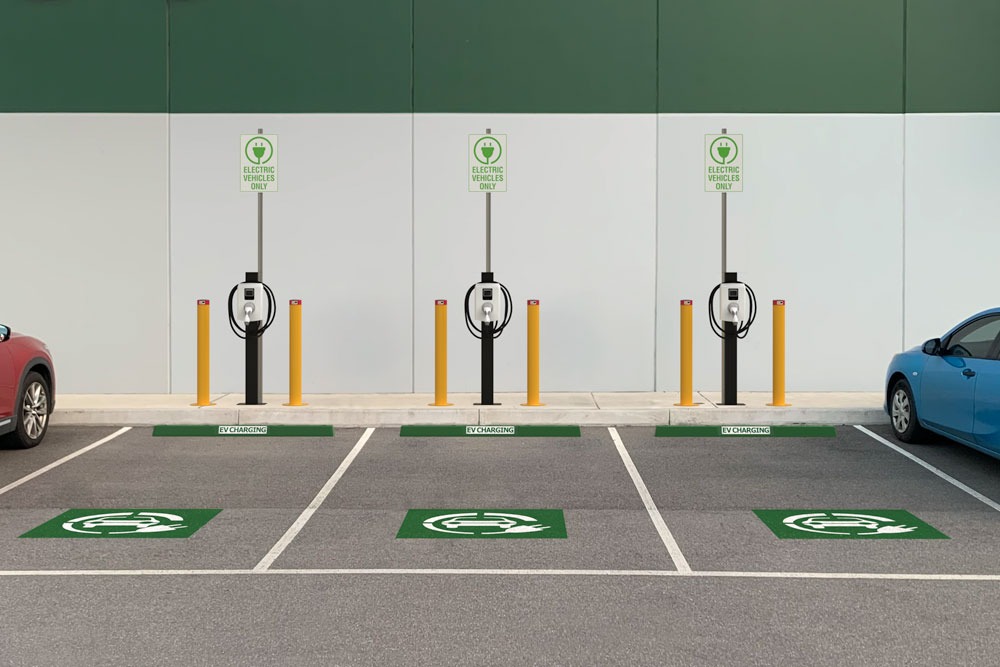
EV charging stations are expanding quickly in commercial buildings, parking structures, fleets, and public infrastructure. As more fast chargers connect to the electrical system, power quality becomes a serious issue.
Many charging stations use high-power electronic converters. These are nonlinear loads. While they improve charging efficiency, they also create harmonic distortion in the electrical network.
If harmonic distortion is not controlled, it can overheat transformers, stress cables, trip breakers, and reduce system reliability. This is why an active harmonic filter is becoming an important part of modern EV charging station design.
In many projects, the question is no longer whether harmonics exist. The real question is how to reduce them before they affect equipment life, compliance, and operating cost.
An EV charging station may look simple from the outside, but its internal electrical behavior is much more complex.
Fast chargers, rectifier stages, switch-mode power electronics, and load fluctuations can all affect power quality. These conditions often create:
harmonic distortion
transformer overheating
higher cable losses
nuisance tripping
stressed protection devices
reduced power factor
lower system efficiency
The risk becomes more serious when many chargers operate at the same time. A small number of chargers may have a manageable effect. A larger charging hub with multiple DC fast chargers can place significant stress on the electrical system.
This is especially important in commercial charging stations, bus depots, logistics fleets, and highway charging sites where demand changes quickly throughout the day.
Harmonic distortion appears when current is drawn in pulses instead of in a smooth sine wave.
In EV charging stations, this usually comes from power electronic converters. These nonlinear loads distort the waveform and introduce extra frequencies into the system.
Those extra frequencies do not perform useful work. Instead, they create heat, losses, and electrical stress.
As the charging load changes, the harmonic level can also change. That makes EV charging stations a dynamic harmonic environment, not a fixed one. This is why standard compensation methods are often not enough.
A system may appear stable during light operation but become much more stressed during peak charging periods. Over time, that stress can reduce equipment life and increase maintenance frequency.
An active harmonic filter is a dynamic power quality device that detects harmonic currents and injects compensating currents in real time.
Instead of targeting only one fixed harmonic order, the active harmonic filter continuously monitors the waveform and reacts to actual system conditions.
This makes it more flexible than fixed tuned solutions in applications with changing load patterns.
For EV charging stations, an active harmonic filter helps keep current distortion lower, improves waveform quality, and reduces electrical stress on the wider distribution network.
In simple terms, the active harmonic filter cancels unwanted harmonic currents before they can damage or disturb the system.
An EV charging station is not a stable linear load environment. Charger usage rises and falls throughout the day. Some chargers may be idle. Others may run at high power at the same time.
This is exactly the kind of application where an active harmonic filter performs well.
Its main advantages include:
real-time harmonic compensation
support for changing nonlinear loads
reduced transformer and cable heating
lower risk of nuisance tripping
better compliance with power quality requirements
improved system reliability
easier expansion for future charger additions
Because charging infrastructure often grows over time, flexibility matters. A solution that works only for one fixed operating point may not remain effective after site expansion.
When harmonic distortion rises, the damage is rarely limited to one device.
The effect can spread through the system and stress:
transformers
switchgear
breakers
protection relays
cables
capacitor banks
upstream distribution equipment
This is why power quality should be treated as a system issue, not just as a charger issue.
By reducing harmonic distortion, an active harmonic filter helps the full electrical network operate in a more stable way. It lowers unnecessary heat, reduces losses, and supports better long-term reliability.
For charging operators, this means fewer interruptions, fewer unexplained trips, and better electrical performance during peak demand.
An active harmonic filter is suitable for many charging scenarios, including:
Public charging sites often have strong load variation. Demand changes by time of day and by the number of vehicles charging at once. Real-time harmonic compensation helps maintain stable operation.
Office buildings, malls, and mixed-use sites often add EV charging to an existing electrical system. This can introduce new harmonic stress into a network that already supports lifts, HVAC, and lighting loads.
Fleet charging depots often operate with concentrated charging windows. Many chargers may run together, creating high distortion and transformer loading. An active harmonic filter helps reduce that stress.
Warehouses and industrial sites may already contain nonlinear loads such as drives and rectifiers. Adding EV charging increases the harmonic burden further. A dynamic filter is often the more reliable approach.
Before choosing an active harmonic filter for an EV charging station, the site should be measured properly.
Key factors include:
total harmonic distortion
charger quantity and power rating
AC or DC fast charger mix
load variation over time
transformer size and temperature
existing capacitor banks
upstream electrical capacity
future expansion plan
This is important because the right filter capacity depends on real harmonic current, not just on the total connected load.
A proper review helps avoid undersizing, oversizing, or selecting a solution that does not match the actual site condition.
As EV infrastructure expands, charging stations will become larger and more power-dense. That means power quality design must become more deliberate.
The goal is not only to install chargers. The goal is to build a charging station that remains reliable as usage grows.
An active harmonic filter supports that goal by helping the system stay stable under changing load conditions. It also reduces the risk of hidden electrical stress that may not appear immediately after commissioning.
For operators planning long-term expansion, this is a more practical strategy than waiting for overheating, repeated trips, or power quality complaints to appear first.
EV charging stations create new demands on the electrical system. Because chargers are nonlinear loads, harmonic distortion can become a serious issue, especially in fast charging and multi-charger environments.
An active harmonic filter helps solve this problem by reducing harmonic distortion in real time. It protects transformers, cables, breakers, and the wider electrical network. It also supports better efficiency, stronger reliability, and easier future expansion.
For modern charging infrastructure, harmonic mitigation is no longer optional in many applications. It is part of building a stable and professional power system.
If your EV charging project is facing harmonic distortion, transformer overheating, or unstable electrical performance, contact us to discuss a suitable active harmonic filter solution for your site.



 IPv6 network supported