
 English
 français
 Deutsch
 español
 العربية
 中文
中文

How Active Power Filters (APF) Protect Smart Factories
The Fourth Industrial Revolution, or Industry 4.0, is transforming the way products are made. Factories are becoming 'smart,' utilizing high-precision robotics, automated assembly lines, and real-time data analytics. But this high-tech machinery has a weakness: it is extremely sensitive to power quality.
In a modern automated factory, even a tiny electrical glitch can cause a massive production halt. The leading cause of these glitches is harmonic distortion. To maintain the precision and reliability demanded by Industry 4.0, manufacturers are increasingly relying on Active Power Filters (APF).

Figure 1: High-precision robotics require ultra-clean power to maintain accuracy.
Industry 4.0 relies on hundreds of Variable Frequency Drives (VFDs), servo motors, and switching power supplies. While these devices provide incredible control and efficiency, they are non-linear loads. As we've discussed before, non-linear loads create 'noise' in the form of harmonic currents.
This electrical noise travels through the factory grid, causing:
• Loss of Precision: Harmonics interfere with the delicate sensors and control signals of industrial robots, causing them to jitter or miss precise points.
• Sudden Production Halts: Sensitive PLC (Programmable Logic Controller) systems can crash or reset due to harmonic-induced voltage distortion.
• Increased Energy Waste: Harmonics cause unnecessary heating in cables and motors, leading to wasted energy and higher bills.
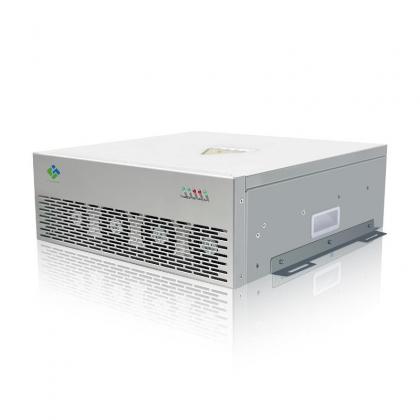
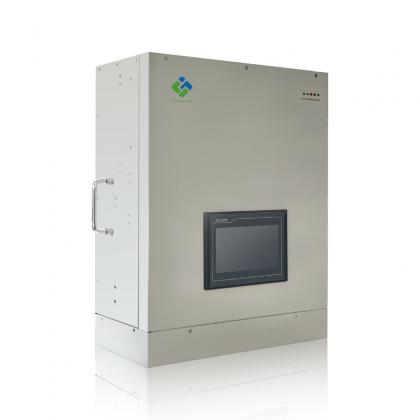
An Active Power Filter (APF) is the ultimate defense for smart manufacturing. Unlike old-fashioned passive filters, an APF is an intelligent, dynamic system. It monitors the factory grid in real-time and 'cleans' it by injecting compensating currents to cancel out harmonics.
It works like noise-canceling technology for your factory's electricity. It ensures that every machine, from the smallest sensor to the largest robotic welder, receives a perfect, clean sine wave.
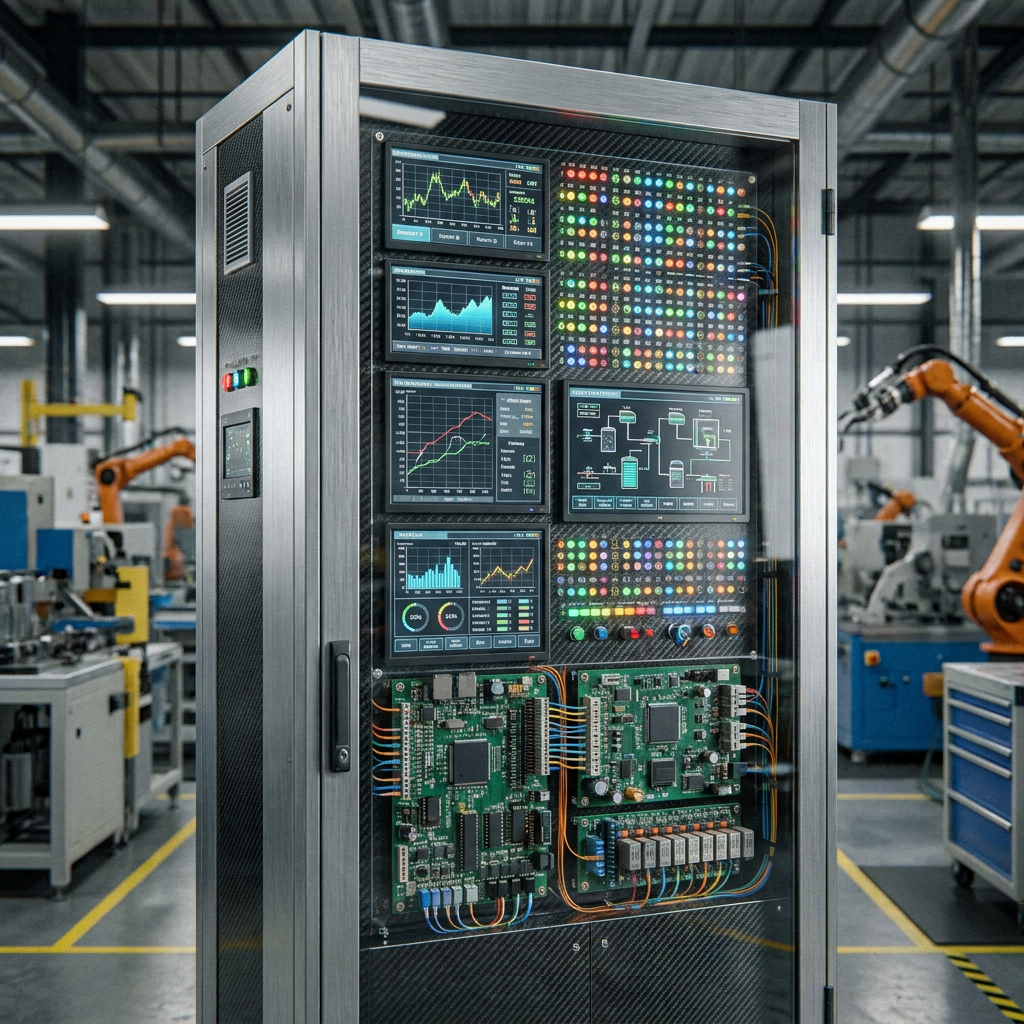
In the world of Industry 4.0, production speed and quality are everything. An APF provides several critical benefits:
• Total Harmonic Mitigation: APFs can eliminate harmonics up to the 50th order, keeping Total Harmonic Distortion (THDi) below 5%, as required by standards like IEEE 519.
• Zero Resonance Risk: Passive filters can actually amplify harmonics under certain conditions (resonance). APFs are active and pose no such risk, making them much safer for complex automated grids.
• Dynamic Performance: As different robots on the line start and stop, the harmonic levels change instantly. APFs respond in less than 5 milliseconds to keep the power clean.
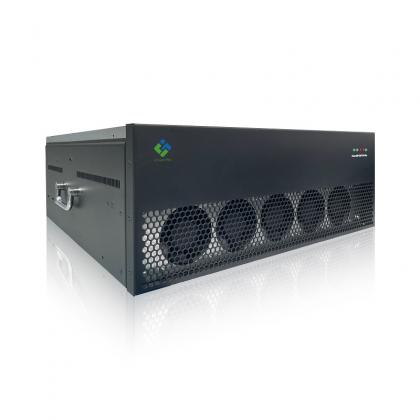
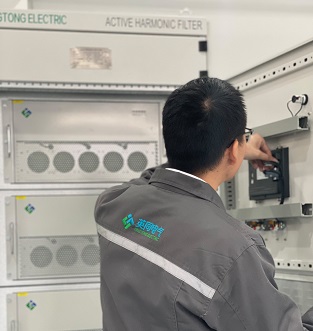
• Space-Saving Design: Modern APFs are modular and compact, making them easy to install inside existing control cabinets or distribution panels.
Consider a modern car factory. Hundreds of robotic welders and sprayers work in perfect synchronization. In one such facility, harmonic interference from VFDs was causing intermittent sensor failures, leading to 2 hours of unplanned downtime every week. This translated to millions in lost revenue.
After installing a modular APF system, the THDi dropped from 18% to 3.5%. The sensor errors vanished immediately, and the plant achieved a 99.9% uptime rate. The investment in APF technology paid for itself in less than three months.
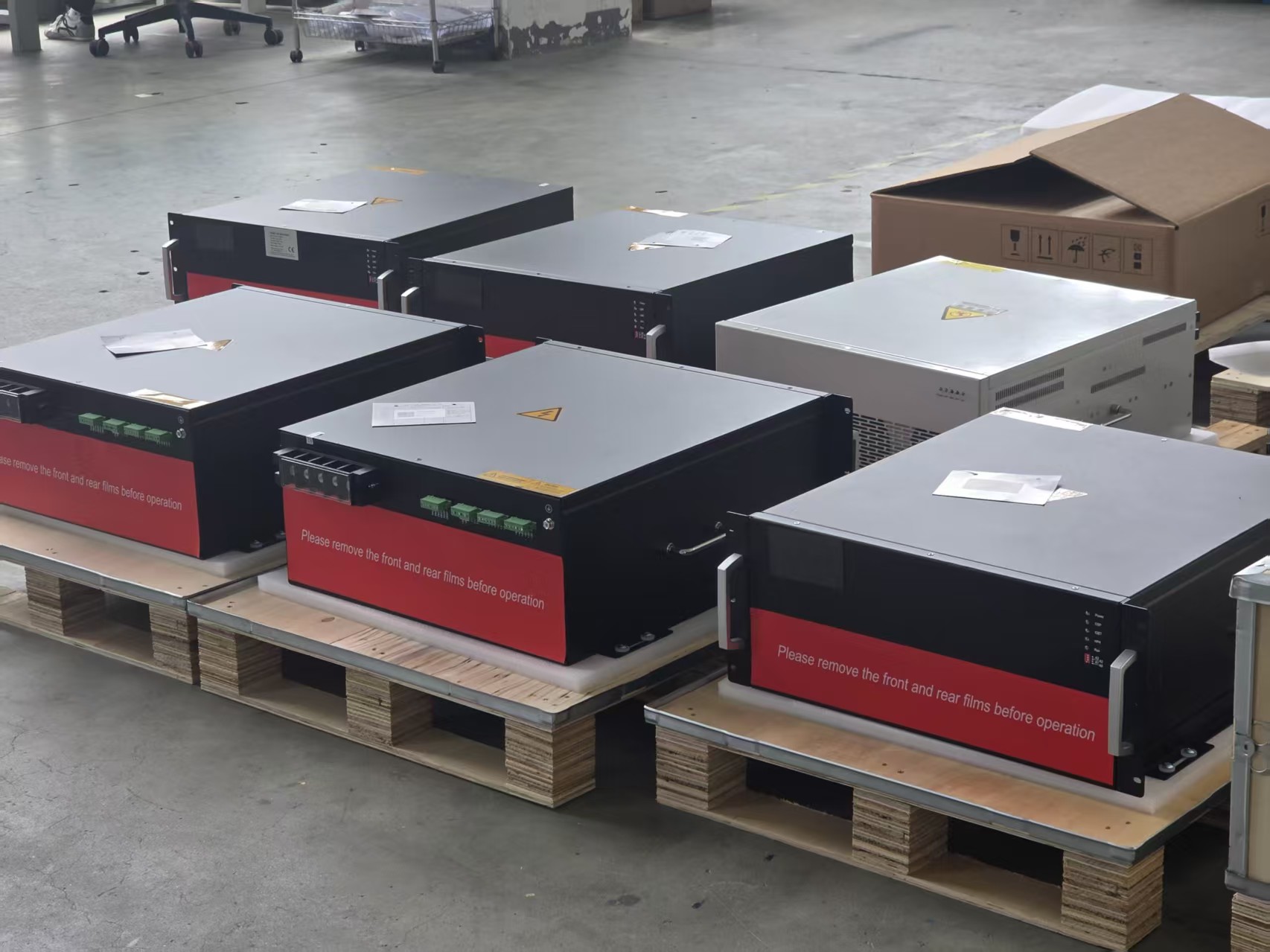
The success of Industry 4.0 depends on reliable, high-quality power. As factories become smarter and more automated, the need for Active Power Filters will only grow. By protecting sensitive robotics and ensuring continuous operation, APF technology serves as the foundation for modern manufacturing excellence.
Don't let harmonic pollution slow down your factory. Invest in the future of smart manufacturing with advanced APF solutions and ensure your production line is always precise, efficient, and profitable.



 IPv6 network supported