
 English
 français
 Deutsch
 español
 العربية
 中文
中文

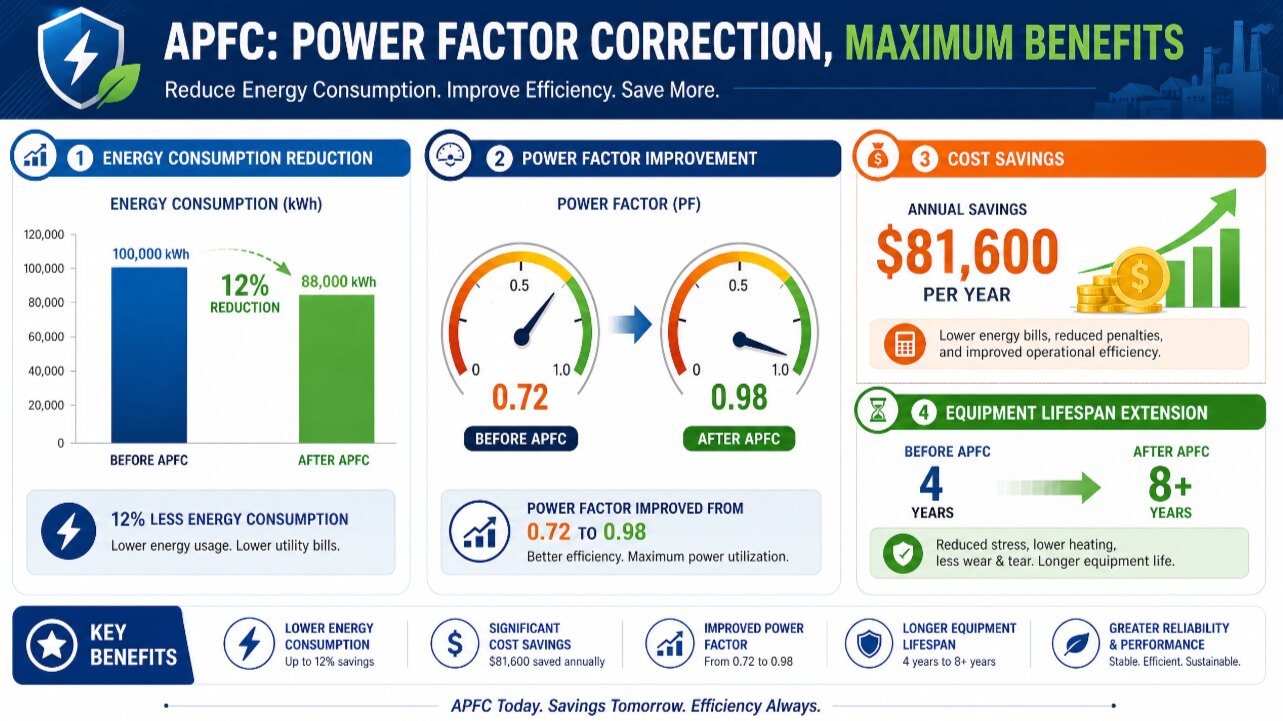
Have you ever wondered why some electronics run cool and quiet while others seem to waste energy? The secret often lies in a hidden technology called Active Power Factor Correction (APFC).
As global standards like IEC 61000-3-2 become stricter, APFC is no longer a luxury. It is a fundamental requirement for anyone designing or buying modern power electronics. In this guide, we will break down why Active PFC is the future of energy efficiency.
To understand Active Power Factor Correction, we first need to look at the problem it solves: Power Factor (PF). In simple terms, PF measures how effectively a device uses the electricity it draws.
Traditional devices often create "noise" on the electrical grid. This noise is known as Total Harmonic Distortion (THD). While Passive PFC uses simple, heavy parts to fix this, APFC uses an intelligent PFC Controller and high-speed switches to solve the problem actively.
Think of an APFC stage as a smart traffic controller for electricity. It sits right after the bridge rectifier and ensures that the current flows in a smooth, sinusoidal wave.
This active "shaping" of the current ensures that the power grid stays clean and your device stays efficient.
Not all APFC circuits are built the same. Engineers choose different "conduction modes" based on the power level of the device.
This is the workhorse for high-power devices like servers. It keeps a steady flow of current through the inductor, which reduces stress on components but requires more complex control.
Often found in LED lighting, CrM (also called Transition Mode) switches exactly when the current hits zero. This is called Zero Current Switching (ZCS), and it is great for saving energy in medium-power designs.
The biggest change in APFC technology recently is the move away from traditional silicon. New materials like Gallium Nitride (GaN) and Silicon Carbide (SiC) are changing the game.
At the end of the day, Active Power Factor Correction is about more than just numbers. It is about Power Quality. High-quality APFC prevents:
Whether you are an engineer selecting a PFC Controller or a consumer looking for an 80 PLUS Titanium power supply, APFC is the technology making it possible.
Yes. Active PFC provides higher efficiency (up to 99%), supports universal input voltage, and is much smaller and lighter than passive designs.
Absolutely. It is the primary tool used to meet THD regulations and ensure compliance with EMC standards worldwide.



 IPv6 network supported