Solar Inverter Harmonics in South Africa Solar inverter harmonics South Africa is now a bigger issue on industrial and commercial sites. Many facilities have added rooftop PV to reduce grid dependence and control electricity bills. But solar inverters also add harmonic current to electrical networks. When that happens, the site may see overheating, unstable power factor, nuisance trips, and weak p...
Optimizing Wind Farm Stability with MV SVG Systems Wind energy plays a vital role in the global transition toward sustainable power generation. However, integrating large-scale wind farms into the electrical grid presents significant technical challenges regarding voltage stability. Rapid fluctuations in wind speed lead to inconsistent power output and reactive power imbalances. To a...
Active Harmonic Filter for Solar Inverters Solar inverter harmonics are common in commercial and industrial solar systems. When harmonic distortion increases, transformers, cables, breakers, and switchgear carry extra electrical stress. An active harmonic filter for solar inverters helps reduce harmonics in real time and improves solar power quality across the whole system. Solar power systems are...
Energy Storage System (ESS) : Match for Solar System Solar systems have become a mainstream choice for clean energy globally. But their inherent brings significant challenges: Cloud cover, day-night cycles, and seasonal changes cause unstable power output.This limits the full potential of solar energy. The Energy Storage System (ESS) paired with an Energy Management System solves this ...
A 120 kW DC fast charger is not a resistive load, and ten of them are not ten kettles. When a highway charging hub starts a batch of charging sessions within the same minute, the transformer, cables and switchgear see a load profile closer to a small welding workshop than a retail site. The consequences—harmonic distortion, reactive power and three-phase imbalance—surface as tripped br...
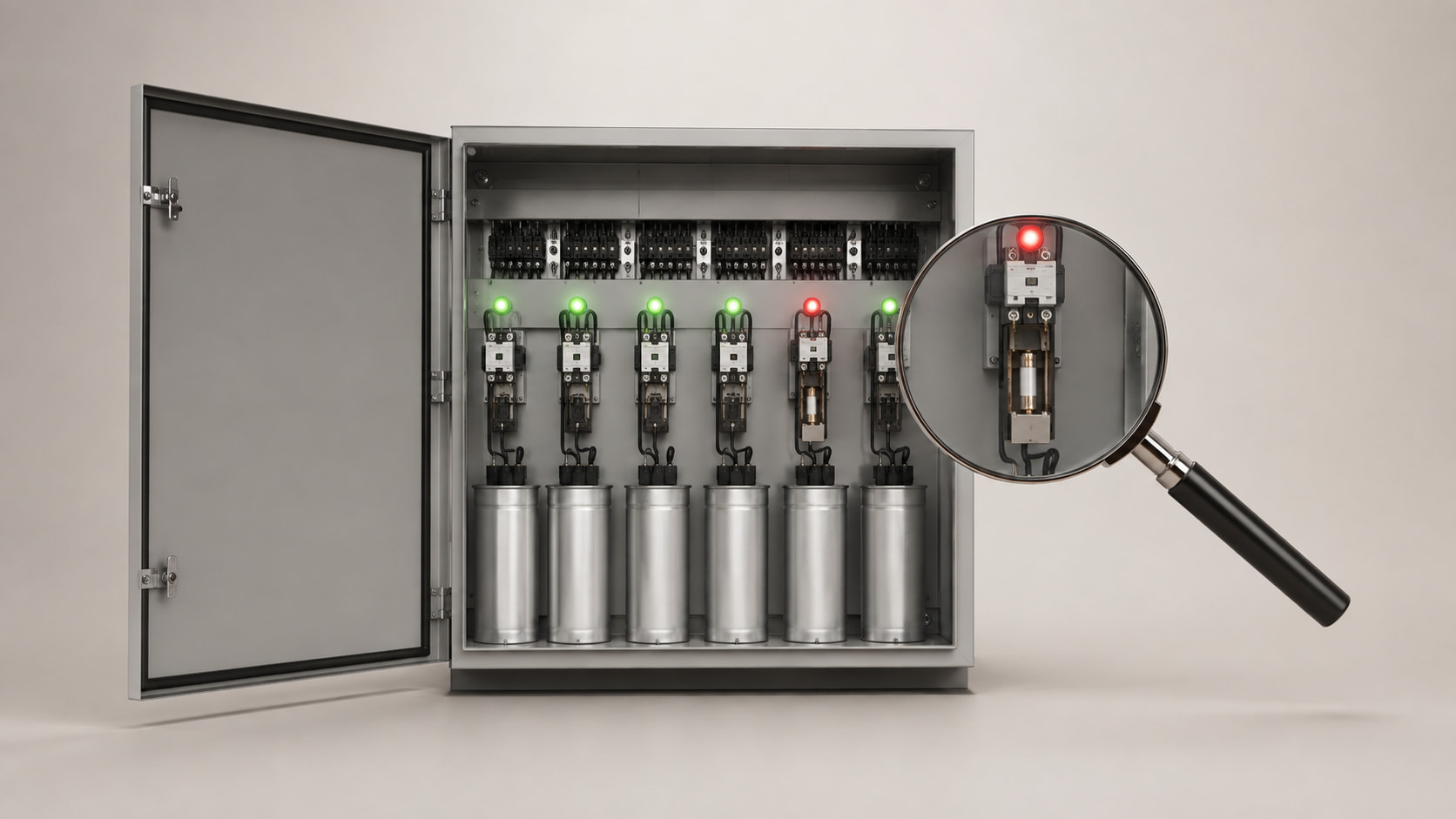
APFC Panel Troubleshooting: 7 Common Faults and How to Fix Them An automatic power factor correction panel may begin switching incorrectly, miss its target or repeatedly trip capacitor stages. A newly commissioned APFC panel can also fail from its first day. The cause is not always a defective capacitor. CT installation, controller settings, harmonics, switching components and changing load...
Poor power quality rarely appears as its own line on an electricity bill, but it can raise the charges a facility already pays by increasing current, losses and power-factor or demand penalties. When a bill climbs the tariff is blamed first — yet low power factor, harmonic distortion and voltage imbalance make a plant draw more current than the useful work it produces requires. This article ...
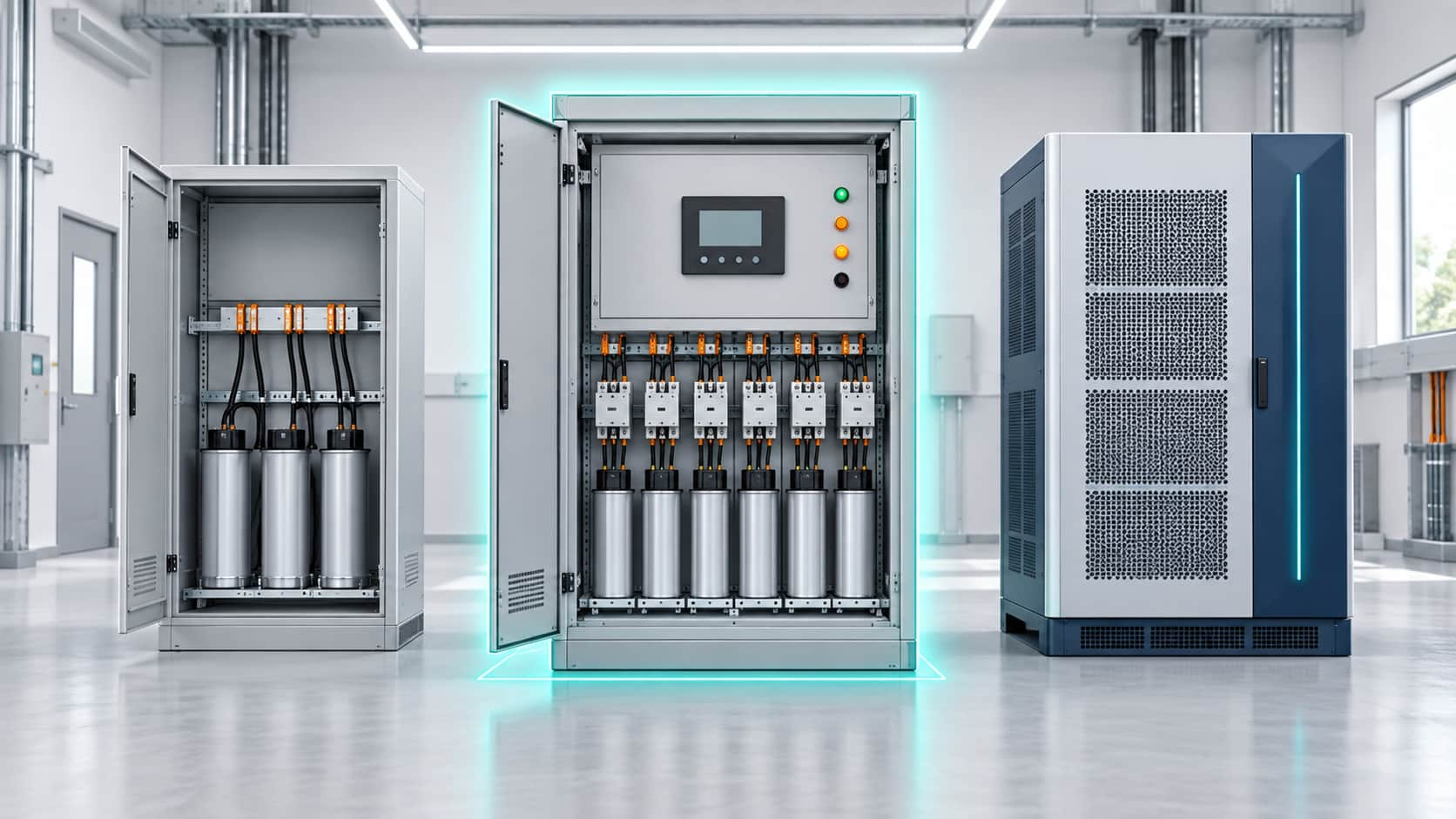
A fixed capacitor bank is often the most economical way to correct power factor — provided the load stays reasonably steady. When motors cycle or production changes by shift, it may overcompensate overnight and undercompensate at peak. An Automatic Power Factor Correction (APFC) panel switches capacitor steps as demand changes; a Static Var Generator (SVG) adjusts reactive power continuously...


 English
 français
 Deutsch
 español
 العربية
 中文




 IPv6 network supported