

 English
 français
 Deutsch
 español
 العربية
 中文
中文
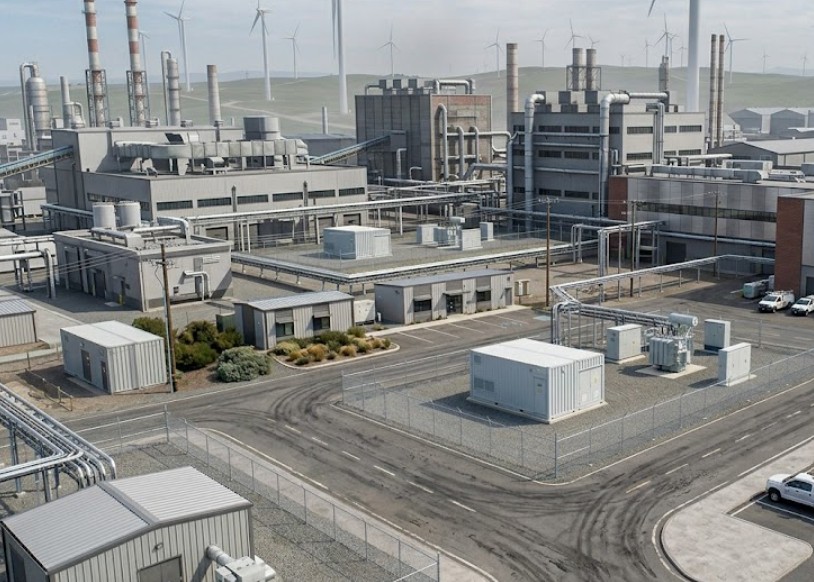
Wind energy plays a vital role in the global transition toward sustainable power generation. However, integrating large-scale wind farms into the electrical grid presents significant technical challenges regarding voltage stability. Rapid fluctuations in wind speed lead to inconsistent power output and reactive power imbalances.
To address these issues, technical support engineers prioritize the implementation of Static Var Generators. Specifically, Medium Voltage SVG systems offer a sophisticated solution for real-time reactive power compensation. These systems ensure that wind farms remain compliant with strict grid codes while maximizing operational efficiency.
In a wind farm environment, induction generators and long transmission lines naturally consume or produce reactive power. If left unmanaged, this causes voltage drops or surges that can trigger protective relays. Such events often lead to costly downtime or equipment damage over time.
Medium Voltage SVG units act as a high-speed bridge between the wind turbines and the utility grid. They utilize power electronics to source or sink reactive current almost instantaneously. This rapid response is essential for maintaining a steady voltage profile at the point of common coupling.
The primary advantage of a Medium Voltage SVG over traditional capacitor banks is its step-less regulation. Traditional systems use mechanical switches which are slow and prone to wear. In contrast, SVG technology employs Insulated Gate Bipolar Transistors to provide precise control.
This precision allows wind farm operators to maintain a power factor close to unity. It also mitigates harmonic distortion, which is a common byproduct of modern wind turbine inverters. By cleaning up the power signal, the SVG extends the lifespan of surrounding infrastructure.
| Feature | Traditional Capacitor Banks | Medium Voltage SVG Systems |
| Response Speed | Slow (seconds to minutes) | Ultra-fast (under 5 milliseconds) |
| Regulation Type | Stepped / Discrete | Continuous / Step-less |
| Harmonic Handling | May amplify harmonics | Actively filters harmonics |
| Footprint | Large physical space | Compact modular design |
Utility companies enforce strict grid codes that require wind farms to stay connected during transient faults. This capability is known as Low Voltage Ride Through or LVRT. Without a robust compensation system, a sudden voltage dip would cause the entire farm to trip.
Medium Voltage SVG systems provide the necessary dynamic voltage support during these critical milliseconds. By injecting reactive current during a fault, the SVG stabilizes the local network. This ensures the wind farm remains online, supporting the grid when it is most vulnerable.
| Parameter | Impact on Stability | SVG Contribution |
| Voltage Flicker | Causes light flickering and stress | Smooths out rapid fluctuations |
| Voltage Unbalance | Damages three-phase motors | Balances phases individually |
| Resonance Risk | Can lead to system failure | Provides active damping control |
Beyond immediate stability, Medium Voltage SVG systems contribute to lower operational costs. Because they are modular, maintenance is simplified compared to rotating synchronous condensers. Their high efficiency means very little energy is lost as heat during the compensation process.
Furthermore, the compact footprint of these systems is ideal for remote wind farm locations. They can be housed in small containers, reducing the need for extensive civil engineering works. This versatility makes them the preferred choice for both onshore and offshore wind projects.
In conclusion, the integration of SVG technology is no longer optional for modern energy projects. It provides the technical foundation needed for a reliable and resilient green energy grid. By choosing Medium Voltage SVG solutions, engineers can guarantee peak performance under any environmental conditions.



 IPv6 network supported