Introduction: When "Refueling" Becomes "Charging," Power Quality Becomes the New Safety Battleground The recent spontaneous combustion of an vehicle in Shanghai during charging, with the official preliminary explanation citing "the use of substandard power by the owner," has sent shockwaves through the community. This incident not only caused panic among owners but also revealed a long-overlooked ...
A 120 kW DC fast charger is not a resistive load, and ten of them are not ten kettles. When a highway charging hub starts a batch of charging sessions within the same minute, the transformer, cables and switchgear see a load profile closer to a small welding workshop than a retail site. The consequences—harmonic distortion, reactive power and three-phase imbalance—surface as tripped br...
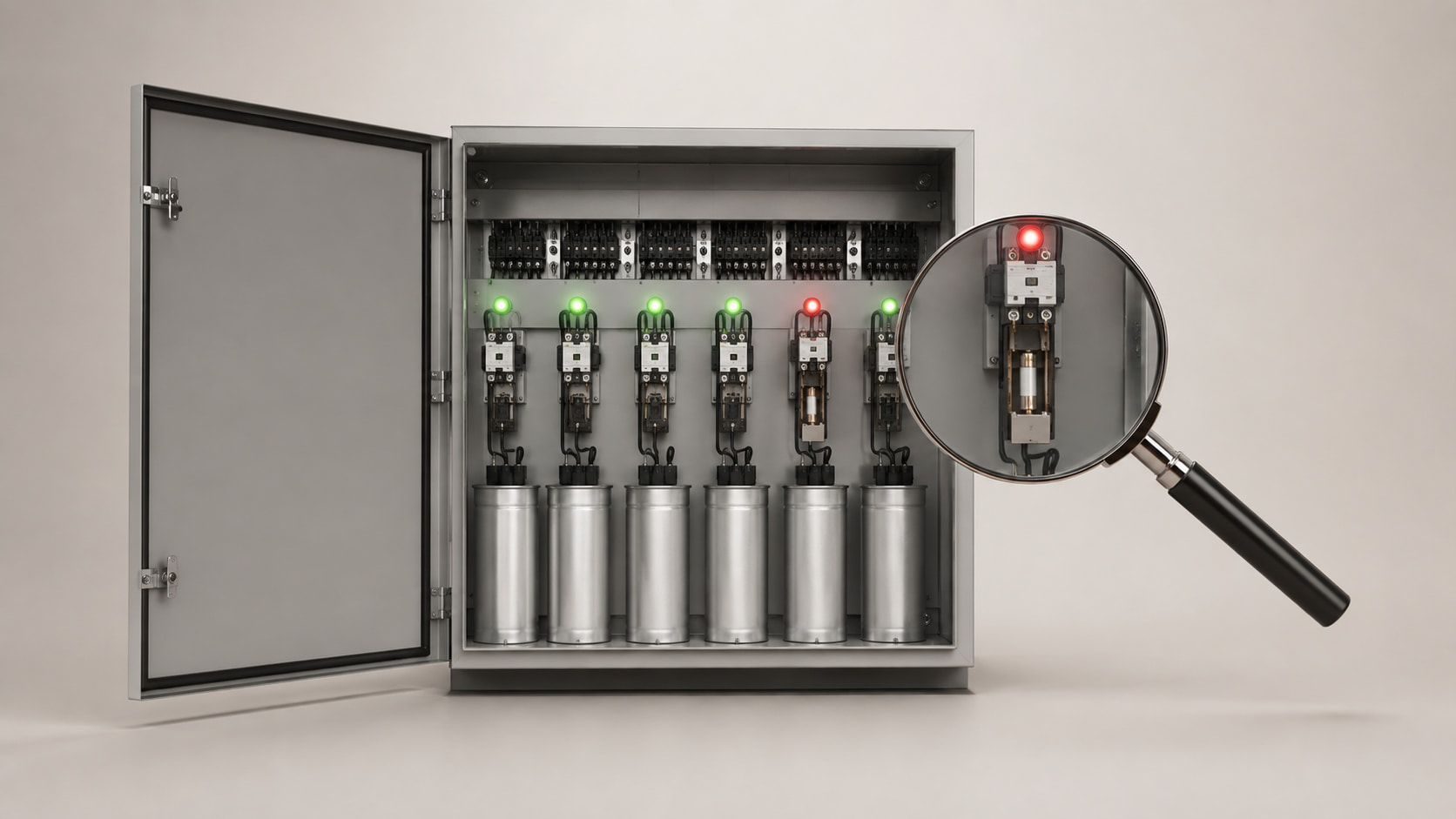
APFC Panel Troubleshooting: 7 Common Faults and How to Fix Them An automatic power factor correction panel may begin switching incorrectly, miss its target or repeatedly trip capacitor stages. A newly commissioned APFC panel can also fail from its first day. The cause is not always a defective capacitor. CT installation, controller settings, harmonics, switching components and changing load...
Poor power quality rarely appears as its own line on an electricity bill, but it can raise the charges a facility already pays by increasing current, losses and power-factor or demand penalties. When a bill climbs the tariff is blamed first — yet low power factor, harmonic distortion and voltage imbalance make a plant draw more current than the useful work it produces requires. This article ...
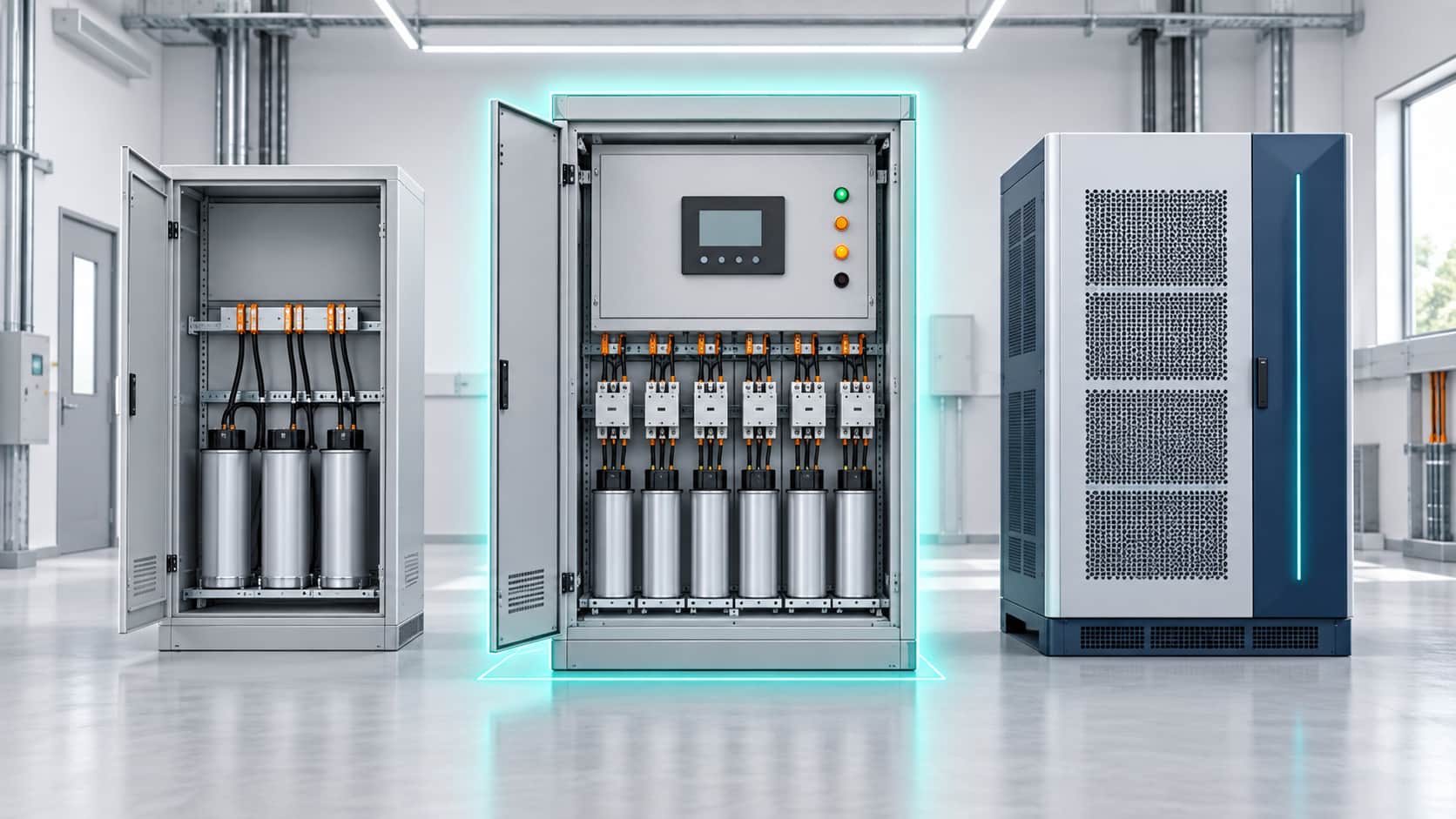
A fixed capacitor bank is often the most economical way to correct power factor — provided the load stays reasonably steady. When motors cycle or production changes by shift, it may overcompensate overnight and undercompensate at peak. An Automatic Power Factor Correction (APFC) panel switches capacitor steps as demand changes; a Static Var Generator (SVG) adjusts reactive power continuously...
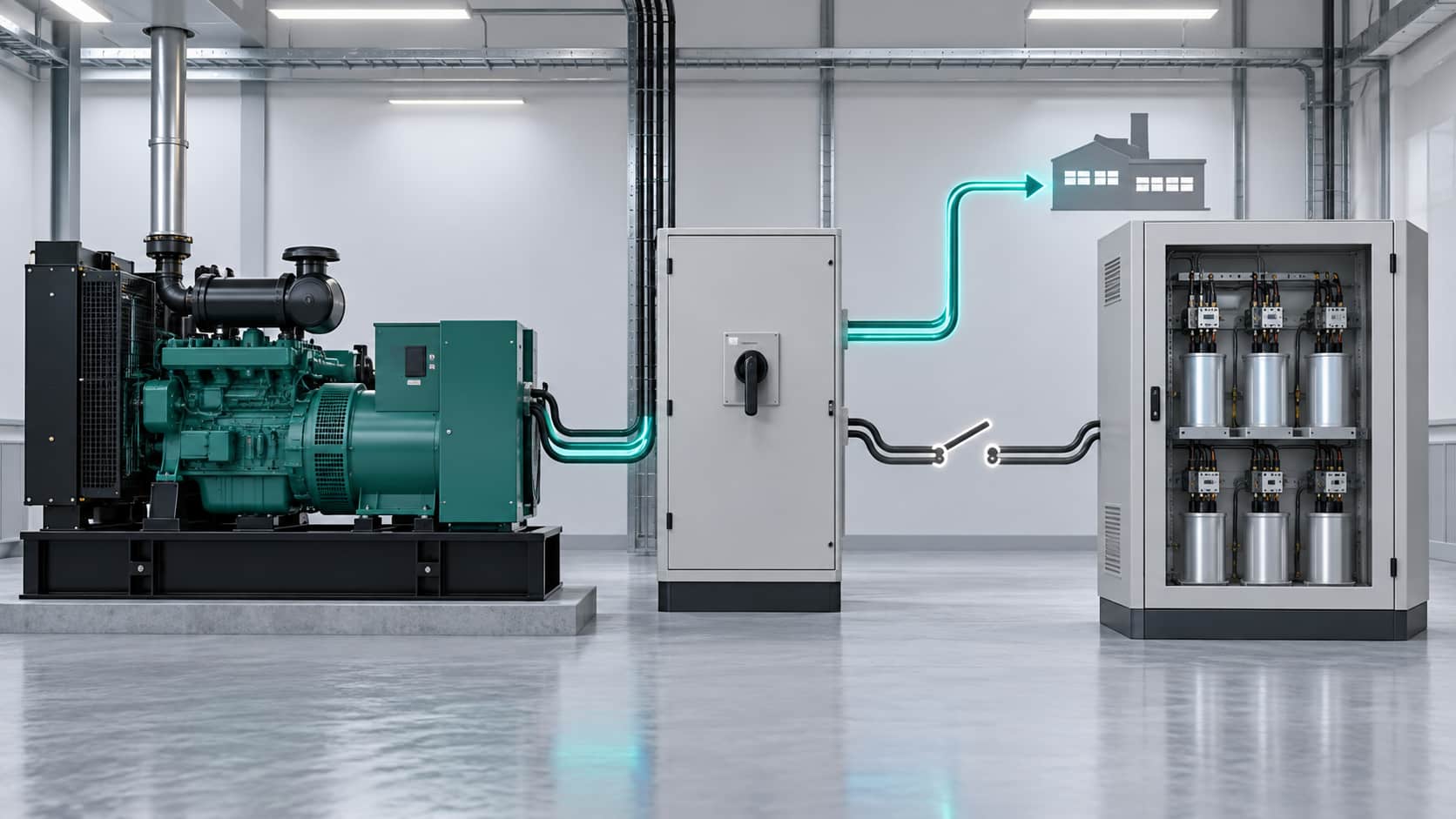
Quick Answer An APFC panel is not simply permitted or forbidden on generator power. Compatibility depends on generator capacity, the power factor of the load that stays online, the size of each load step, harmonic distortion, available short-circuit capacity, governor and excitation response, the generator manufacturer’s limits, and the logic inside the APFC controller. On many standby syste...
Why Does an APFC Panel Keep Switching? Causes of Capacitor Step Hunting and How to Stop It In commercial buildings, manufacturing plants, and distribution substations, Automatic Power Factor Correction (APFC) panels are deployed to maintain target power factor (typically 0.95 to 0.98 lagging) and avoid costly utility reactive power penalties. An APFC panel relies on a microprocessor-based power fa...
Variable frequency drives (VFDs) are often described as having a high power factor. That can be correct and still be misleading. A VFD may have little phase shift but draw pulsed input current, creating harmonics that reduce true power factor. The result is a common contradiction: one meter displays a cos φ close to 1.00, while another shows a lower total power factor. Both may be reporting co...


 English
 français
 Deutsch
 español
 العربية
 中文
中文





 IPv6 network supported