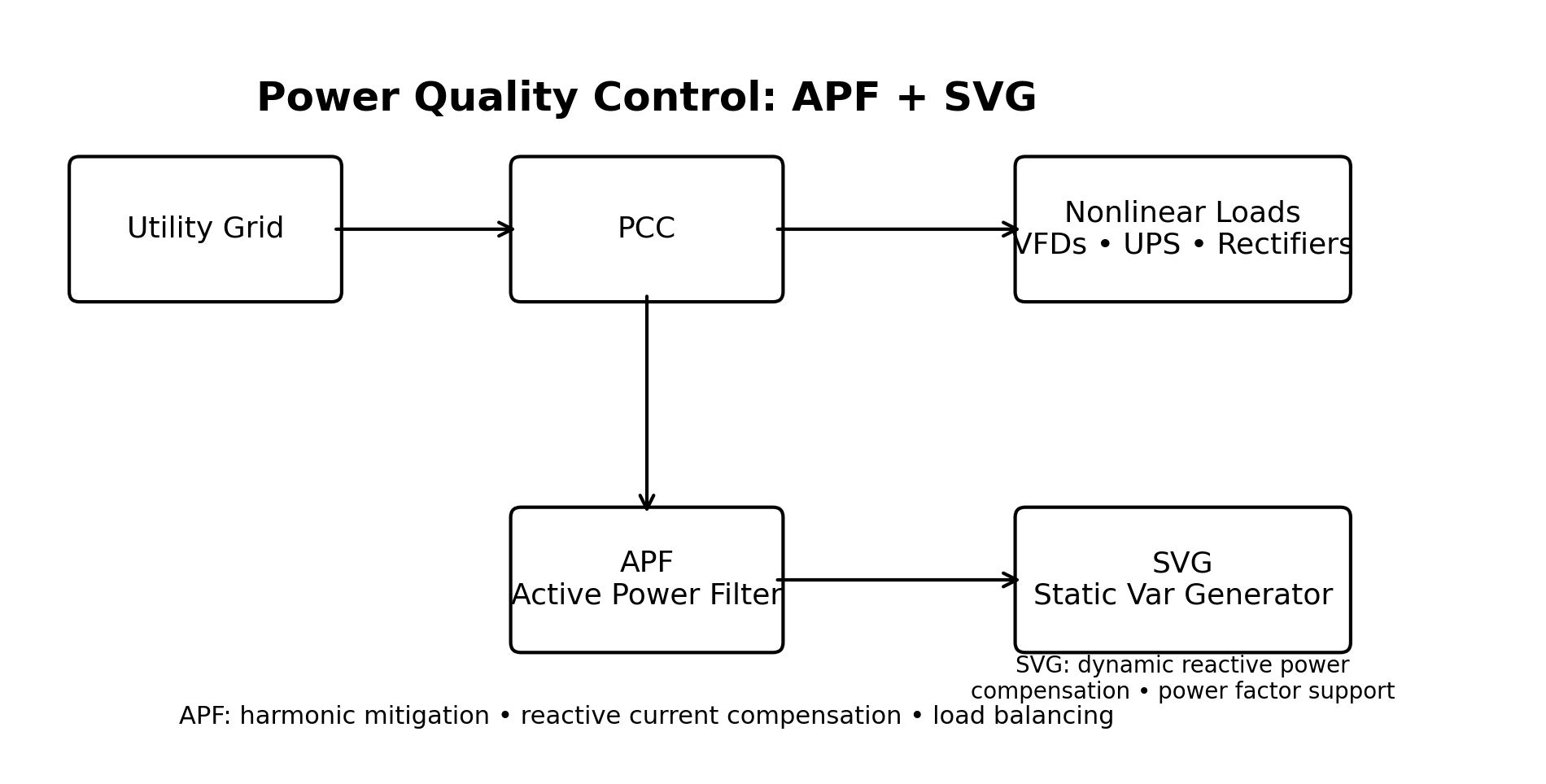
Power Quality Control: How APF and SVG Improve Modern Electrical Systems Introduction: Why Power Quality Matters More Than Ever As modern industrial and commercial facilities become increasingly dependent on power electronics, power quality has become a critical factor in electrical system reliability, energy efficiency, and equipment protection. Variable frequency drives (VFDs), UPS...
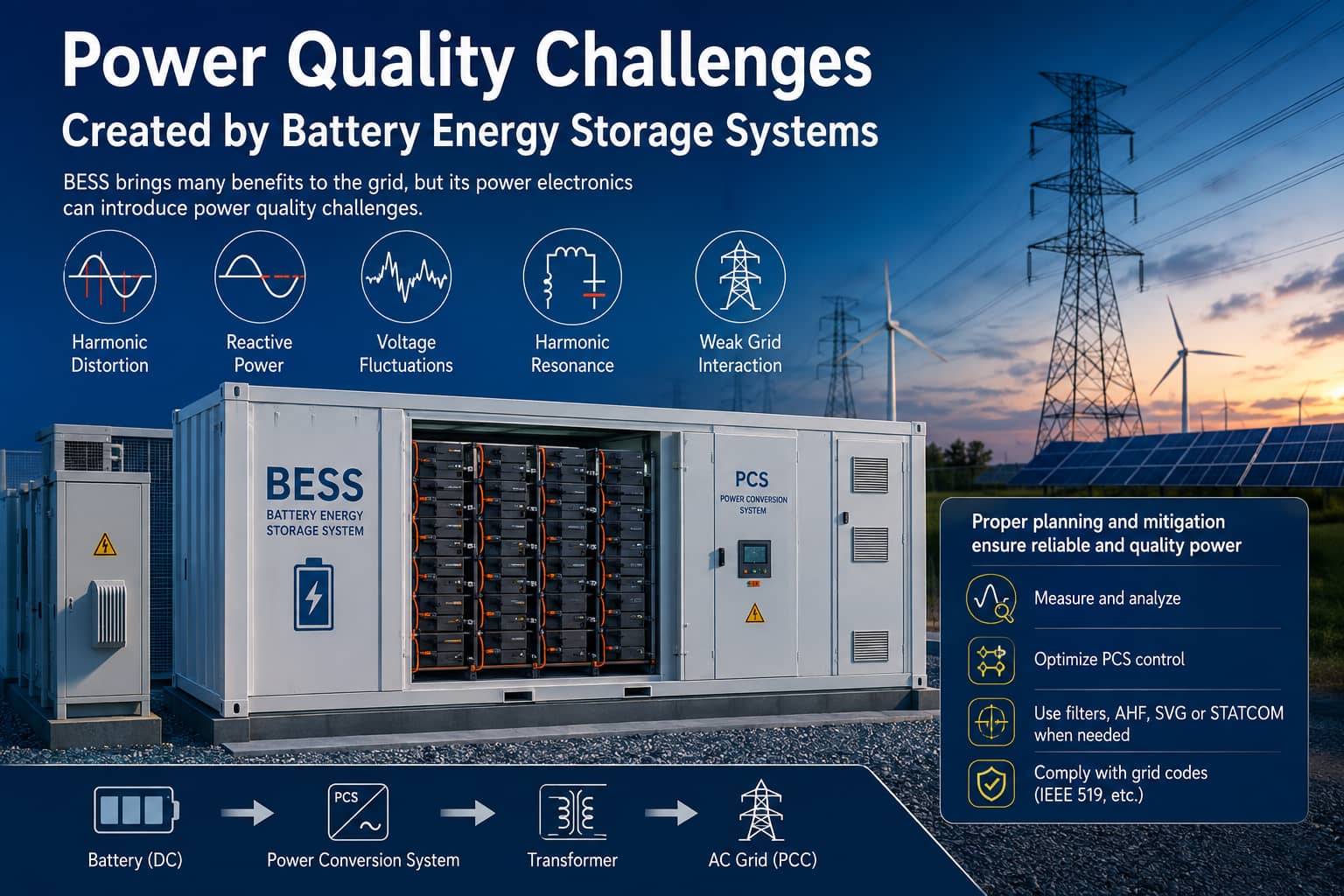
Power Quality Challenges Created by Battery Energy Storage Systems Battery energy storage systems (BESS) are becoming a major part of modern electrical infrastructure. Utilities, renewable energy plants, industrial facilities, data centers and microgrids increasingly use battery storage to manage peak demand, stabilize power supply and integrate renewable energy. However, connecting large battery ...
A vehicle body shop can run hundreds of welding points per minute, while robots, presses, conveyors, paint lines and HVAC systems change their electrical demand continuously. The production line may look mechanically stable, but the electrical load seen by the transformer is not. Rapid reactive-power changes, low power factor, voltage fluctuation and harmonic current can appear whenever several we...
Why a Solar Plant Needs Active Compensation A Static Var Generator (SVG) is an active, IGBT-based power-electronics compensator that stabilises voltage, supplies or absorbs reactive power and filters harmonic current at the point of common coupling (PCC) of a solar plant. It turns unstable PV output into grid-compliant power for EPC contractors, electrical engineers, procurement teams and power-qu...
When a PV plant reaches MW scale, inverter control stops being the same thing as grid code compliance. Compliance is judged at the point of common coupling (PCC), where the utility measures voltage and current quality — not at the inverter terminals. A plant with well-behaved inverters can still fail its connection test for that reason, and a medium-voltage STATCOM is usually the device that...
SVG sizing for power factor correction cannot be estimated from transformer capacity or a motor nameplate alone. Those figures describe how much load a site could connect, not how much reactive power the load actually exchanges with the supply at the point of common coupling (PCC). A Static Var Generator chosen from nameplate data will either leave the power factor short of target or spend on capa...


 English
 français
 Deutsch
 español
 العربية
 中文
中文



 IPv6 network supported