An Active Harmonic Filter (AHF) is a parallel-connected, closed-loop power-electronic device that measures load harmonic current with current transformers and injects an opposing current to cancel distortion at the point of common coupling (PCC). The engineering conclusion is blunt: an AHF is selected against the measured harmonic spectrum, load variability, site ambient temperature, and network i...
Neutral conductor overheating in a three-phase four-wire system is a zero-sequence problem, so measure harmonic orders first and only then select a filter. A neutral that runs hot while the phases stay comfortably cool is rarely a coincidence. It points to zero-sequence current driven by triplen harmonics, which behaves nothing like a balanced-load calculation predicts. This article follows the or...
Capacitor bank overheating after adding VFDs is a power quality symptom, not a capacitor defect. VFD rectifiers inject harmonic current, the bank offers a low-impedance path at those frequencies, and parallel resonance between the bank and the supply can amplify that current until fuses open, contactors chatter and capacitor cans swell. A capacitor bank supplies reactive power to correct power fac...
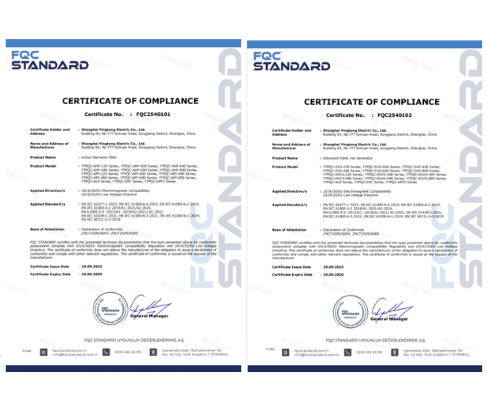
Certificate Documentations in Power Quality Selection: Meaning and Guide A procurement engineer receives an Active Harmonic Filter quotation with a compliance certificate attached. The certificate names a product family, but the quotation specifies another voltage, current rating, enclosure layout, ambient condition, and feeder arrangement. The correct question is not “Does the suppli...


 English
 français
 Deutsch
 español
 العربية
 中文
中文




 IPv6 network supported