How to choose a suitable current transformer? Choosing the Right Current Transformer for Your Power Measurement Project If you’re gearing up for a power measurement project, you’ve likely narrowed down your options for a power meter. Whether you’re dealing with a multi-circuit setup or require precise metering in an industrial environment, the next crucial step is s...
Why is CT Selection the Core of AHF System Performance? The current transformer (CT), as the "sensing organ" of the active harmonic filter (AHF), directly affects the accuracy of harmonic detection and the dynamic response speed. If the CT is not properly selected, the following problems may occur: Failure of Harmonic Compensation: Low-frequency or high-frequency harmonics are missed in det...
1. Current Transformer (CT) A Current Transformer is an instrument transformer used to measure alternating current (AC) by stepping down high currents to a lower, measurable value. Key Functions: Current Measurement: Steps down high primary current (e.g., 1000A) to a standardized secondary current (e.g., 5A or 1A) for meters and relays. Isolation: Provides galvanic isolation be...
The choice between installing an Active Harmonic Filter (AHF) on the power side (at the Point of Common Coupling - PCC) versus the load side (at the source of harmonics) is a critical design decision with significant technical and financial implications. Here is a detailed analysis comparing both installation strategies. Executive Summary Load-Side Installation (Local Compensation): Targets s...
An Active Harmonic Filter (AHF) is a parallel-connected, closed-loop power-electronic device that measures load harmonic current with current transformers and injects an opposing current to cancel distortion at the point of common coupling (PCC). The engineering conclusion is blunt: an AHF is selected against the measured harmonic spectrum, load variability, site ambient temperature, and network i...
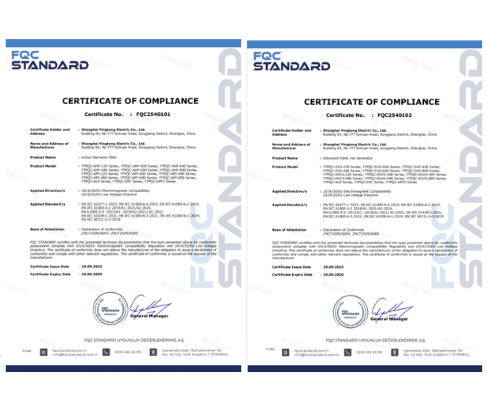
Certificate Documentations in Power Quality Selection: Meaning and Guide A procurement engineer receives an Active Harmonic Filter quotation with a compliance certificate attached. The certificate names a product family, but the quotation specifies another voltage, current rating, enclosure layout, ambient condition, and feeder arrangement. The correct question is not “Does the suppli...
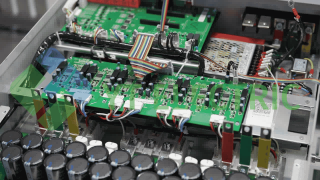
SVG and AHF Components: What Determines Accurate and Long-Term Performance? A 400 V plant may install two power-quality cabinets with the same rated current and expect the same result. Months later, one follows peak load while the other derates, produces more acoustic noise, or leaves compensation error at the point of common coupling (PCC). The difference lies in the sensing chain, ...
SVG Reactive Power Compensation: Beyond PF Correction For decades, plant electrical engineers and facility managers viewed reactive power compensation through a single, narrow lens: avoiding utility low power factor penalty surcharges. Traditional solutions—primarily fixed capacitor banks and automatic power factor correction (APFC) panels—were designed solely to supply bulk capacitive...


 English
 français
 Deutsch
 español
 العربية
 中文
中文




 IPv6 network supported