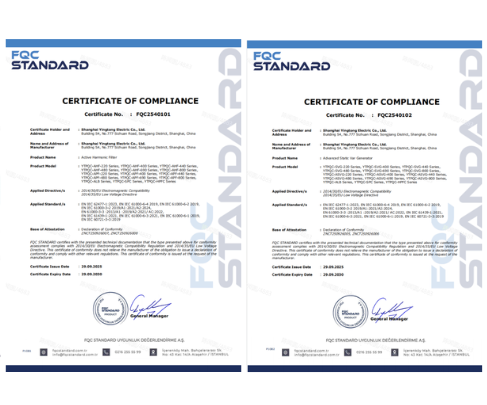
Certificate Documentations in Power Quality Selection: Meaning and Guide A procurement engineer receives an Active Harmonic Filter quotation with a compliance certificate attached. The certificate names a product family, but the quotation specifies another voltage, current rating, enclosure layout, ambient condition, and feeder arrangement. The correct question is not “Does the suppli...
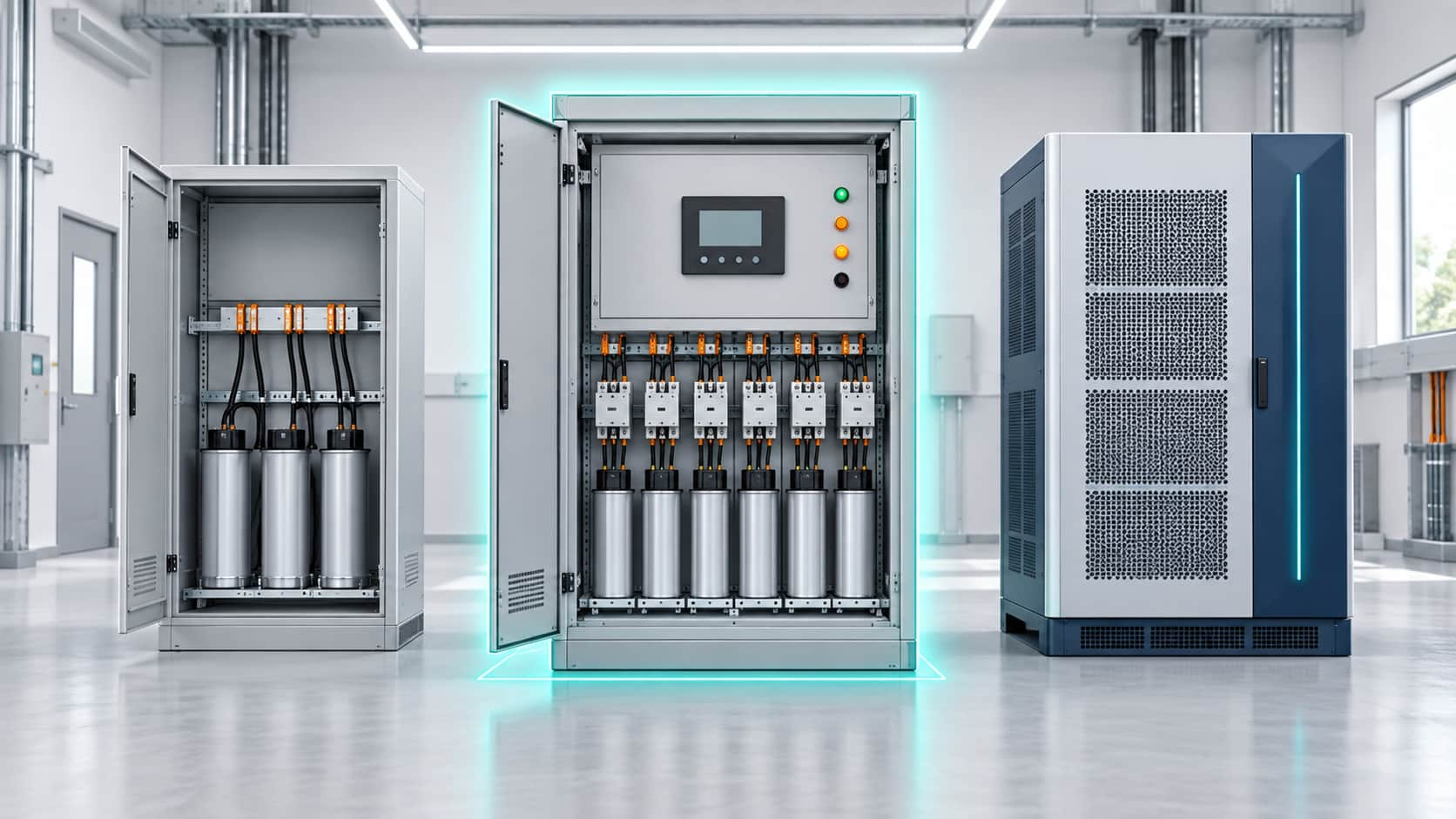
A fixed capacitor bank is often the most economical way to correct power factor — provided the load stays reasonably steady. When motors cycle or production changes by shift, it may overcompensate overnight and undercompensate at peak. An Automatic Power Factor Correction (APFC) panel switches capacitor steps as demand changes; a Static Var Generator (SVG) adjusts reactive power continuously...
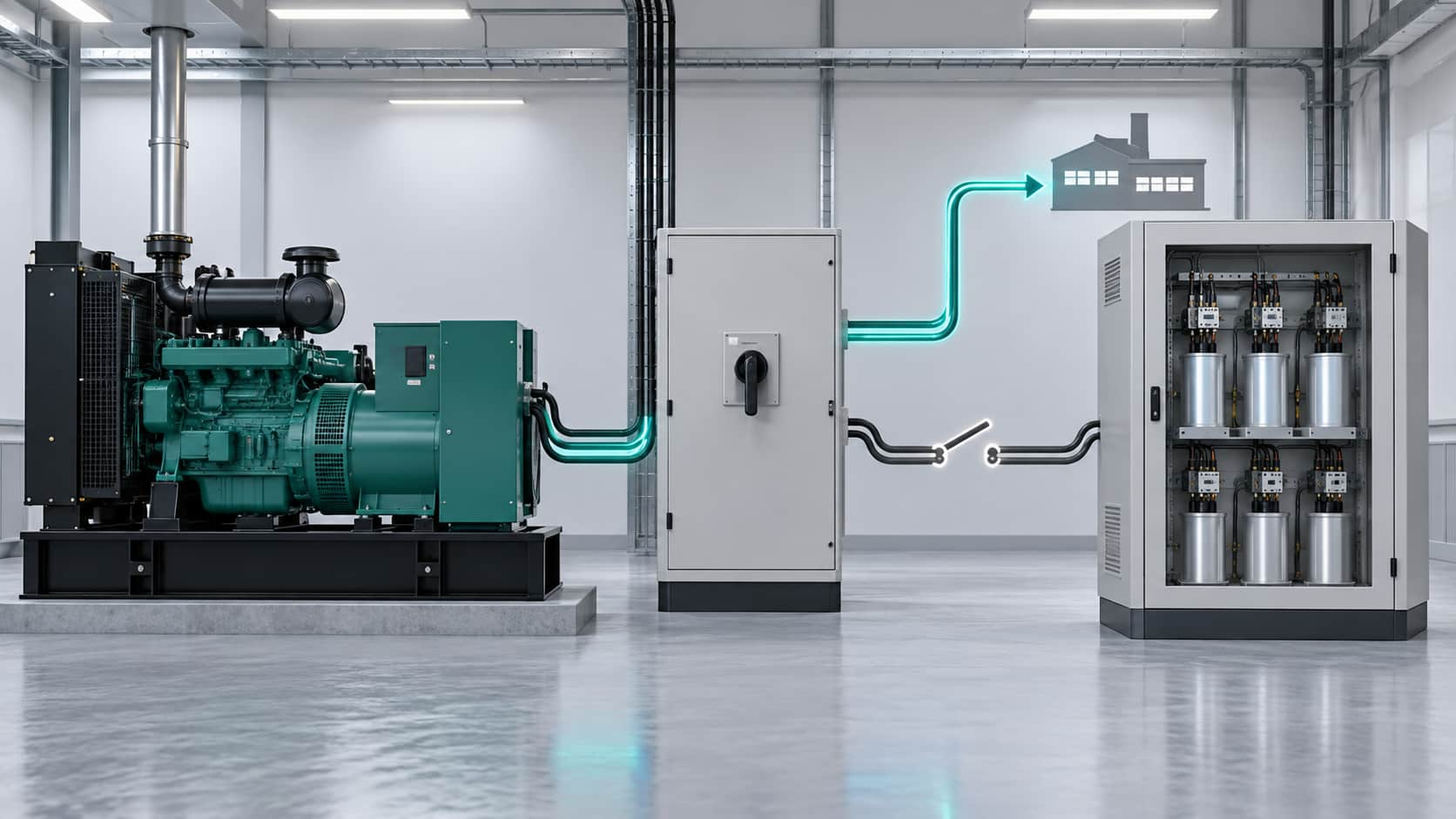
Quick Answer An APFC panel is not simply permitted or forbidden on generator power. Compatibility depends on generator capacity, the power factor of the load that stays online, the size of each load step, harmonic distortion, available short-circuit capacity, governor and excitation response, the generator manufacturer’s limits, and the logic inside the APFC controller. On many standby syste...
High-density data centers, semiconductor fabs, and offshore platforms expose a weakness in many silicon-based active harmonic filters (AHF) and static var generators (SVG): the correction target moves faster than the thermal design. At 20–25.6 kHz, a conventional silicon IGBT converter can correct current distortion, but switching loss, 45°C full-load temperature rise, heatsink volume, a...
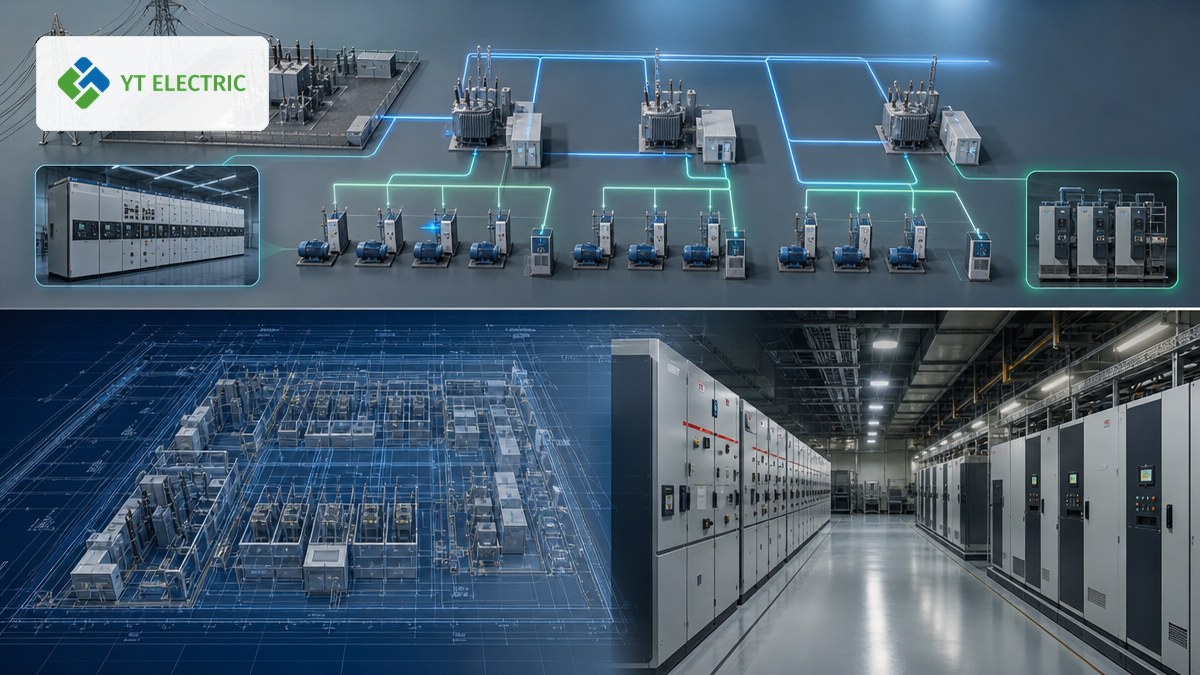
Centralized vs. Distributed Compensation: Strategic AHF and SVG Placement in Multi-Transformer Facilities Quick Engineering Answer: In multi-transformer industrial plants and commercial complexes, choosing between centralized compensation at the main low-voltage switchboard (PCC) and distributed compensation at regional sub-distribution panels depends on transformer loading, cable run lengths, and...
SVG Reactive Power Compensation: Beyond PF Correction For decades, plant electrical engineers and facility managers viewed reactive power compensation through a single, narrow lens: avoiding utility low power factor penalty surcharges. Traditional solutions—primarily fixed capacitor banks and automatic power factor correction (APFC) panels—were designed solely to supply bulk capacitive...
Why Does an APFC Panel Keep Switching? Causes of Capacitor Step Hunting and How to Stop It In commercial buildings, manufacturing plants, and distribution substations, Automatic Power Factor Correction (APFC) panels are deployed to maintain target power factor (typically 0.95 to 0.98 lagging) and avoid costly utility reactive power penalties. An APFC panel relies on a microprocessor-based power fa...
Harmonic Resonance in Data Center UPS Eco-Mode: AHF vs Active Line Conditioning Hyper-scale enterprise data centers and colocation cloud facilities are under relentless pressure to optimize Power Usage Effectiveness (PUE) and reduce megawatt-scale operational electricity costs. To capture energy savings of 2% to 4% across large uninterruptible power supply (UPS) fleets, engineering managers increa...


 English
 français
 Deutsch
 español
 العربية
 中文




 IPv6 network supported

