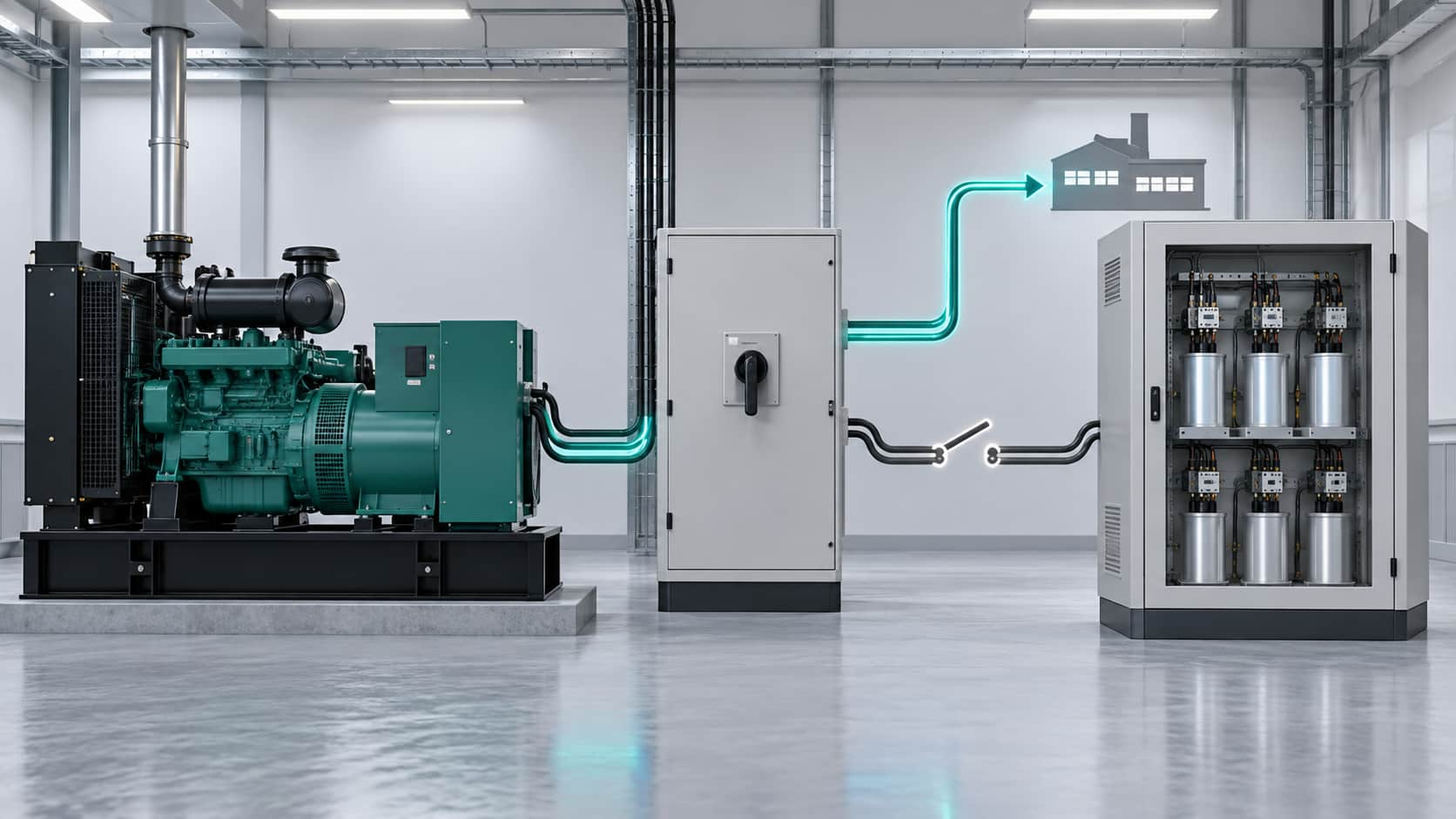
Quick Answer An APFC panel is not simply permitted or forbidden on generator power. Compatibility depends on generator capacity, the power factor of the load that stays online, the size of each load step, harmonic distortion, available short-circuit capacity, governor and excitation response, the generator manufacturer’s limits, and the logic inside the APFC controller. On many standby syste...
SVG Reactive Power Compensation: Beyond PF Correction For decades, plant electrical engineers and facility managers viewed reactive power compensation through a single, narrow lens: avoiding utility low power factor penalty surcharges. Traditional solutions—primarily fixed capacitor banks and automatic power factor correction (APFC) panels—were designed solely to supply bulk capacitive...
Three-Phase Unbalance in Heavy-Duty EV Fleet Depots: Active Load Balancer vs SVG The rapid global electrification of commercial transportation has accelerated the deployment of megawatt-scale electric bus and heavy-duty truck charging depots. A standard fleet charging hub routinely integrates 20 to 60 high-power DC fast chargers (rated at 120 kW to 360 kW each), megawatt-hour energy storage system...
The same capacitor bank that improves power factor during full production can push a facility into leading power factor when the load falls. This overcompensation often appears at night, on weekends, or after large motors stop while capacitors remain connected. A meter may remain close to 1.00, but “leading,” “capacitive,” or the direction of kVAr shows that the syst...
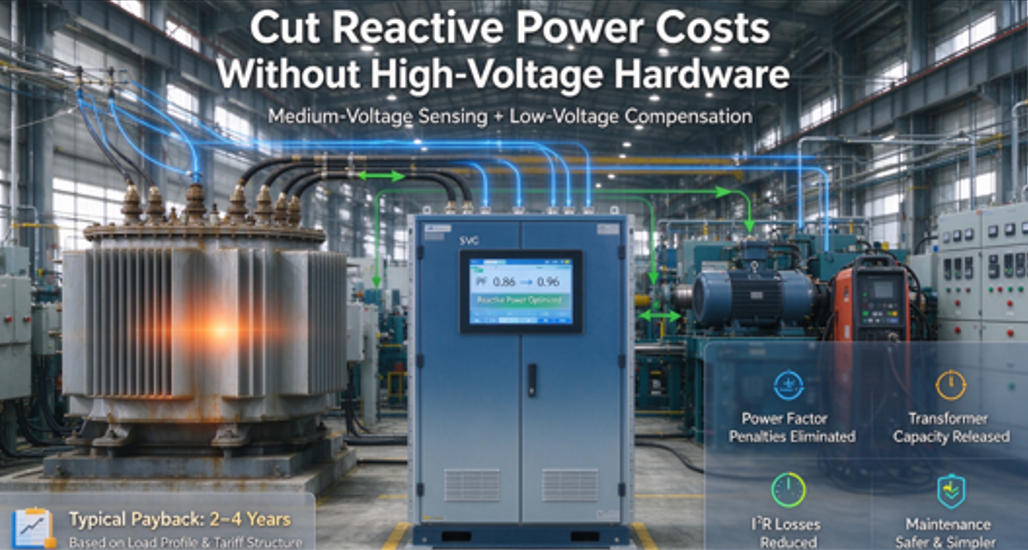
Medium-Voltage Sensing, Low-Voltage SVG Architecture Industrial plants, manufacturing complexes, and large commercial facilities frequently face a challenging power quality engineering dilemma: utility metering occurs on the medium-voltage (MV) intake bus (such as 6.6 kV, 10 kV, 13.8 kV, or 35 kV), while the vast majority of non-linear and inductive loads operate on the low-voltage (LV) 400V, 480V...
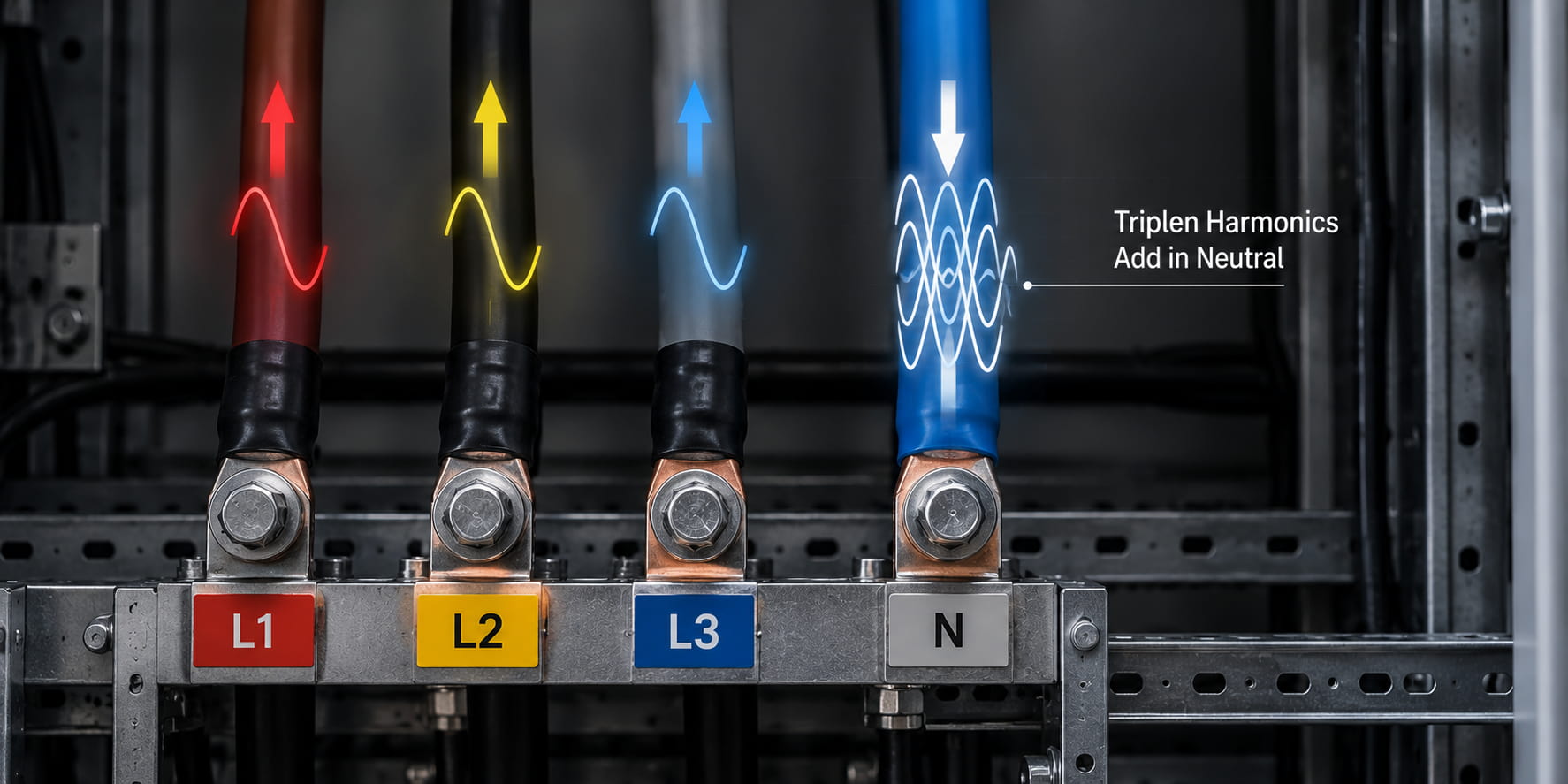
What Causes Neutral Current in Three-Phase Systems? In a theoretically balanced three-phase four-wire (3 ext{P}4 ext{W}) electrical distribution network supplying purely linear loads, phase currents are separated by 120° electrical phase angles, summing vectorially to zero at the star point (I<sub>N</sub> = I_A + I_B + I_C = 0). In modern real-world facilities—such as AI hype...
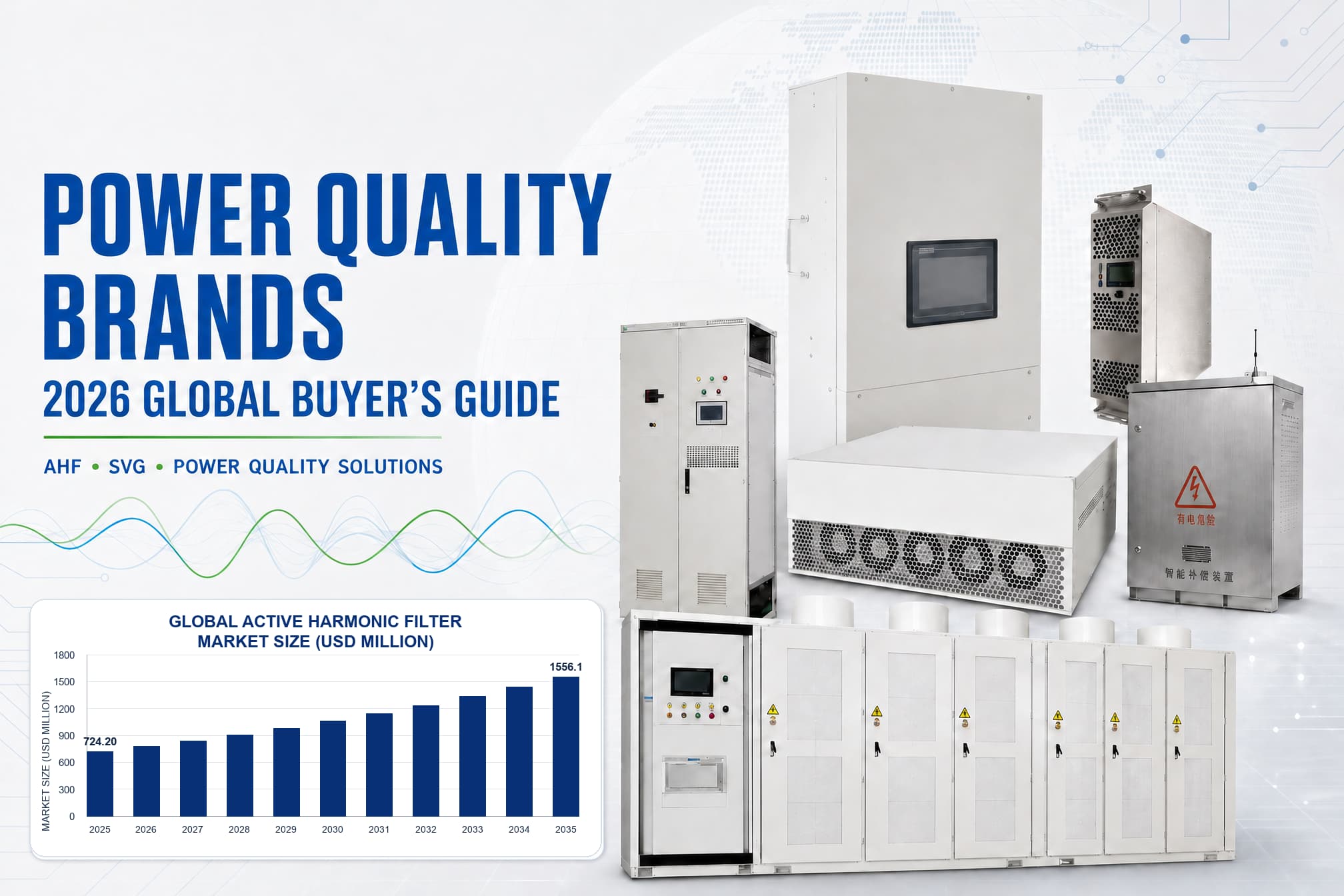
Power Quality Brands: 2026 Global Buyer’s Guide Procuring power quality equipment for mission-critical industrial plants, hyperscale AI data centers, port electrification terminals, and grid-connected renewable substations has evolved from a routine component purchase into a strategic capital investment. In 2026, severe harmonic pollution generated by megawatt-scale non-linear loads, rigid u...
What Causes Voltage Unbalance in Three-Phase Systems: Root Causes, Motor Derating Physics, and Dynamic SVG Mitigation Quick Engineering Answer: Voltage unbalance in three-phase power systems is caused by unequal distribution of single-phase loads, untransposed distribution lines, blown capacitor fuses, and asymmetrical non-linear industrial equipment. According to NEMA MG-1 and IEC 61000-2-4 stand...


 English
 français
 Deutsch
 español
 العربية
 中文






 IPv6 network supported