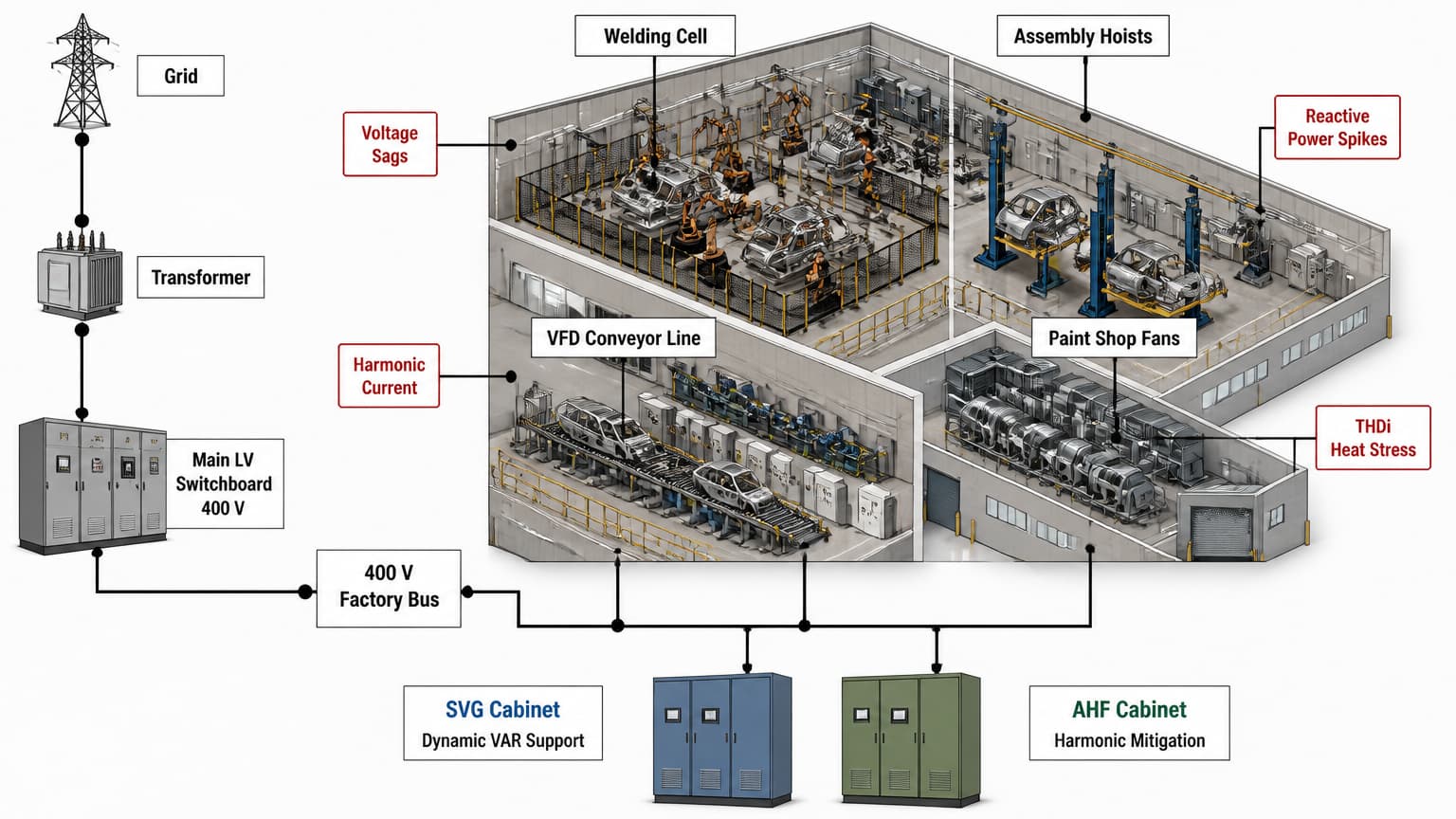
Stop Hidden Power Costs from Automotive Dynamic Loads: Benefits of Power Quality System Upgrade Automotive assembly lines operate with extreme load volatility. High-power lifting equipment and robotic welders demand instantaneous reactive power during startup cycles. Traditional capacitor-based compensation systems fail to track these millisecond-level transients, leading to severe power fa...
SVG for Reactive Power Compensation in Industrial Plants A shovel line that punished the capacitor bank A copper mine in Chile ran an 800 kW electric shovel with 1.2 MW peaks on a 690 V bus. Voltage flicker (Pst) measured 1.6 against the 1.0 limit, and the contactor-switched capacitor bank cycled more than 200 times per day. Contactors failed every seven months, and the site p...
Your UPS (Uninterruptible Power Supply) is supposed to be your safeguard—the insurance policy that keeps your critical operations running when the grid fails. But here's the irony: that very same UPS might be quietly damaging your equipment, inflating your electricity bills, and threatening the stability of your entire electrical system. How? Through harmonic distortion. Let's break dow...
Power Quality in Steel Mills — A Silent Threat to Production Steel manufacturing is one of the most energy-intensive industries in the world. Within a typical steel mill, you will find a diverse range of electrical loads: water pumps circulating cooling systems, medium-frequency induction furnaces for melting, overhead cranes for material handling, LED lighting for workspaces, rolling mills,...
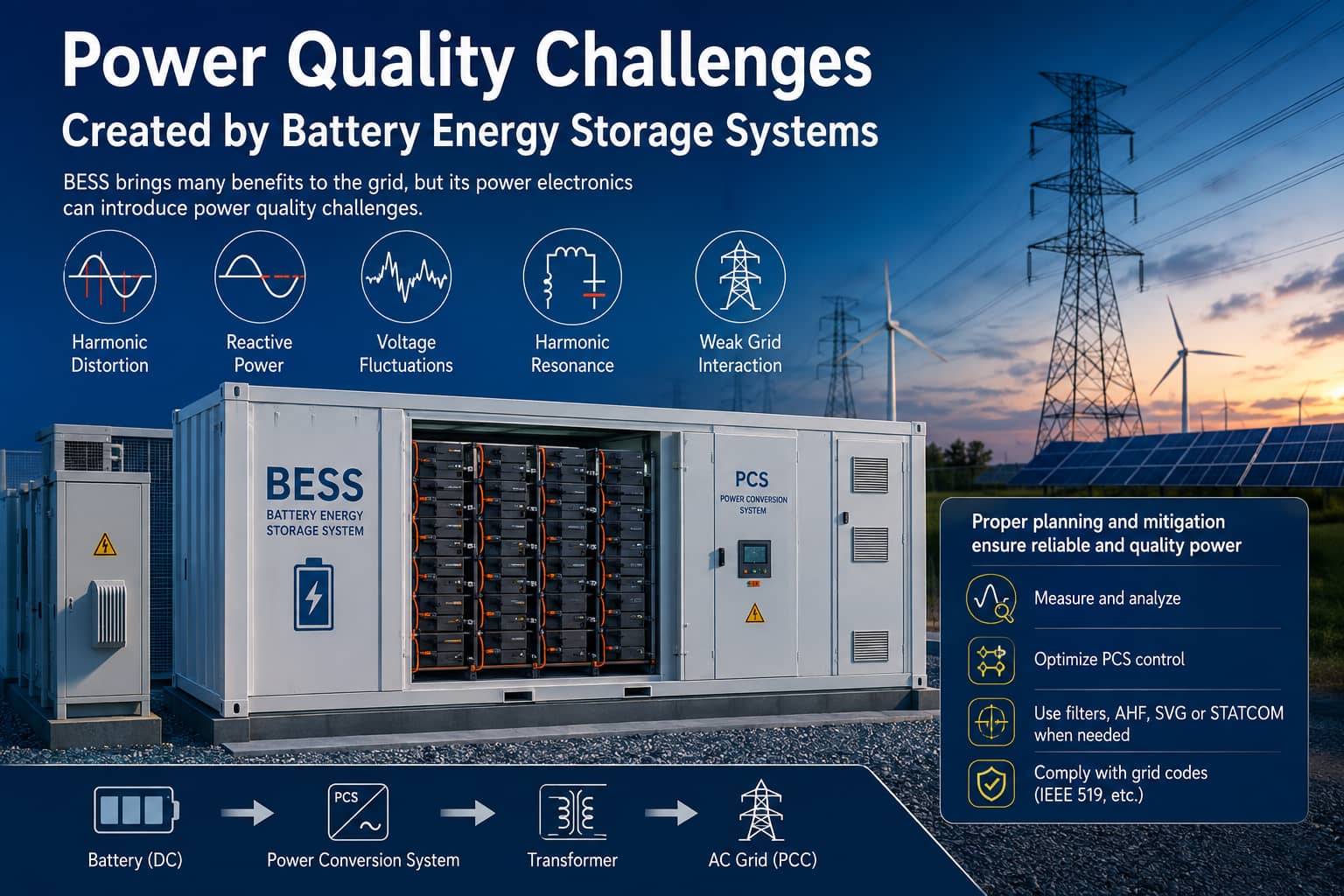
Power Quality Challenges Created by Battery Energy Storage Systems Battery energy storage systems (BESS) are becoming a major part of modern electrical infrastructure. Utilities, renewable energy plants, industrial facilities, data centers and microgrids increasingly use battery storage to manage peak demand, stabilize power supply and integrate renewable energy. However, connecting large battery ...
Walking into a steel melting shop, you feel the raw power. Arc furnaces roar, induction furnaces hum at high frequencies, and the electricity demand is staggering. But behind this impressive industrial might lies a hidden cost – poor power quality that drains profits and threatens equipment. The Real Trouble: Reactive Power and Start-Up Mayhem Electric arc furnaces and medium-frequency induc...
A 120 kW DC fast charger is not a resistive load, and ten of them are not ten kettles. When a highway charging hub starts a batch of charging sessions within the same minute, the transformer, cables and switchgear see a load profile closer to a small welding workshop than a retail site. The consequences—harmonic distortion, reactive power and three-phase imbalance—surface as tripped br...
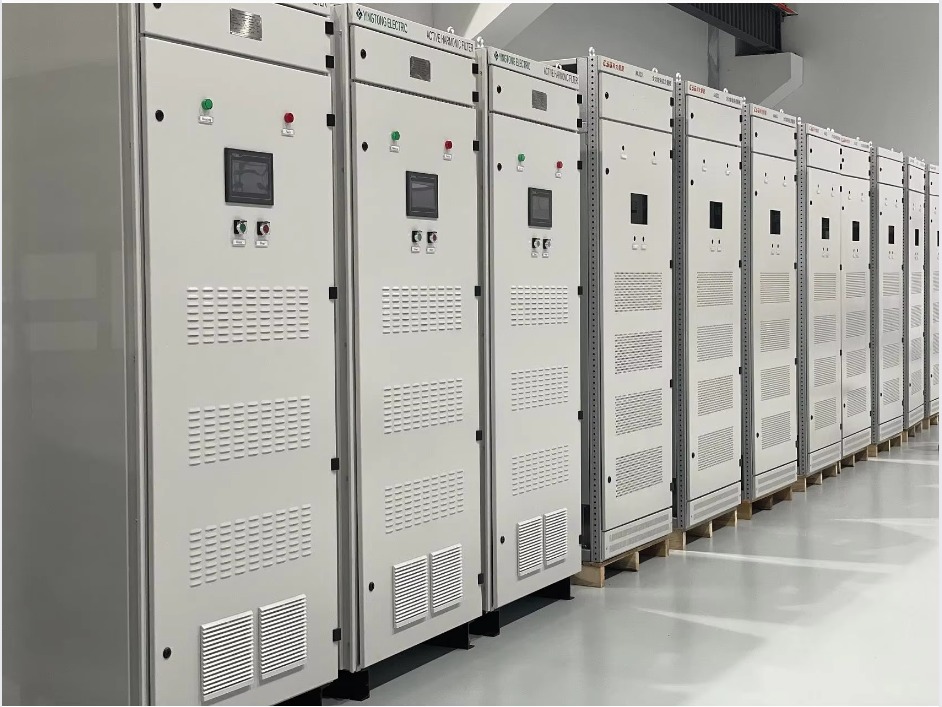
In modern industrial environments, automated manufacturing lines, variable frequency drives (VFDs), dynamic robotics, and heavy inductive loads have placed unprecedented demands on power distribution networks. While investing in power quality equipment is vital to reduce downtime, avoid utility penalties, and improve energy efficiency, selecting the wrong solution can lead to costly equipment fail...


 English
 français
 Deutsch
 español
 العربية
 中文
中文



 IPv6 network supported