Improving Medical Center Power Quality with STATCOM Modern medical centers rely heavily on advanced electrical systems to support life-saving equipment, digital healthcare infrastructure, and uninterrupted patient care. From MRI scanners and CT imaging systems to intensive care units and laboratory automation, every department depends on stable and reliable power. Even a brief voltag...
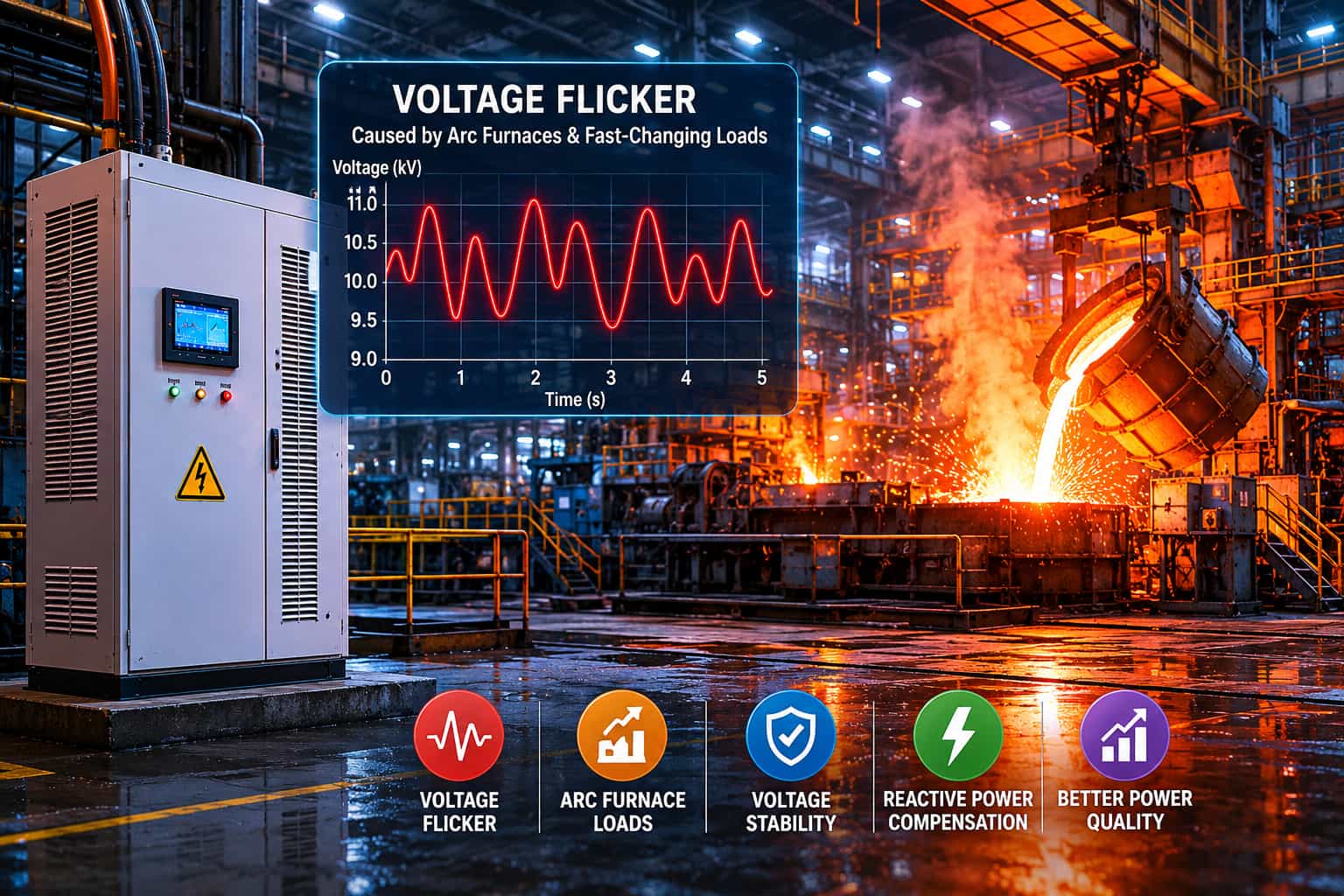
Voltage Flicker in Steel Plants Voltage flicker is a serious power quality problem in steel plants. It is often caused by loads that change quickly. These loads include electric arc furnaces, rolling mills, ladle furnaces, large motors, and heavy equipment. These loads do not draw power smoothly. Their demand changes quickly during melting, rolling, lifting, cutting, and cooling operations. When t...
Waterproof STATCOM Case Study: Reliable Reactive Power in Harsh Environments Modern power systems demand high reliability, stable voltage, and efficient reactive power compensation. In challenging outdoor environments, conventional power quality equipment can face significant operational risks due to moisture, dust, salt spray, and extreme temperatures. This case study examines how a...
STATCOM Solutions for Renewable Energy Grid Stability As renewable energy generation continues to expand worldwide, maintaining grid stability has become a critical challenge for utilities, power system operators, and industrial users. Solar farms, wind power plants, and other renewable energy sources introduce variability and intermittency into the electrical grid, creating voltage fluctuations, ...
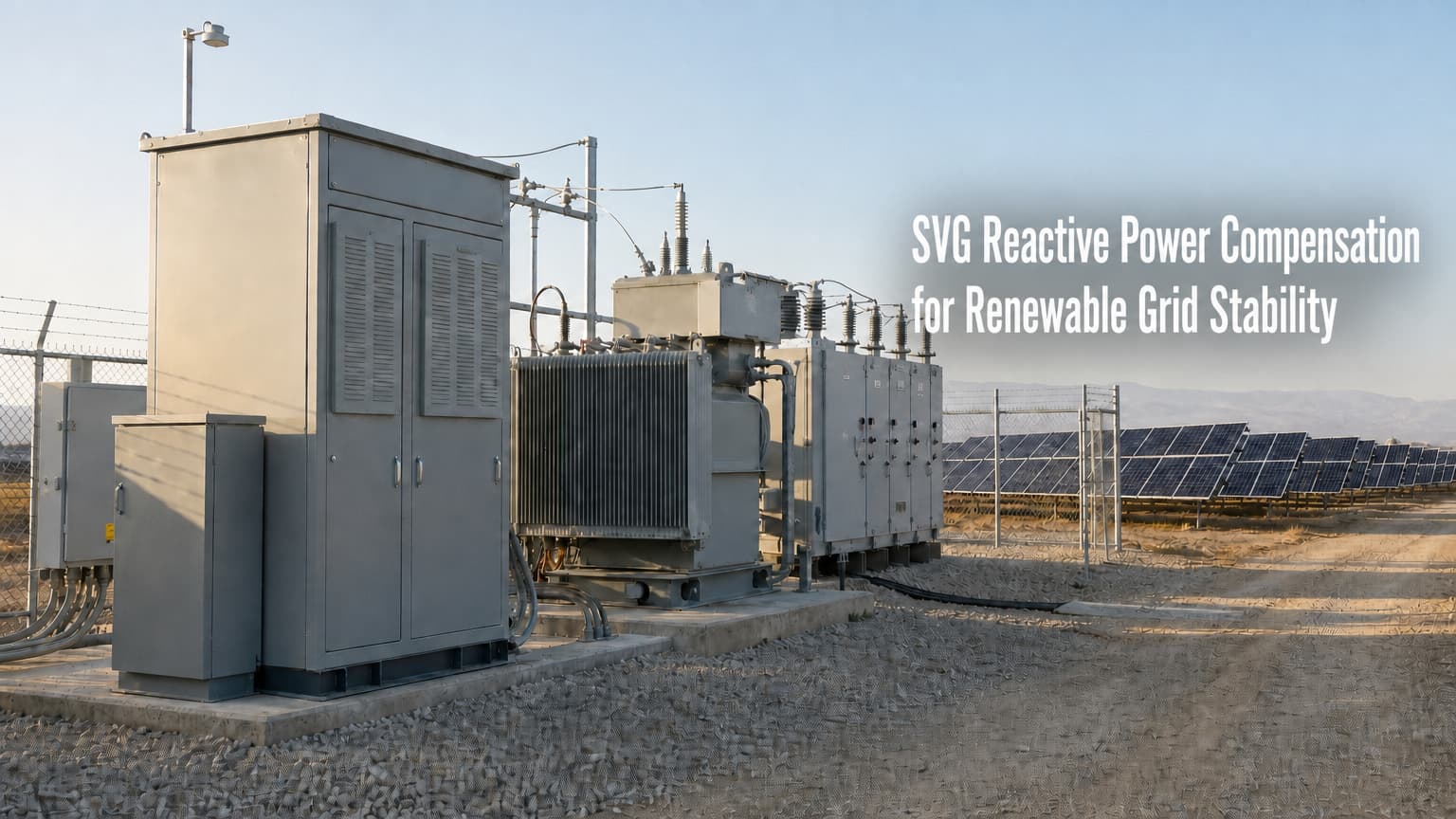
A photovoltaic plant can lose inverter blocks even when irradiance is stable. The immediate trigger is often a point-of-common-coupling (PCC) voltage excursion after cloud movement, feeder switching, or a neighboring motor load change. SVG Reactive Power Compensation addresses that engineering problem by injecting or absorbing reactive current fast enough to support the PCC rather than waiting for...
When a PV plant reaches MW scale, inverter control stops being the same thing as grid code compliance. Compliance is judged at the point of common coupling (PCC), where the utility measures voltage and current quality — not at the inverter terminals. A plant with well-behaved inverters can still fail its connection test for that reason, and a medium-voltage STATCOM is usually the device that...


 English
 français
 Deutsch
 español
 العربية
 中文
中文



 IPv6 network supported