
 English
 français
 Deutsch
 español
 العربية
 中文
中文
Waterproof STATCOM Case Study: Reliable Reactive Power in Harsh Environments
Modern power systems demand high reliability, stable voltage, and efficient reactive power compensation. In challenging outdoor environments, conventional power quality equipment can face significant operational risks due to moisture, dust, salt spray, and extreme temperatures. This case study examines how a Waterproof STATCOM solution helped an industrial facility maintain grid stability and improve power quality in a harsh operating environment.
A Static Synchronous Compensator (STATCOM) is a power electronic device used for dynamic reactive power compensation. It plays a critical role in voltage regulation, power factor correction, and grid stabilization. However, when installed in coastal regions, mining sites, wastewater treatment plants, or outdoor substations, environmental conditions can threaten equipment performance and longevity.
To address these challenges, a waterproof STATCOM was deployed at an industrial manufacturing facility located in a coastal area characterized by high humidity, frequent rainfall, and salt-laden air.
The project aimed to:
Improve power factor
Stabilize voltage fluctuations
Reduce reactive power penalties
Ensure long-term reliability under harsh environmental conditions
The manufacturing plant operated several large motor-driven systems, including compressors, pumps, and production machinery. These inductive loads generated substantial reactive power demand, resulting in:
Power factor below 0.85
Voltage fluctuations during peak operation
Increased utility charges
Higher stress on electrical infrastructure
The facility's location introduced additional challenges:
| Environmental Factor | Impact on Equipment |
|---|---|
| High Humidity | Risk of condensation and corrosion |
| Heavy Rainfall | Water ingress concerns |
| Salt Spray | Accelerated metal deterioration |
| Temperature Variations | Thermal stress on components |
| Dust and Particles | Reduced cooling efficiency |
Traditional capacitor banks had experienced repeated failures due to environmental exposure and could not provide the dynamic compensation required by rapidly changing loads.
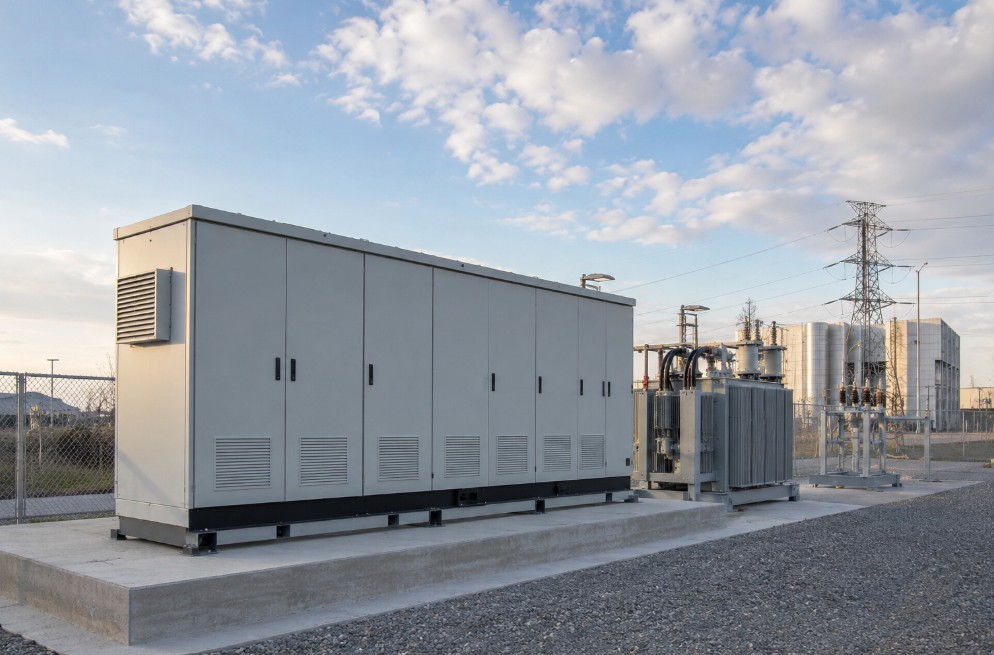
The engineering team selected a Waterproof STATCOM specifically designed for outdoor operation.
Key design features included:
IP65-rated enclosure
Corrosion-resistant coating
Advanced thermal management system
Intelligent digital control platform
Real-time reactive power compensation
Remote monitoring capability
The waterproof enclosure prevented moisture penetration while maintaining adequate cooling for power electronic components.
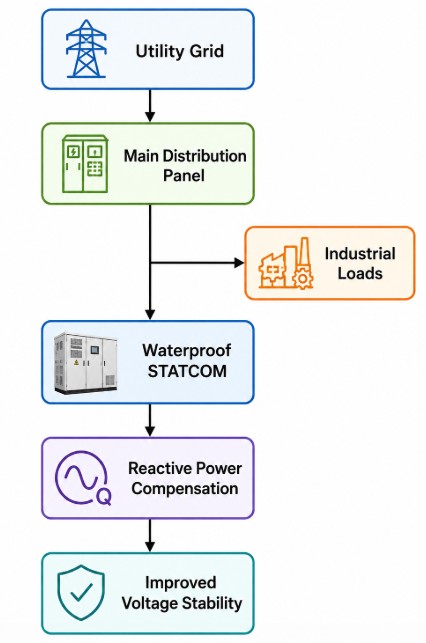
This configuration allowed the STATCOM to continuously monitor grid conditions and inject or absorb reactive power as required.
The installation was completed without major disruption to plant operations.
Site assessment and load analysis
Selection of STATCOM capacity
Foundation and outdoor mounting preparation
Electrical integration with the distribution system
Protection and communication setup
Commissioning and performance testing
Continuous monitoring and optimization
The modular design significantly reduced installation time compared to traditional compensation systems.
After commissioning, the facility monitored electrical performance over a six-month period.
| Performance Indicator | Before Installation | After Installation |
|---|---|---|
| Power Factor | 0.84 | 0.99 |
| Voltage Deviation | ±8% | ±2% |
| Reactive Power Demand | High | Significantly Reduced |
| Utility Penalties | Frequent | Eliminated |
| Equipment Reliability | Moderate | Improved |
| Maintenance Requirements | High | Low |
The waterproof STATCOM delivered continuous compensation despite varying load conditions and challenging weather patterns.
One of the most significant improvements involved voltage regulation.
Prior to installation, large motor starts caused noticeable voltage dips throughout the facility. Sensitive equipment occasionally experienced interruptions, affecting production efficiency.
The STATCOM's fast response capability enabled near-instantaneous reactive power support. As a result:
Voltage fluctuations were minimized
Production equipment operated more consistently
Process interruptions decreased
Overall power quality improved
Unlike conventional capacitor banks, the STATCOM adjusted compensation dynamically according to real-time system requirements.
A primary objective of the project was ensuring long-term operation in a harsh environment.
Over the evaluation period, the waterproof STATCOM successfully withstood:
Seasonal storms
High humidity levels
Salt-air exposure
Continuous outdoor operation
Routine inspections revealed:
No evidence of water ingress
Minimal corrosion
Stable internal temperature performance
Consistent electrical output
The enclosure design and protective coatings played a crucial role in maintaining operational integrity.
Beyond technical improvements, the project generated measurable financial advantages.
| Benefit Category | Impact |
|---|---|
| Utility Penalty Reduction | Significant Savings |
| Reduced Maintenance | Lower Operating Costs |
| Improved Equipment Life | Reduced Replacement Expenses |
| Enhanced Production Stability | Increased Productivity |
| Better Energy Efficiency | Lower Energy Losses |
The facility achieved a favorable return on investment through reduced utility charges and improved operational efficiency.
As industrial facilities increasingly move toward outdoor electrical infrastructure, environmental protection becomes a critical consideration.
A waterproof STATCOM offers several advantages:
Reliable operation in challenging climates
Dynamic reactive power compensation
Fast response to load changes
Enhanced power quality
Lower maintenance requirements
Extended equipment lifespan
Industries that particularly benefit include:
Renewable energy plants
Mining operations
Oil and gas facilities
Water treatment plants
Coastal manufacturing sites
Outdoor substations
Organizations considering a waterproof STATCOM should follow several key recommendations:
Conduct a detailed power quality assessment.
Analyze environmental conditions carefully.
Select an appropriate enclosure protection rating.
Ensure proper ventilation and thermal management.
Implement remote monitoring systems.
Schedule regular preventive inspections.
Work with experienced power quality specialists.
These practices help maximize performance and long-term reliability.
This Waterproof STATCOM case study demonstrates how advanced reactive power compensation technology can deliver reliable performance even in harsh environmental conditions. By combining dynamic voltage support, robust waterproof protection, and intelligent control capabilities, the system significantly improved power factor, enhanced voltage stability, and reduced operational costs.
For industrial facilities operating in coastal, humid, dusty, or outdoor environments, a waterproof STATCOM provides an effective solution for maintaining grid stability while ensuring long-term equipment reliability. As power quality requirements continue to increase, waterproof STATCOM systems will remain a valuable tool for achieving efficient and dependable electrical network performance.



 IPv6 network supported