Why a Solar Plant Needs Active Compensation A Static Var Generator (SVG) is an active, IGBT-based power-electronics compensator that stabilises voltage, supplies or absorbs reactive power and filters harmonic current at the point of common coupling (PCC) of a solar plant. It turns unstable PV output into grid-compliant power for EPC contractors, electrical engineers, procurement teams and power-qu...
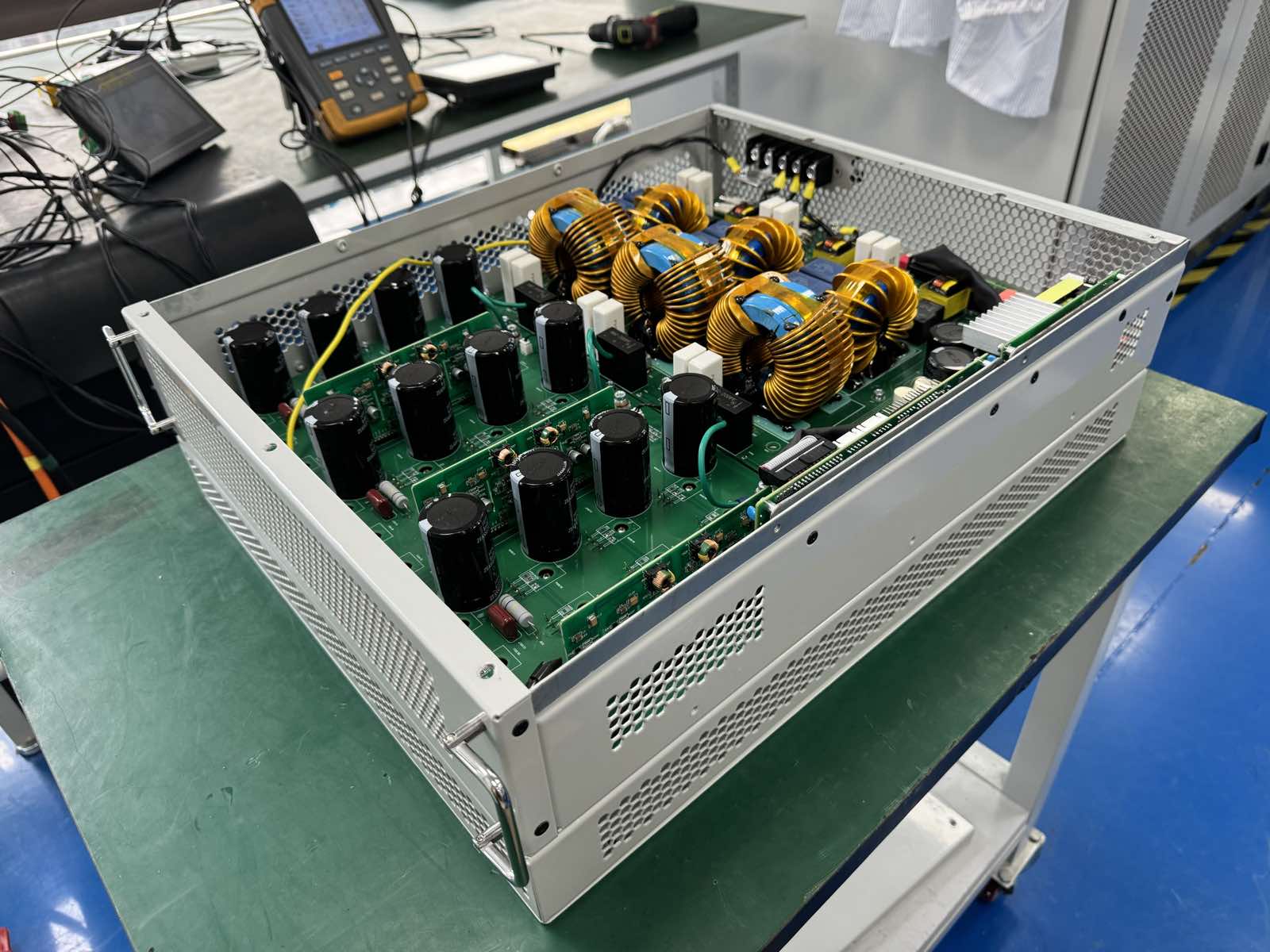
When Power Quality Equipment Must Also Be Quiet A Static Var Generator is normally evaluated by reactive power capacity, response time, power factor control and harmonic compensation. In many installations, the equipment room adds another requirement: the solution must also control noise, dust exposure and maintenance demands. YT Electric’s Fanless Static Var Generator uses natural he...
Power Factor and Reactive Power: The Hidden Cost on Your Electricity Bill Your electricity bill may be higher than it needs to be — not because you use more energy, but because of how you use it. The culprit is power factor, and it's one of the most overlooked opportunities in energy management. Active, Reactive and Apparent Power To understand power factor...
Neutral conductor overheating in a three-phase four-wire system is a zero-sequence problem, so measure harmonic orders first and only then select a filter. A neutral that runs hot while the phases stay comfortably cool is rarely a coincidence. It points to zero-sequence current driven by triplen harmonics, which behaves nothing like a balanced-load calculation predicts. This article follows the or...
SVG sizing for power factor correction cannot be estimated from transformer capacity or a motor nameplate alone. Those figures describe how much load a site could connect, not how much reactive power the load actually exchanges with the supply at the point of common coupling (PCC). A Static Var Generator chosen from nameplate data will either leave the power factor short of target or spend on capa...
Capacitor bank overheating after adding VFDs is a power quality symptom, not a capacitor defect. VFD rectifiers inject harmonic current, the bank offers a low-impedance path at those frequencies, and parallel resonance between the bank and the supply can amplify that current until fuses open, contactors chatter and capacitor cans swell. A capacitor bank supplies reactive power to correct power fac...
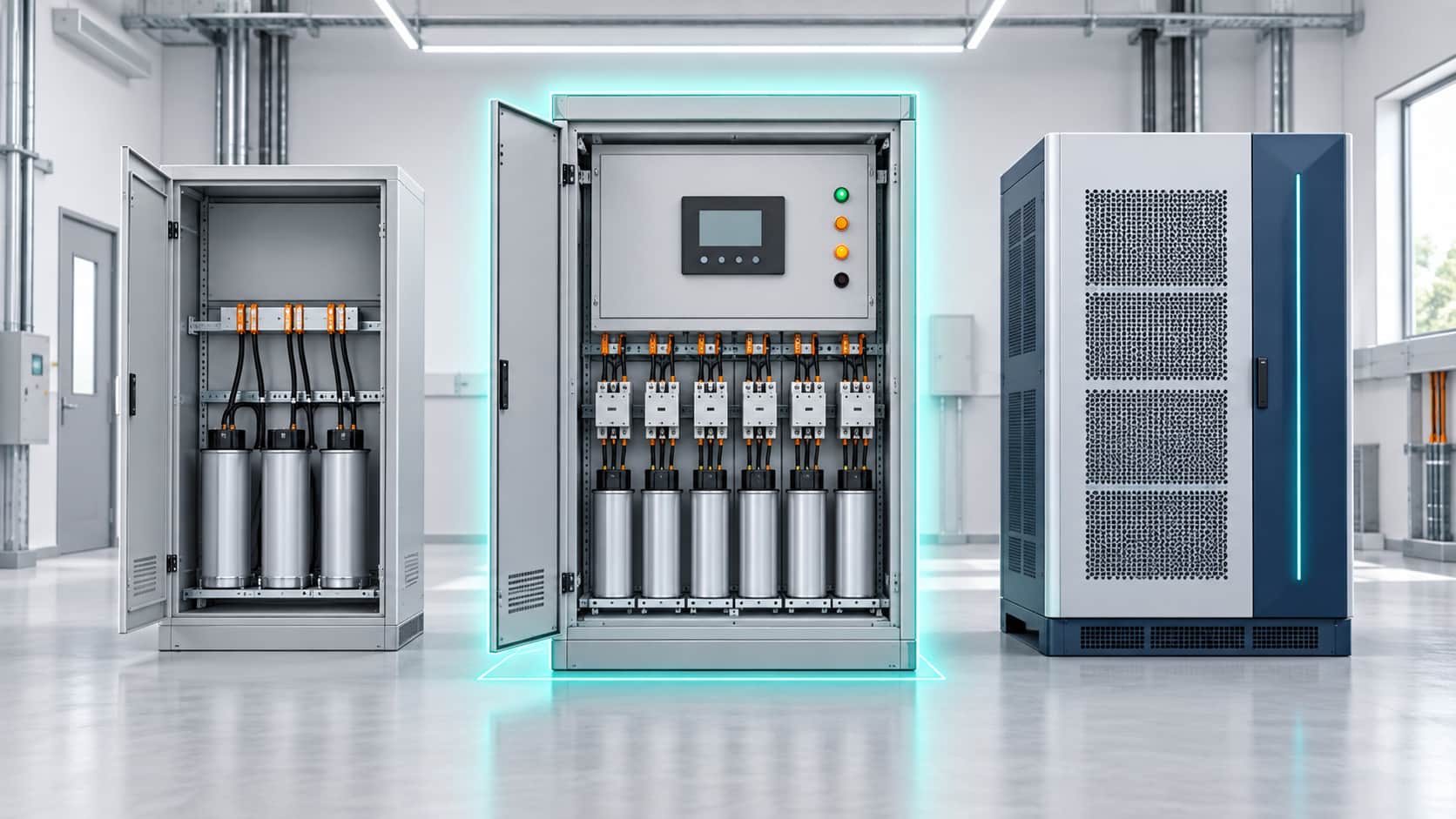
Capacitor Banks vs. Active SVG: Which Power Factor Correction Is Right for You? When your electricity bill suddenly spikes — or your utility sends a power-factor penalty notice — a common fix is to install power factor correction (PFC). For decades, that meant one thing: capacitor banks. Today you have a second, modern option: the Static Var Generator (SVG). Both i...
A fixed capacitor bank is often the most economical way to correct power factor — provided the load stays reasonably steady. When motors cycle or production changes by shift, it may overcompensate overnight and undercompensate at peak. An Automatic Power Factor Correction (APFC) panel switches capacitor steps as demand changes; a Static Var Generator (SVG) adjusts reactive power continuously...


 English
 français
 Deutsch
 español
 العربية
 中文
中文





 IPv6 network supported