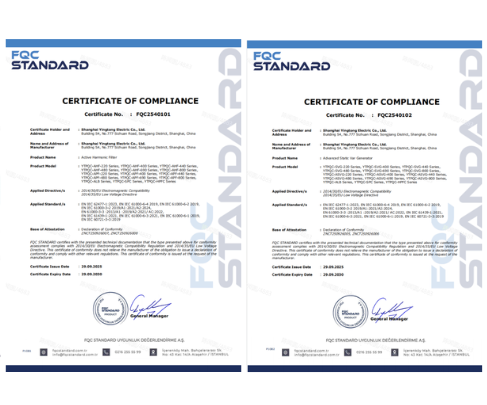
Certificate Documentations in Power Quality Selection: Meaning and Guide A procurement engineer receives an Active Harmonic Filter quotation with a compliance certificate attached. The certificate names a product family, but the quotation specifies another voltage, current rating, enclosure layout, ambient condition, and feeder arrangement. The correct question is not “Does the suppli...
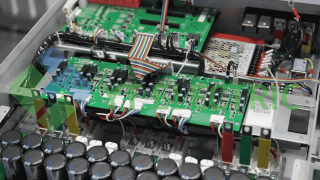
SVG and AHF Components: What Determines Accurate and Long-Term Performance? A 400 V plant may install two power-quality cabinets with the same rated current and expect the same result. Months later, one follows peak load while the other derates, produces more acoustic noise, or leaves compensation error at the point of common coupling (PCC). The difference lies in the sensing chain, ...
High-density data centers, semiconductor fabs, and offshore platforms expose a weakness in many silicon-based active harmonic filters (AHF) and static var generators (SVG): the correction target moves faster than the thermal design. At 20–25.6 kHz, a conventional silicon IGBT converter can correct current distortion, but switching loss, 45°C full-load temperature rise, heatsink volume, a...
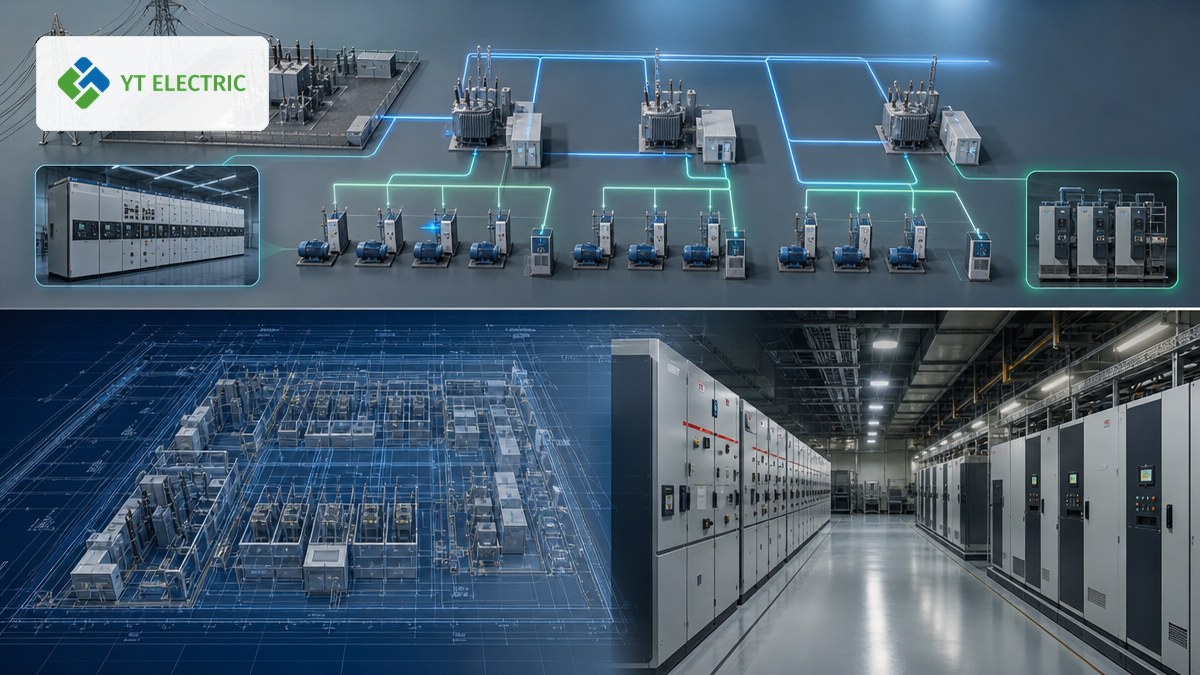
Centralized vs. Distributed Compensation: Strategic AHF and SVG Placement in Multi-Transformer Facilities Quick Engineering Answer: In multi-transformer industrial plants and commercial complexes, choosing between centralized compensation at the main low-voltage switchboard (PCC) and distributed compensation at regional sub-distribution panels depends on transformer loading, cable run lengths, and...
SVG Reactive Power Compensation: Beyond PF Correction For decades, plant electrical engineers and facility managers viewed reactive power compensation through a single, narrow lens: avoiding utility low power factor penalty surcharges. Traditional solutions—primarily fixed capacitor banks and automatic power factor correction (APFC) panels—were designed solely to supply bulk capacitive...
Harmonic Resonance in Data Center UPS Eco-Mode: AHF vs Active Line Conditioning Hyper-scale enterprise data centers and colocation cloud facilities are under relentless pressure to optimize Power Usage Effectiveness (PUE) and reduce megawatt-scale operational electricity costs. To capture energy savings of 2% to 4% across large uninterruptible power supply (UPS) fleets, engineering managers increa...
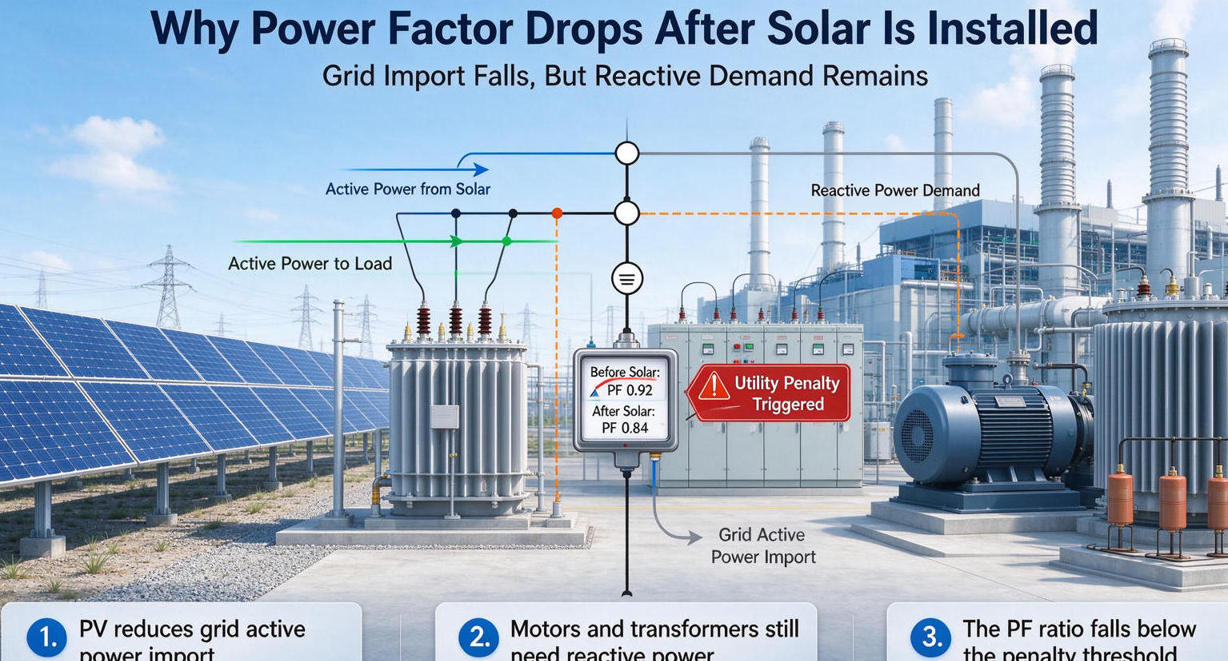
Solar Farm Power Factor Penalties: How SVG Stops Grid Fees Utility-scale and distributed solar photovoltaic (PV) plant operators worldwide face escalating monthly utility penalties for power factor (PF) non-compliance at the Point of Common Coupling (PCC). While solar farm developers engineer their systems for maximum active power generation during peak irradiance, grid codes such as IEEE 1547, IE...
APF in Automotive Manufacturing: Where Harmonics Come From, What They Cost, and How to Mitigate Them In high-throughput automotive manufacturing plants, electrical power reliability directly dictates production output and vehicle yield. An assembly plant does not suffer from a single, uniform harmonic problem—it contends with three fundamentally distinct harmonic generation profiles across i...


 English
 français
 Deutsch
 español
 العربية
 中文




 IPv6 network supported

