Why Capacitors Are the Preferred Choice for Reactive Power Compensation When it comes to low-voltage reactive power compensation, the conversation usually narrows down to two options: capacitor banks and Static Var Generators. Ask around, and you’ll likely hear one common reason why capacitors remain popular:“They’re cheaper.” That’s true—but the real answer goe...
Microinverters vs. String Inverters: The Future of Solar Panel Power Conversion In the rapidly evolving solar industry, the debate between microinverters and string inverters has become one of the most discussed topics among engineers, installers, and homeowners alike. Both technologies have the same core purpose—converting DC (direct current) from solar panels into usable AC (...
Why Solar Pumping Systems Need SVG for Stable Farm Power Solar pumping systems are becoming more common in agriculture. Farms use them for irrigation, livestock water supply, greenhouse support, and remote water management. They reduce dependence on diesel and help lower long-term operating cost. Many farms are now adopting renewable energies and expanding solar installations to reduce dies...
Why Your Traditional Capacitor Bank Fails to CompensateReactive Power In power systems, reactive power compensation is key to keeping grids stable and using electricity efficiently. Many businesses use traditional capacitor banks for compensation, only to find they don’t work well in real operation. This article explains simply why standard capacitor banks often fail to compensate reactive p...
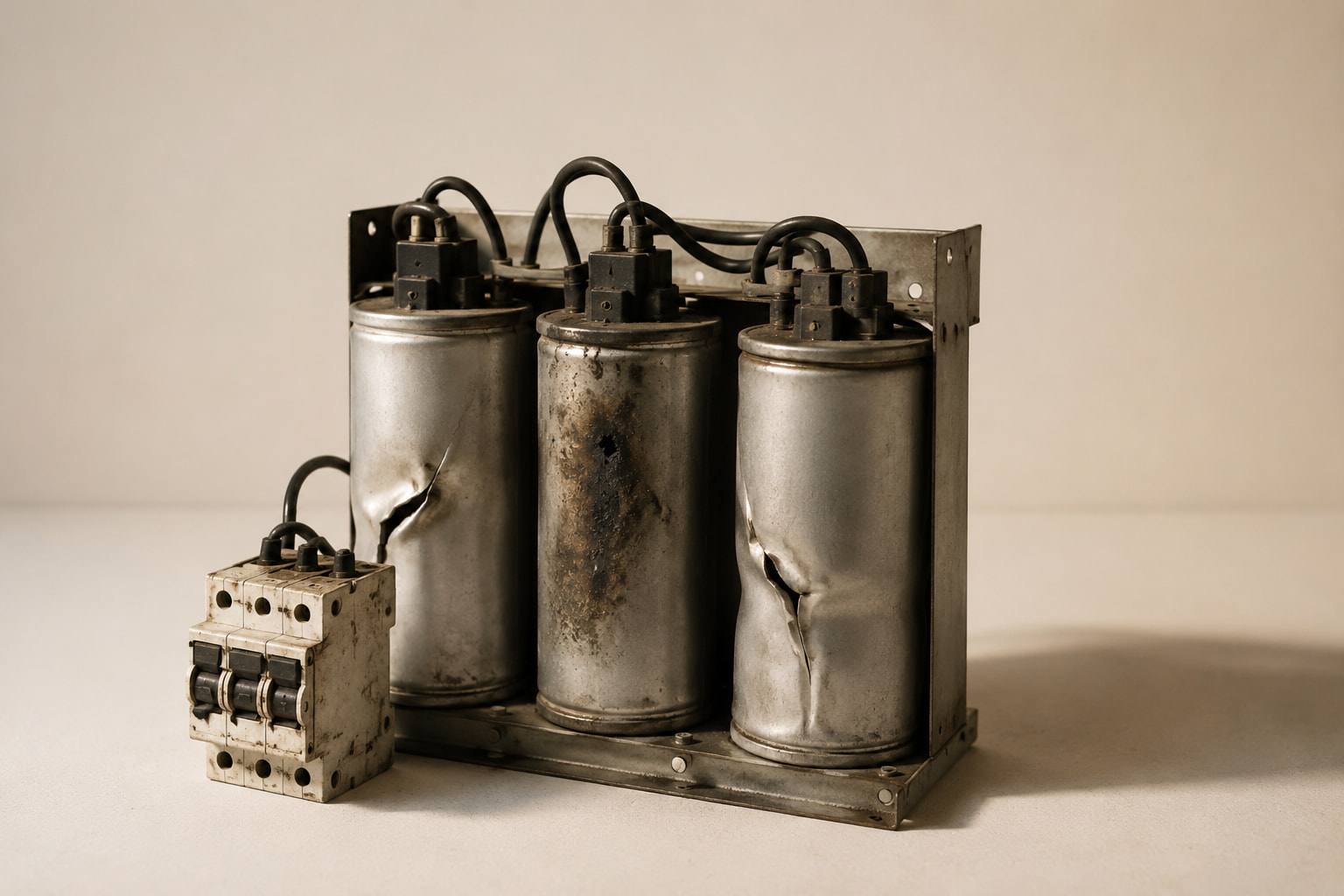
Capacitor Bank Failure from Harmonic Distortion Capacitor bank failure is a common problem in modern industrial power systems. Many facilities install capacitor banks for power factor correction, but the equipment still overheats, trips, or fails early. The main cause is often harmonic distortion. Capacitor bank failure from harmonic distortion happens when nonlinear loads create distorted current...
Capacitor bank overheating is a common problem in modern electrical systems. Many facilities install capacitor banks for power factor correction, but the capacitor bank still runs hot, trips, or fails early. In many cases, capacitor bank overheating is caused by harmonic distortion. Harmonic distortion puts extra electrical stress on the capacitor bank. A capacitor bank is designed to supply react...
Installing a capacitor bank should improve power factor, reduce reactive power demand and release capacity in transformers and cables. However, some facilities find that their power factor remains below the utility target even after the capacitor bank has been commissioned. This does not necessarily mean the capacitor bank is defective. The cause may be incorrect sizing, changing loads, harmonic d...
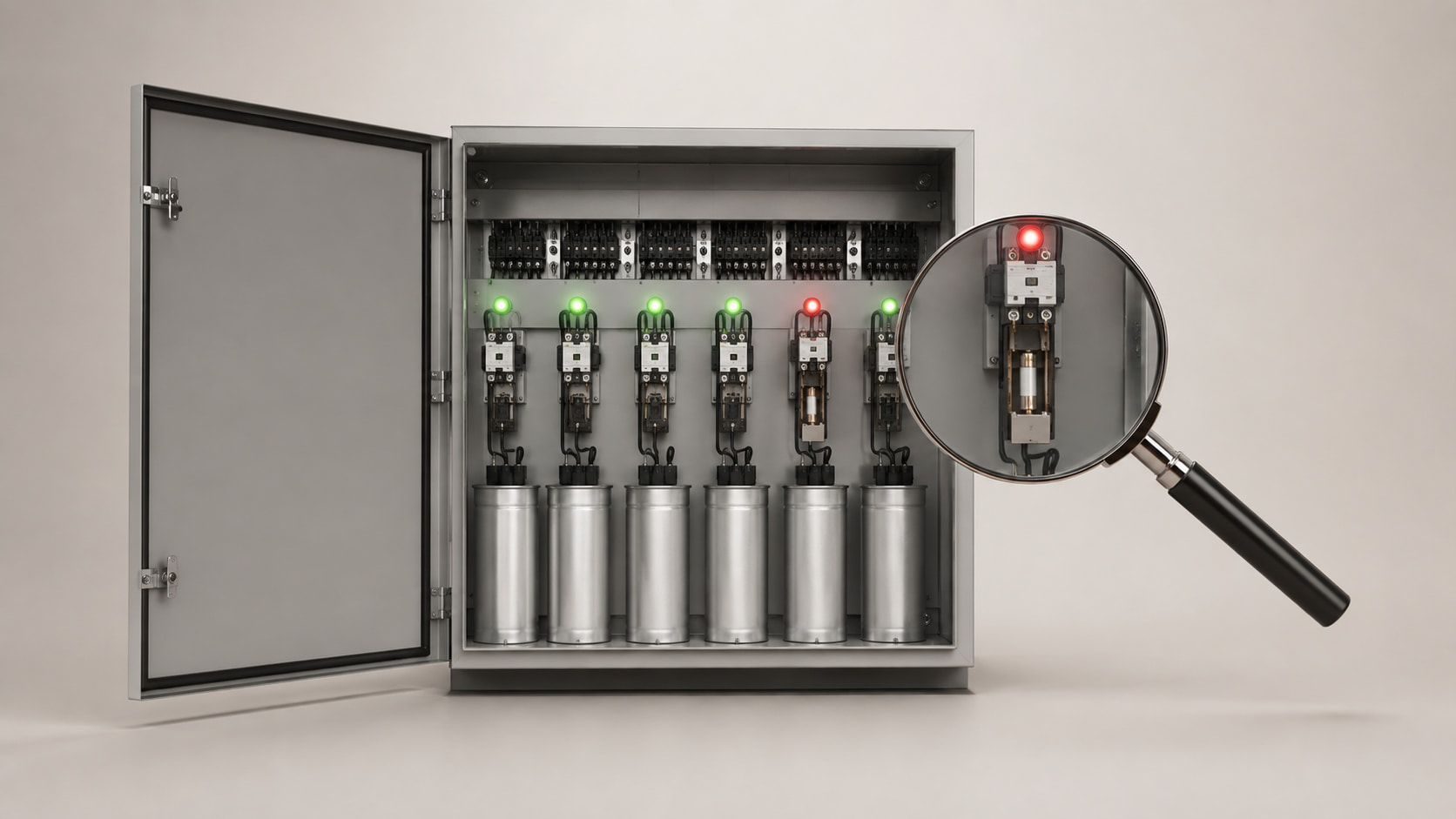
APFC Panel Troubleshooting: 7 Common Faults and How to Fix Them An automatic power factor correction panel may begin switching incorrectly, miss its target or repeatedly trip capacitor stages. A newly commissioned APFC panel can also fail from its first day. The cause is not always a defective capacitor. CT installation, controller settings, harmonics, switching components and changing load...


 English
 français
 Deutsch
 español
 العربية
 中文
中文




 IPv6 network supported