Why Dynamic Reactive Power Compensation is Mandatory on Utility-Scale Solar PV Farms: Grid Interconnection Engineering Guide Quick Engineering Answer: Dynamic reactive power compensation is mandatory on utility-scale solar photovoltaic (PV) farms to satisfy stringent utility grid interconnection codes (such as IEEE 2800, IEEE 1547, and ENTSO-E). Intermittent cloud cover creates rapid active power ...
kVAr and Amps in power quality Reactive Power (kVAR) Reactive power, measured in kilovolt-amperes reactive (kVAR), is the component of alternating current (AC) power that does not perform any actual work but is necessary for maintaining the voltage levels required for the active (real) power to do useful work. It is associated with the energy storage in inductive and capacitive elements of the pow...
Neutral Current and Single-Phase Loads Neutral current is an essential aspect to consider in electrical systems, especially when dealing with single-phase loads in a three-phase system. The presence of single-phase loads can lead to various issues related to N line current, impacting the overall power quality and safety of the system. Understanding N line Current in Systems with Single-Phase Loads...
How to calculate THD and PF? Total Harmonic Distortion (THD) Analysis and Power Factor Evaluation Within this discussion, we'll explore methodologies for gauging total harmonic distortion alongside computations for power factor. Total Harmonic Distortion (THD) is a metric reflecting the amalgamation of harmonic frequencies juxtaposed against the primary frequency—such as 60Hz—on...
Overview As regulatory authorities impose ever-stricter requirements for power quality, utilities increasingly want to know which customer is imposing harmonics and flicker on the utility power system. As a result, we are often asked if we can determine the “direction” of harmonic power flow, and what can be done about flicker. Harmonic Power Flow Harmonics, like fundamental frequencie...
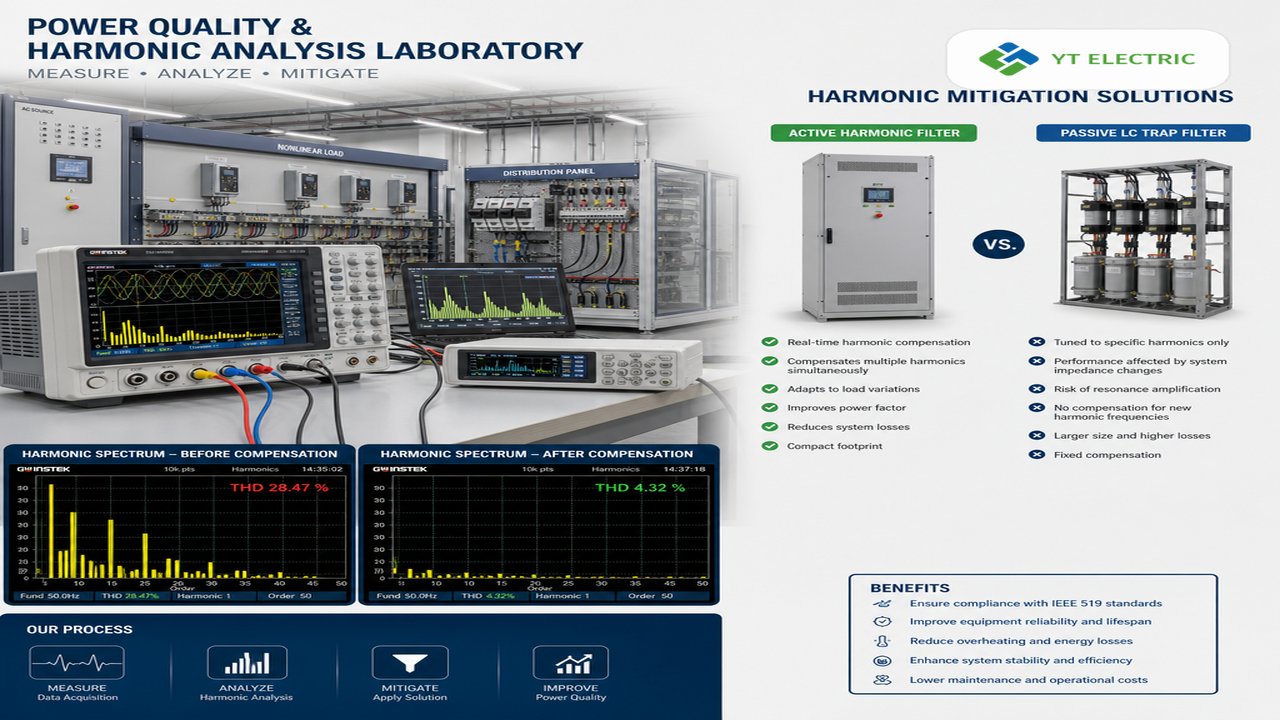
How Harmonics Form, Spread, and Clean Up in Non-Linear Loads 1. Introduction The industrial revolution changed life with technology, notably electrical power globally distributed by utilities. Today, power quality is essential for constant equipment operation, demanding glitch-free, stable power for domestic and industrial users. Utilities mandate high-quality equipment to prevent system power iss...
What is Harmonic Mitigating Transformers? Harmonic Mitigating Transformers (HMTs) are specialized electrical devices designed to reduce energy wastage by minimizing losses caused by harmonic distortions. They achieve this through several mechanisms: 1. Triplen Harmonic Cancellation: By cancelling out zero phase sequence harmonic fluxes, HMTs prevent triplen harmonic currents from circulatin...


 English
 français
 Deutsch
 español
 العربية
 中文




 IPv6 network supported