Electricity is a big part of our day, powering all the tech we use. There are two main types of electricity users, or "loads," called linear and non-linear. This just means they use electricity from the power supply in different ways. This distinction affects everything from power efficiency to the longevity of devices. Categories of Electrical Loads: · Inductive Loads: Characterized b...
How Harmonics Form, Spread, and Clean Up in Non-Linear Loads 1. Introduction The industrial revolution changed life with technology, notably electrical power globally distributed by utilities. Today, power quality is essential for constant equipment operation, demanding glitch-free, stable power for domestic and industrial users. Utilities mandate high-quality equipment to prevent system power iss...
As cities globally grapple with mounting waste volumes, incineration power generation offers a dual solution—waste reduction and clean energy. Yet, the complex electrical loads from machinery like carding systems, needle acupuncture units, and non-woven ovens introduce disruptive harmonics that undermine efficiency. These distortions manifest as overheated transformers, melted fuses, and pre...
I. Why Are Non-Linear Loads So Ubiquitous in Our Daily Lives? The fundamental reason is technological advancement and our relentless pursuit of efficiency and control. The core of non-linear loads is various power electronic devices that precisely control electrical energy through rapid switching. Here are the specific reasons for their ubiquity: Demand for Energy Savings and Efficiency:...
Active Harmonic Filter vs Passive Harmonic Filter Modern facilities depend on equipment that improves efficiency and control, but that same equipment often creates serious power quality problems. In an industrial power system, nonlinear loads such as variable frequency drive units, rectifiers, UPS systems, welders, and switched-mode power supplies can generate harmonic distortion. Once harm...
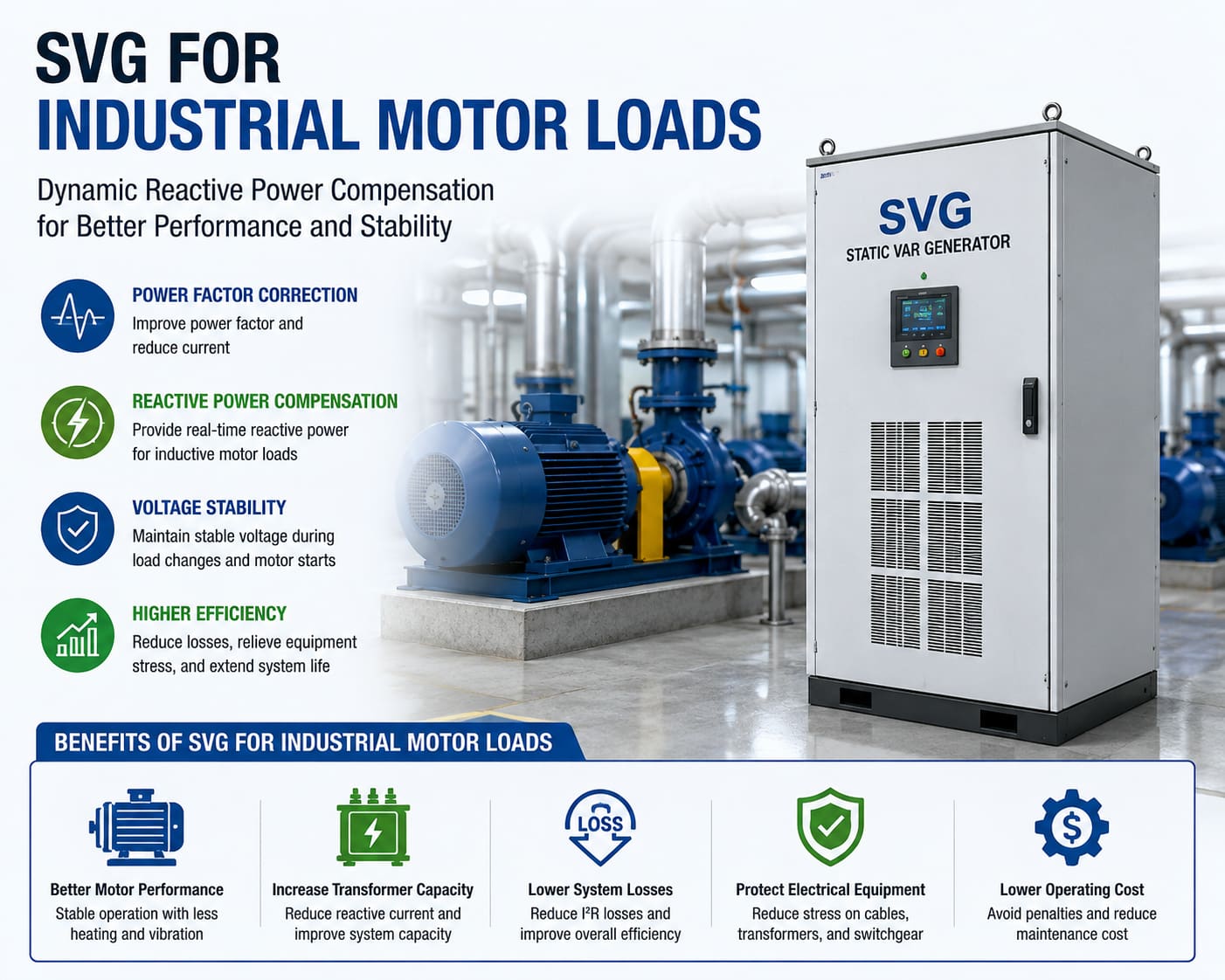
SVG for Industrial Motor Loads Motor loads are common in factories, mines, water treatment plants, commercial buildings, and pumping systems. These loads are reliable and useful, but they also create reactive power demand. When reactive power is not controlled, the system may face poor power factor, higher current, voltage instability, and extra stress on electrical equipment. This is why S...
Capacitor bank overheating is a common problem in modern electrical systems. Many facilities install capacitor banks for power factor correction, but the capacitor bank still runs hot, trips, or fails early. In many cases, capacitor bank overheating is caused by harmonic distortion. Harmonic distortion puts extra electrical stress on the capacitor bank. A capacitor bank is designed to supply react...
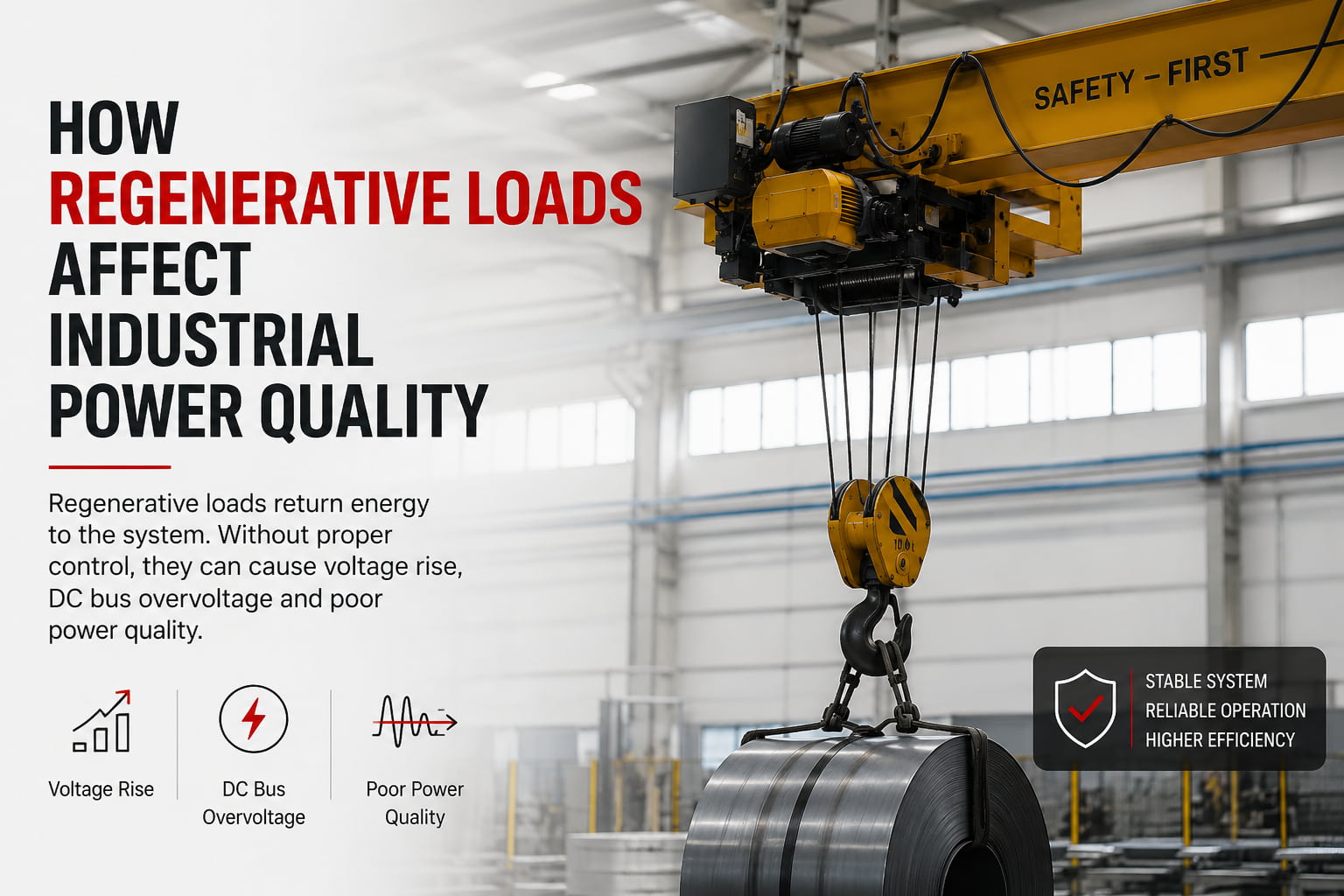
How Regenerative Loads Affect Industrial Power Quality Regenerative loads are common in modern industrial systems. They appear when a motor changes from consuming power to returning power.This often happens during braking, lowering, deceleration, or rapid speed changes.Cranes, hoists, elevators, rolling mills, centrifuges, test benches, and conveyor systems can all create regenerative loads.These ...


 English
 français
 Deutsch
 español
 العربية
 中文
中文



 IPv6 network supported