

 English
 français
 Deutsch
 español
 العربية
 中文
中文
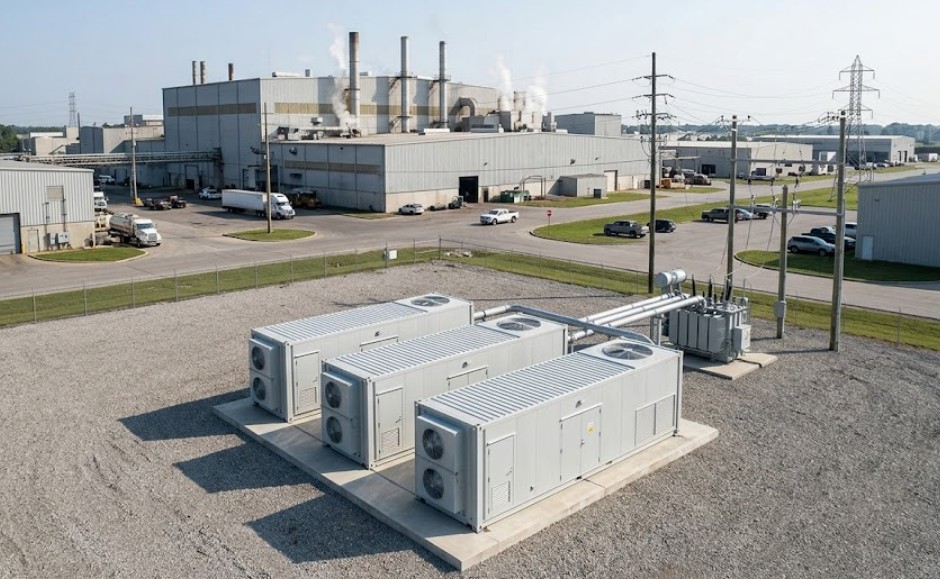
Industrial welding plants face unique power quality challenges due to the high-frequency, intermittent nature of welding loads. These loads cause rapid voltage fluctuations and harmonic distortion. Implementing a Medium Voltage STATCOM (Static Synchronous Compensator) is the most effective way to stabilize the grid and ensure operational continuity.
Welding processes require massive amounts of reactive power in short bursts. This demand leads to significant voltage drops and flicker, which can disrupt sensitive control electronics and neighboring equipment. Traditional capacitor banks are often too slow to react to these microsecond changes.
The Medium Voltage STATCOM uses high-speed Insulated Gate Bipolar Transistors (IGBTs) to provide instantaneous reactive power compensation. By switching at high frequencies, the system can inject or absorb reactive power to maintain a constant voltage profile. This proactive approach prevents equipment downtime and extends the lifespan of industrial machinery.
The following table illustrates the performance differences between traditional compensation methods and the modern STATCOM solution in a typical welding plant environment.
| Feature | Passive Capacitor Banks | SVC (Static Var Compensator) | MV STATCOM |
| Response Time | Slow (>20ms) | Moderate (5-10ms) | Fast (<1ms) |
| Harmonic Filtering | Minimal/Fixed | Moderate | High/Active |
| Footprint | Large | Medium | Compact |
| Low Voltage Performance | Poor (proportional to $V^2$) | Moderate | Excellent (current source) |
Grid stability is measured by the consistency of the voltage magnitude. In a welding plant, the rapid cycling of robotic welders creates "flicker," which is perceived as a rapid oscillation in the power supply. A STATCOM mitigates this by acting as a dynamic voltage source.
When the voltage drops during a weld cycle, the STATCOM provides capacitive current to boost the level. Conversely, if the voltage rises, it absorbs inductive current. Because it is a voltage-source converter, the STATCOM can provide full reactive current even when the system voltage is significantly depressed, a feat that passive systems cannot achieve.
Beyond simple compliance with utility regulations, the installation of an MV STATCOM offers tangible economic benefits. Reducing harmonic content lowers the heat generated in transformers and cabling, which reduces energy losses and prevents premature insulation failure.
Furthermore, the stabilization of the local grid improves the "arc start" consistency of welding machines. This leads to higher-quality welds and reduced scrap rates. The compact design of modern STATCOM units allows for easy integration into existing electrical rooms without requiring massive structural changes.
Safety is paramount when deploying medium voltage equipment. Modern STATCOM units feature advanced protection logic, including overcurrent, overvoltage, and thermal monitoring. They are typically housed in NEMA 3R or higher-rated enclosures to withstand the dust and heat of an industrial plant.
During commissioning, the control algorithms are tuned to the specific impedance of the plant’s grid connection. This ensures that the STATCOM does not resonate with other equipment. The result is a robust, "set-and-forget" solution that provides long-term reliability for high-demand industrial applications.



 IPv6 network supported