Dynamic Voltage Restorer: The Guardian of Power Systems In modern industrial and commercial applications, maintaining power quality is crucial for the reliable operation of sensitive equipment. One of the major challenges in power quality is voltage sags and dips, which can disrupt operations and cause equipment malfunction. Enter the Dynamic Voltage Restorer (DVR) – a critical piece of equi...
Static Var Generator (SVG) and Energy Saver are both technologies aimed at improving the efficiency of electrical systems, but they work in different ways. However, when used together, they contribute to significant energy savings and improved power quality. Here’s how each operates and how they complement each other: 1. Static Var Generator (SVG) · An SVG or ASVG is a ...
Hybrid Harmonic Mitigation Architecture: Combining Tuned Passive LC Traps with Active Power Filters for Heavy Industrial Facilities Quick Engineering Answer: In heavy industrial facilities with massive harmonic distortion (e.g., steel rolling mills, induction melting furnaces, and chemical electrolysis plants requiring > 2,000 A of harmonic compensation), deploying a Hybrid Harmonic Mitigation ...
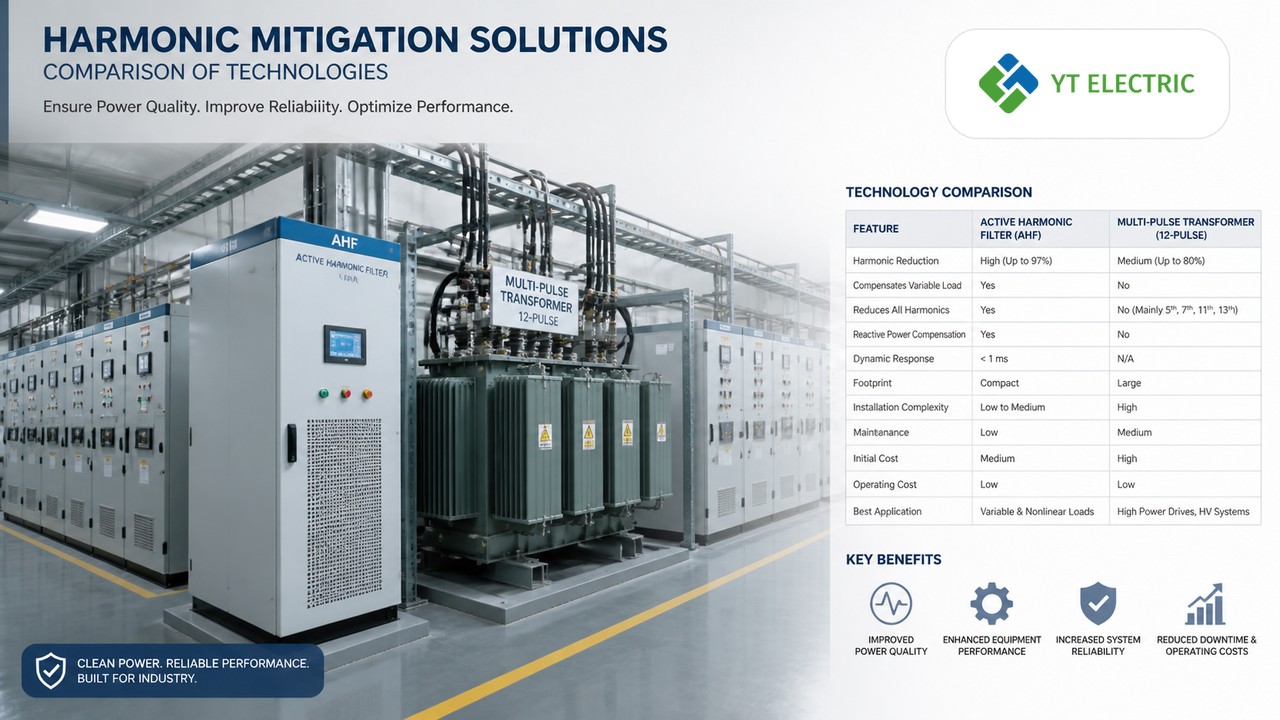
What are the relationship of Active Harmonic Filter, capacitor banks and reactors? Active Harmonic Filters (AHFs), capacitor banks, and reactors are essential components used in electrical networks to manage power quality, reactive power compensation, and harmonic mitigation. When these devices are combined effectively in a network, they can help improve system performance, energy efficiency, and ...
Voltage Unbalance: Causes, Impacts, and Mitigation Strategies This state of imbalance not only affects power quality but can also damage equipment and reduce energy efficiency. For example, using SPC (Static Phase Converter) for dynamic adjustment within the distribution station can effectively improve this situation; at the same time, users should also pay attention to reasonable load configurati...
How does Static var generator reduce kva demand? A Static Var Generator (SVG) reduces kVA demand through the following mechanisms: 1. Dynamic Reactive Power Compensation Real-Time Adjustment: SVG provide real-time reactive power support by injecting or absorbing reactive power (kVAR) as needed. This dynamic response helps maintain voltage levels, reducing the overall kVA demand. 2. Improved Power ...
Introduction of power conversion system A Power Conversion System (PCS) refers to a set of devices and processes that convert electrical energy from one form to another in various applications, including renewable energy, energy storage systems, electric vehicles, and industrial applications. It plays a crucial role in managing and optimizing energy flow, ensuring efficiency, and maintaining power...
Difference between SVG and SVC Reactive power compensation devices enhance power systems by improving the power factor, boosting equipment efficiency, and reducing electricity costs. Strategically placing these devices along transmission lines increases system stability, and transmission capacity, and ensures voltage stability across the grid. Static Var Compensator (SVC) The SVC was a static reac...


 English
 français
 Deutsch
 español
 العربية
 中文




 IPv6 network supported

