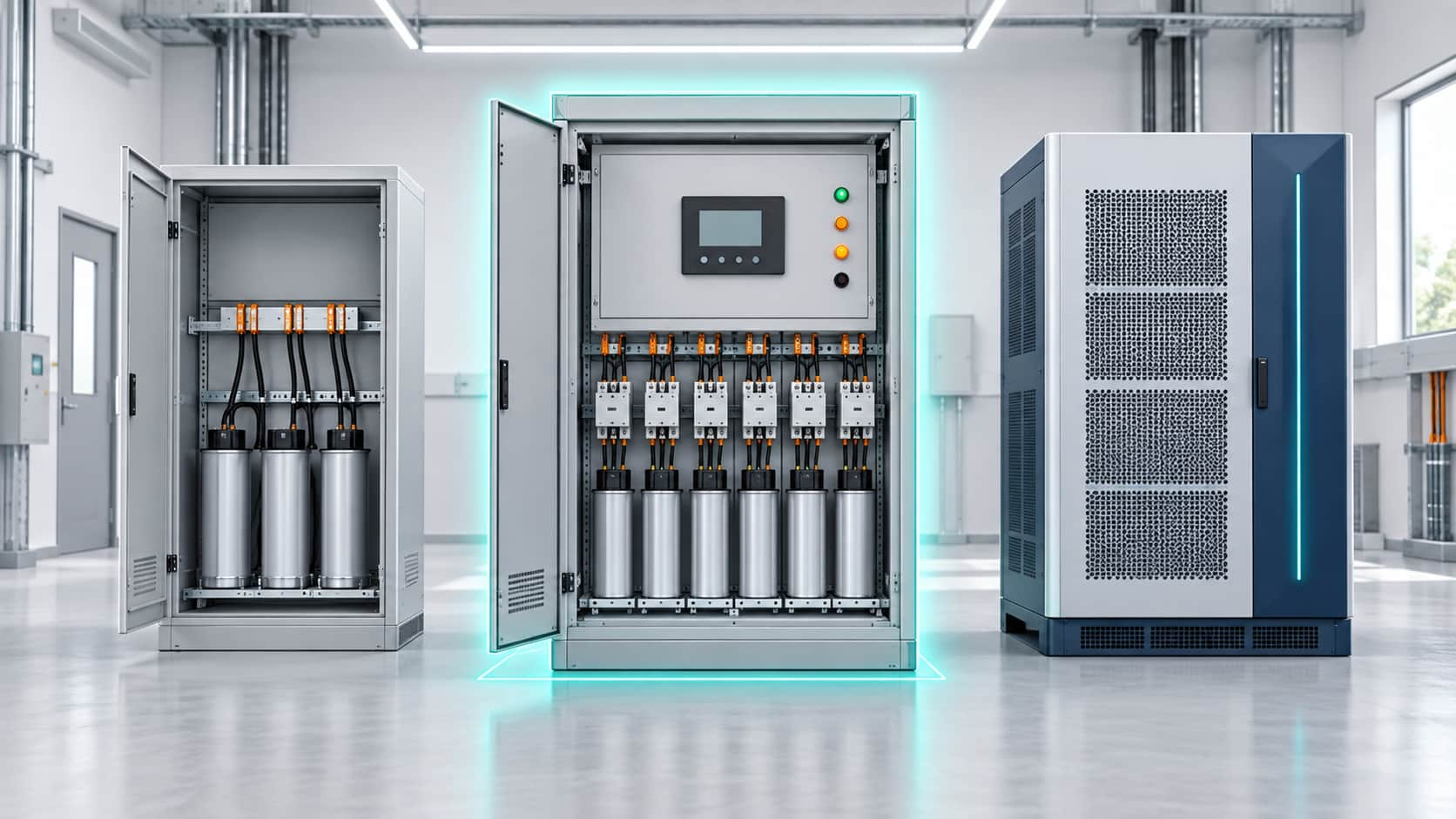
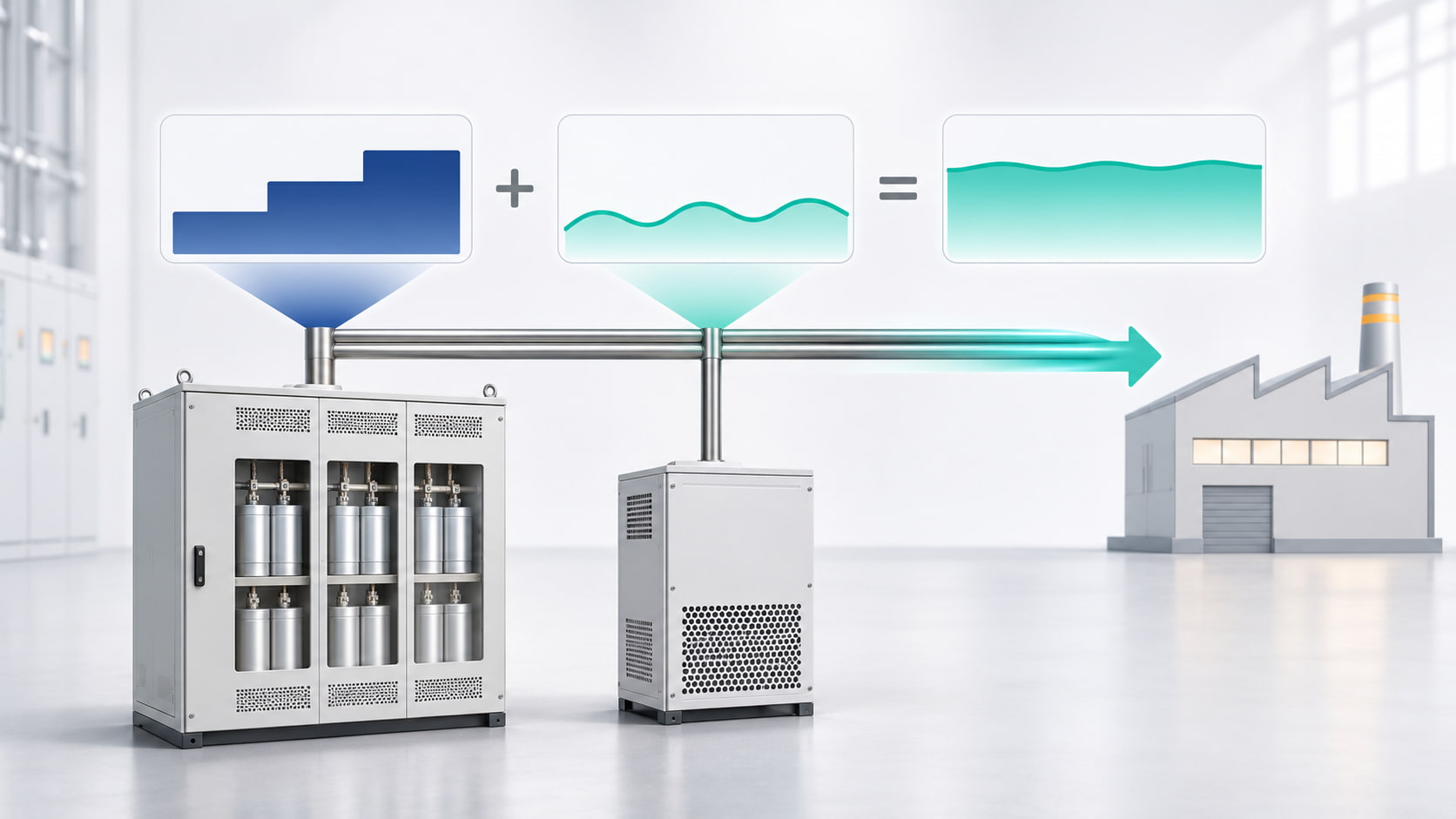
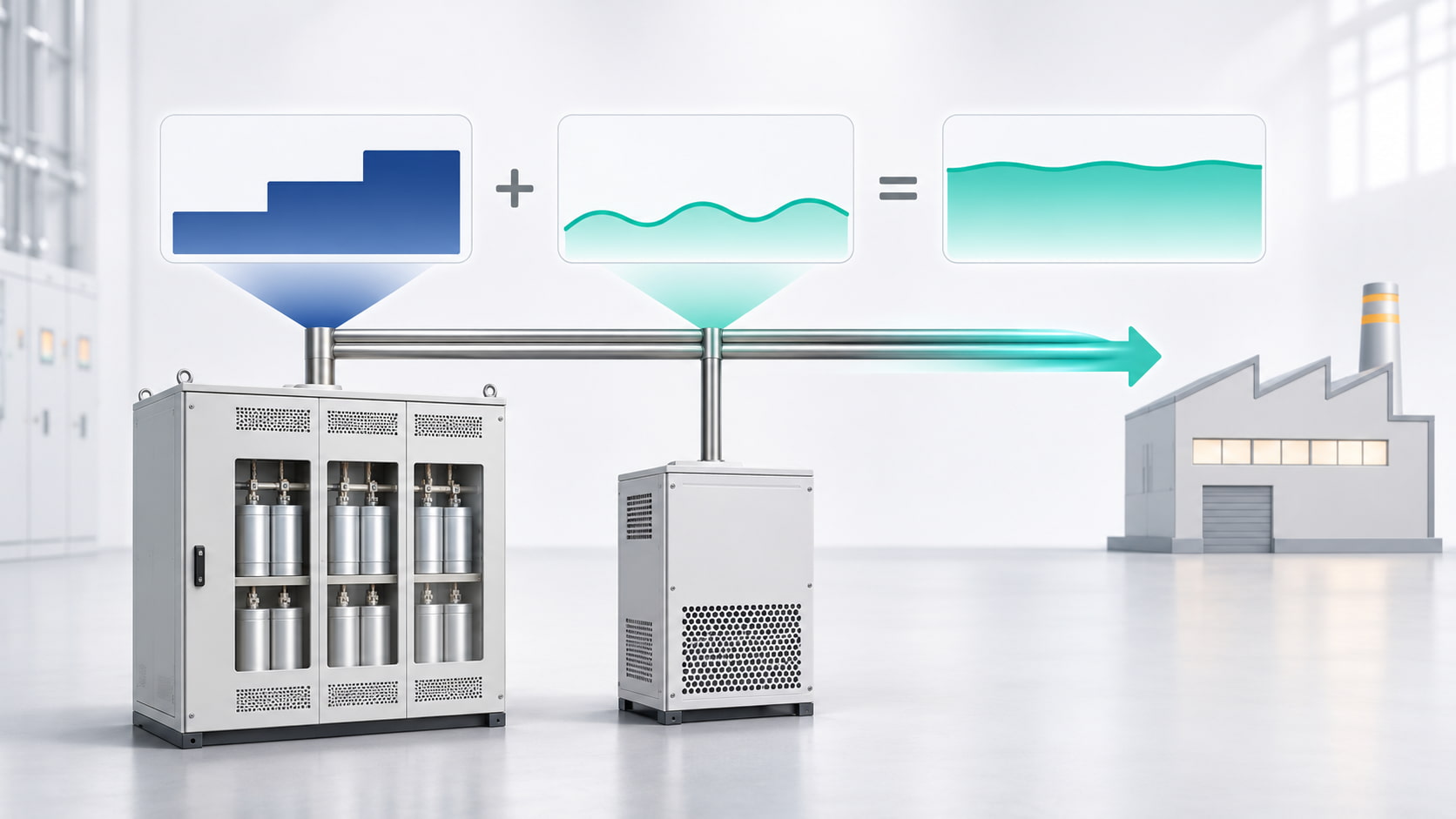
A fixed capacitor bank is often the most economical way to correct power factor — provided the load stays reasonably steady. When motors cycle or production changes by shift, it may overcompensate overnight and undercompensate at peak. An Automatic Power Factor Correction (APFC) panel switches capacitor steps as demand changes; a Static Var Generator (SVG) adjusts reactive power continuously...
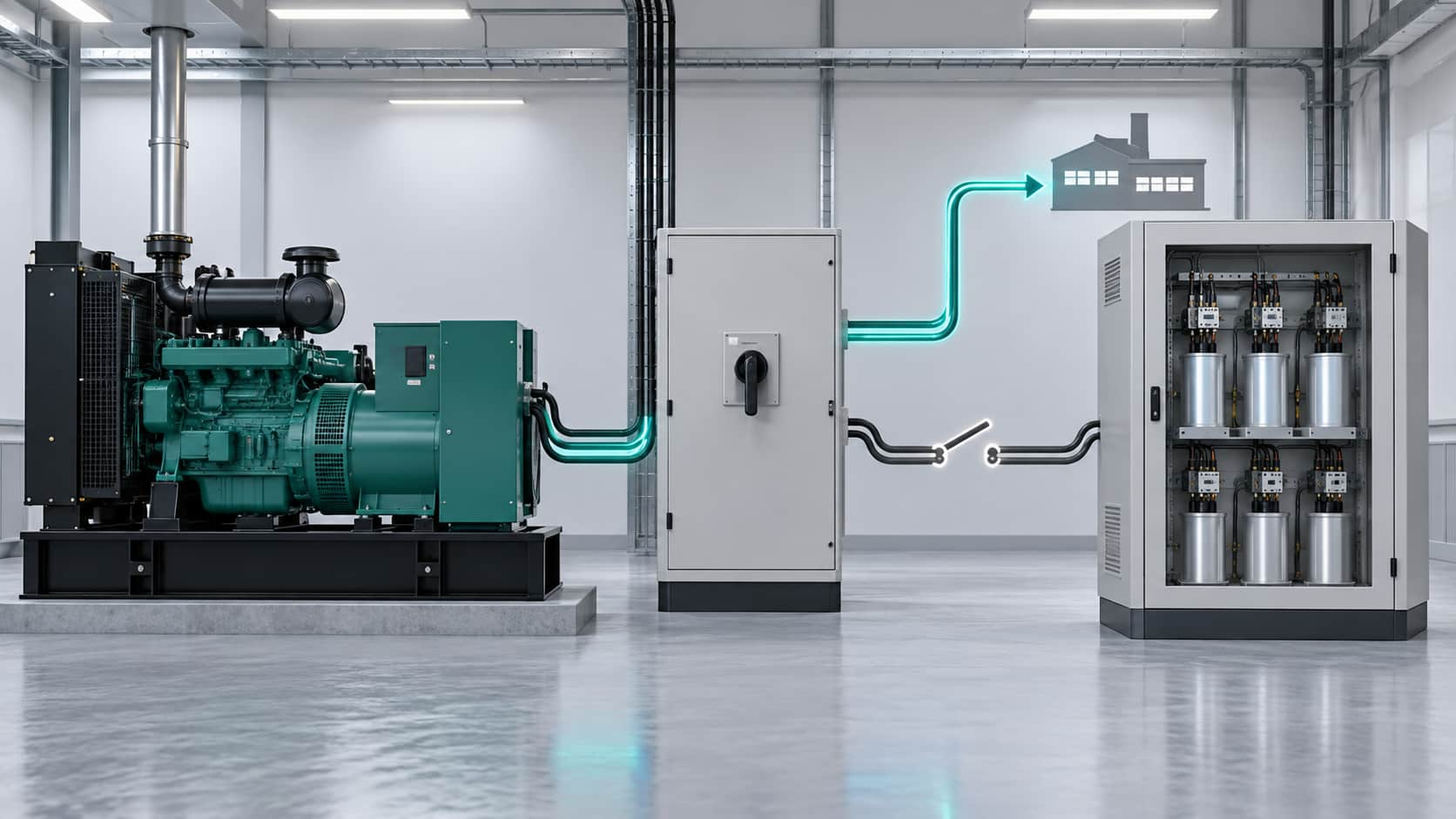
Quick Answer An APFC panel is not simply permitted or forbidden on generator power. Compatibility depends on generator capacity, the power factor of the load that stays online, the size of each load step, harmonic distortion, available short-circuit capacity, governor and excitation response, the generator manufacturer’s limits, and the logic inside the APFC controller. On many standby syste...
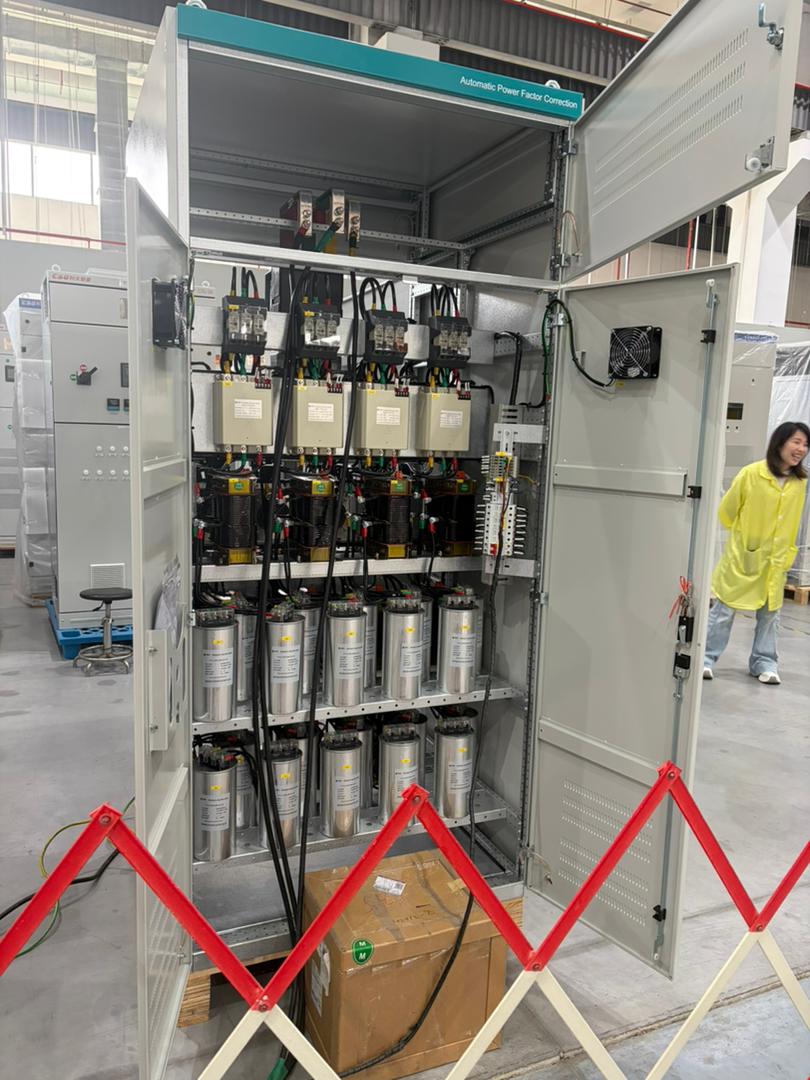
Why Does an APFC Panel Keep Switching? Causes of Capacitor Step Hunting and How to Stop It In commercial buildings, manufacturing plants, and distribution substations, Automatic Power Factor Correction (APFC) panels are deployed to maintain target power factor (typically 0.95 to 0.98 lagging) and avoid costly utility reactive power penalties. An APFC panel relies on a microprocessor-based power fa...
The same capacitor bank that improves power factor during full production can push a facility into leading power factor when the load falls. This overcompensation often appears at night, on weekends, or after large motors stop while capacitors remain connected. A meter may remain close to 1.00, but “leading,” “capacitive,” or the direction of kVAr shows that the syst...
What Causes Voltage Unbalance in Three-Phase Systems: Root Causes, Motor Derating Physics, and Dynamic SVG Mitigation Quick Engineering Answer: Voltage unbalance in three-phase power systems is caused by unequal distribution of single-phase loads, untransposed distribution lines, blown capacitor fuses, and asymmetrical non-linear industrial equipment. According to NEMA MG-1 and IEC 61000-2-4 stand...
How to Size an SVG for an Existing Capacitor Bank: A Practical Hybrid PFC Guide An existing capacitor bank provides economical bulk reactive power but may struggle with rapidly changing loads, uneven phases, or coarse steps. Adding a Static Var Generator (SVG) can close this gap without replacing useful equipment. The SVG should not automatically match the facility’s entire reactive demand. ...
Can an SVG and Capacitor Bank Work Together? CT Placement, Control Logic, and Common Mistakes Yes. A well-designed hybrid arrangement combines economical capacitor-based bulk compensation with the speed and precision of a Static Var Generator (SVG). Connecting both devices to one busbar is not enough. Each controller needs the correct current signal and a defined priority. Incorrect CT placement o...


 English
 français
 Deutsch
 español
 العربية
 中文




 IPv6 network supported

