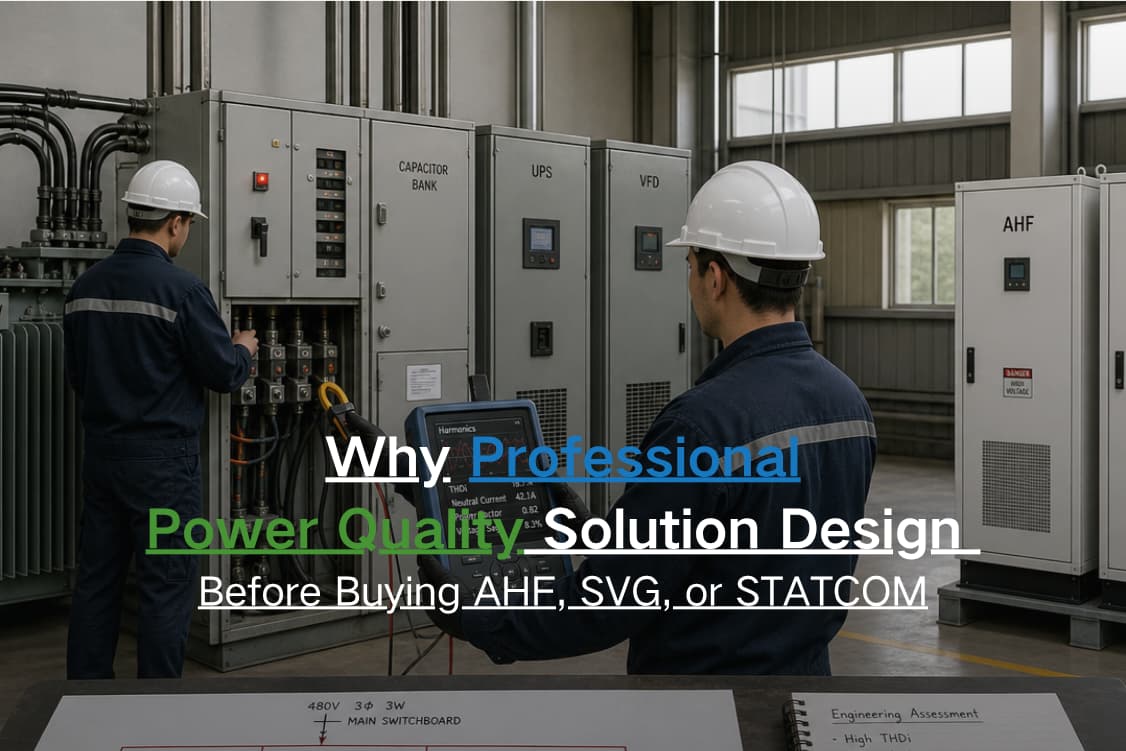
Why Professional Power Quality Design Before Buying AHF, SVG, or STATCOM A 480V switchboard can look normal during a routine inspection and still trip the generator every time the UPS load transfers. The breaker records show high neutral current, the capacitor bank contactors run hot, and the plant team sees THDi above the local utility limit. This is where Power Quality Design matters more...
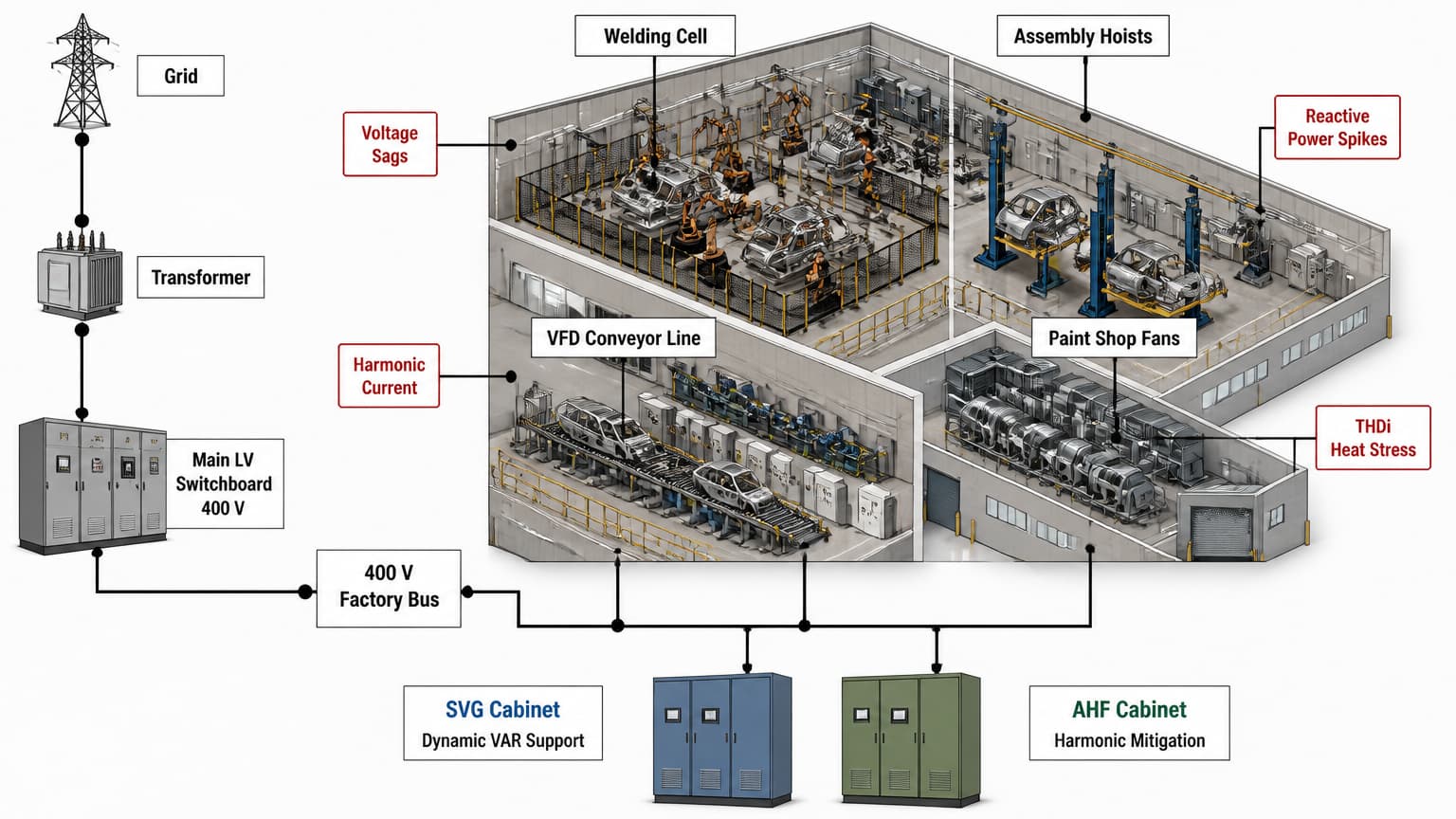
Stop Hidden Power Costs from Automotive Dynamic Loads: Benefits of Power Quality System Upgrade Automotive assembly lines operate with extreme load volatility. High-power lifting equipment and robotic welders demand instantaneous reactive power during startup cycles. Traditional capacitor-based compensation systems fail to track these millisecond-level transients, leading to severe power fa...
Power Quality in Steel Mills — A Silent Threat to Production Steel manufacturing is one of the most energy-intensive industries in the world. Within a typical steel mill, you will find a diverse range of electrical loads: water pumps circulating cooling systems, medium-frequency induction furnaces for melting, overhead cranes for material handling, LED lighting for workspaces, rolling mills,...
Walking into a steel melting shop, you feel the raw power. Arc furnaces roar, induction furnaces hum at high frequencies, and the electricity demand is staggering. But behind this impressive industrial might lies a hidden cost – poor power quality that drains profits and threatens equipment. The Real Trouble: Reactive Power and Start-Up Mayhem Electric arc furnaces and medium-frequency induc...
A 120 kW DC fast charger is not a resistive load, and ten of them are not ten kettles. When a highway charging hub starts a batch of charging sessions within the same minute, the transformer, cables and switchgear see a load profile closer to a small welding workshop than a retail site. The consequences—harmonic distortion, reactive power and three-phase imbalance—surface as tripped br...
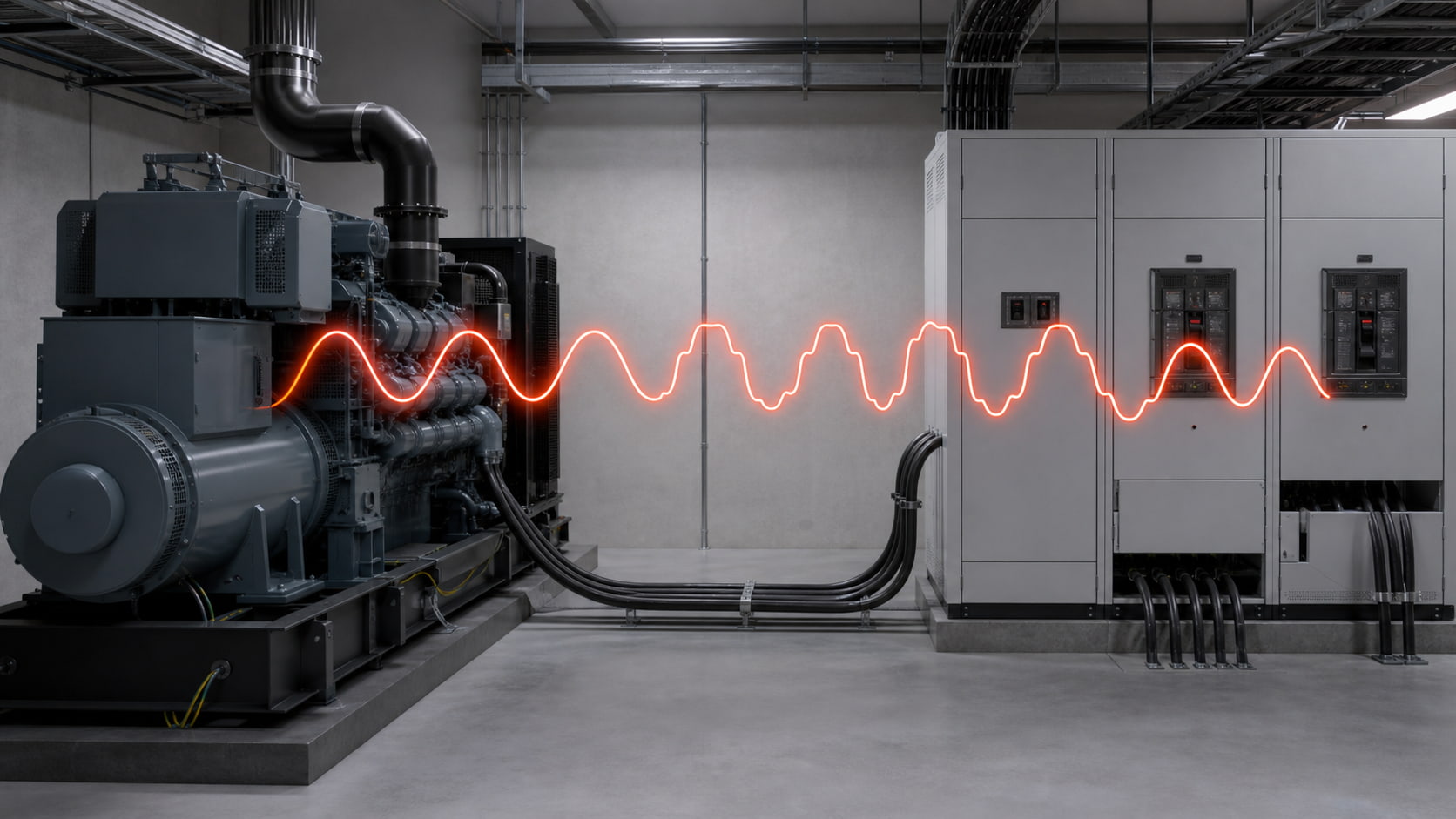
A facility can operate normally on utility power and develop power quality problems after transferring to a standby generator. Drives trip, UPS systems report input faults and lights flicker—even though the load has not changed. Nonlinear loads are usually already generating harmonic current. The generator provides a weaker source, allowing the same current distortion to create greater volta...
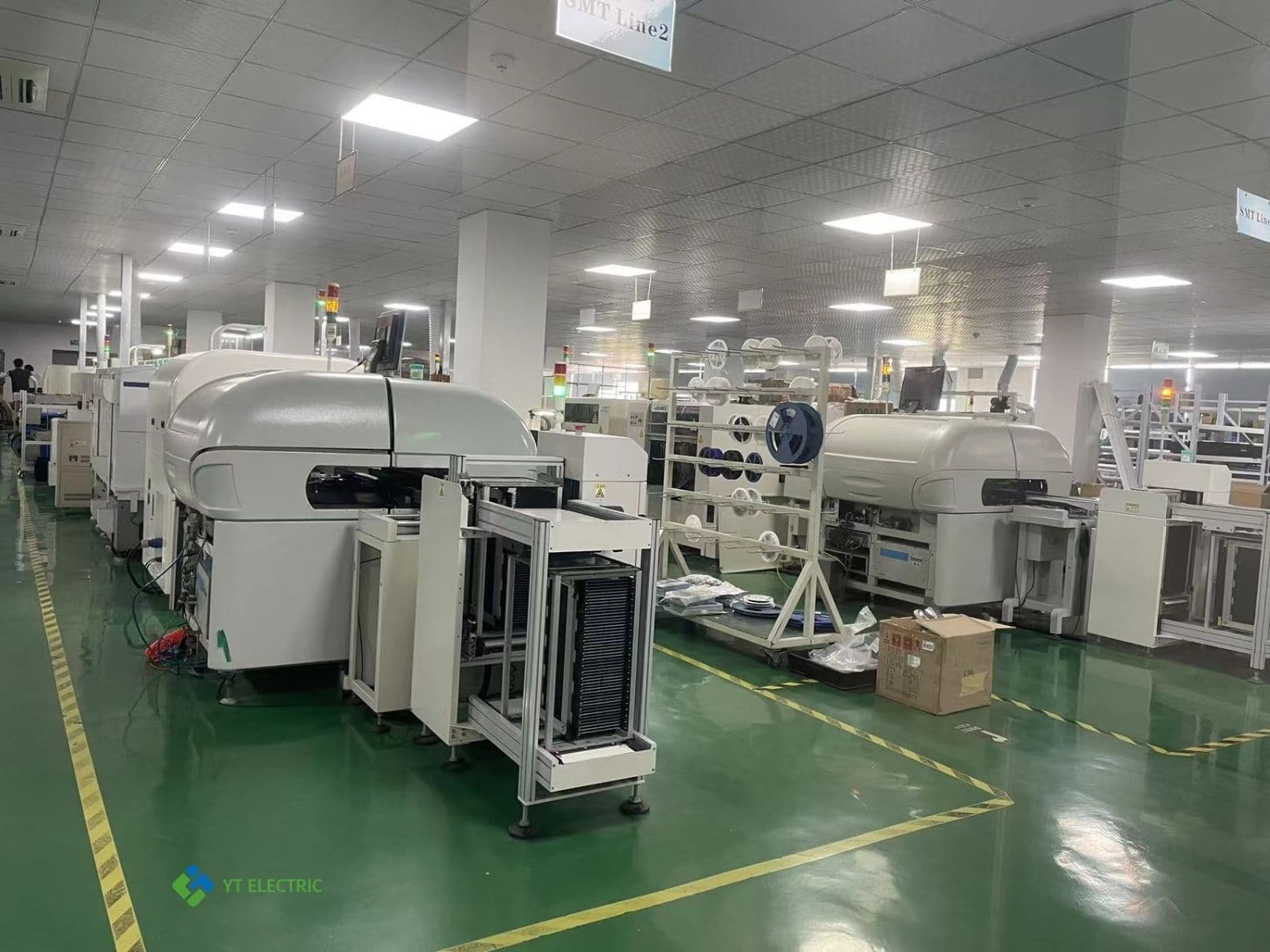
A vehicle body shop can run hundreds of welding points per minute, while robots, presses, conveyors, paint lines and HVAC systems change their electrical demand continuously. The production line may look mechanically stable, but the electrical load seen by the transformer is not. Rapid reactive-power changes, low power factor, voltage fluctuation and harmonic current can appear whenever several we...
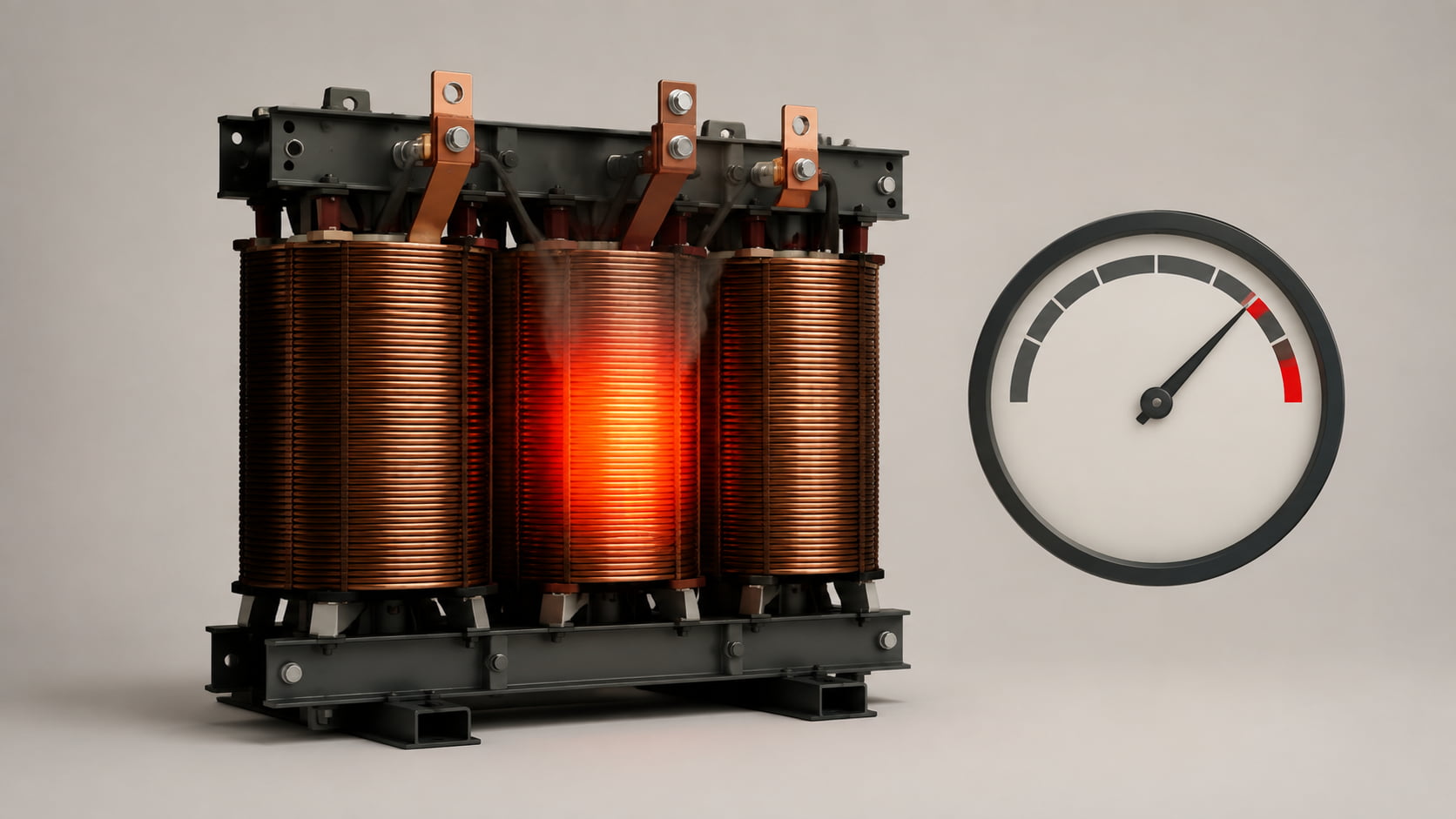
Transformer Overheating Explained: Why It Happens Below Rated Load A transformer can run unusually hot even when the connected load appears safely below its nameplate rating. Current may seem acceptable while winding or enclosure temperatures continue rising. This often happens because loading is assessed only in kilowatts or average amperes. Harmonics, imbalance, poor power factor and inad...


 English
 français
 Deutsch
 español
 العربية
 中文
中文



 IPv6 network supported