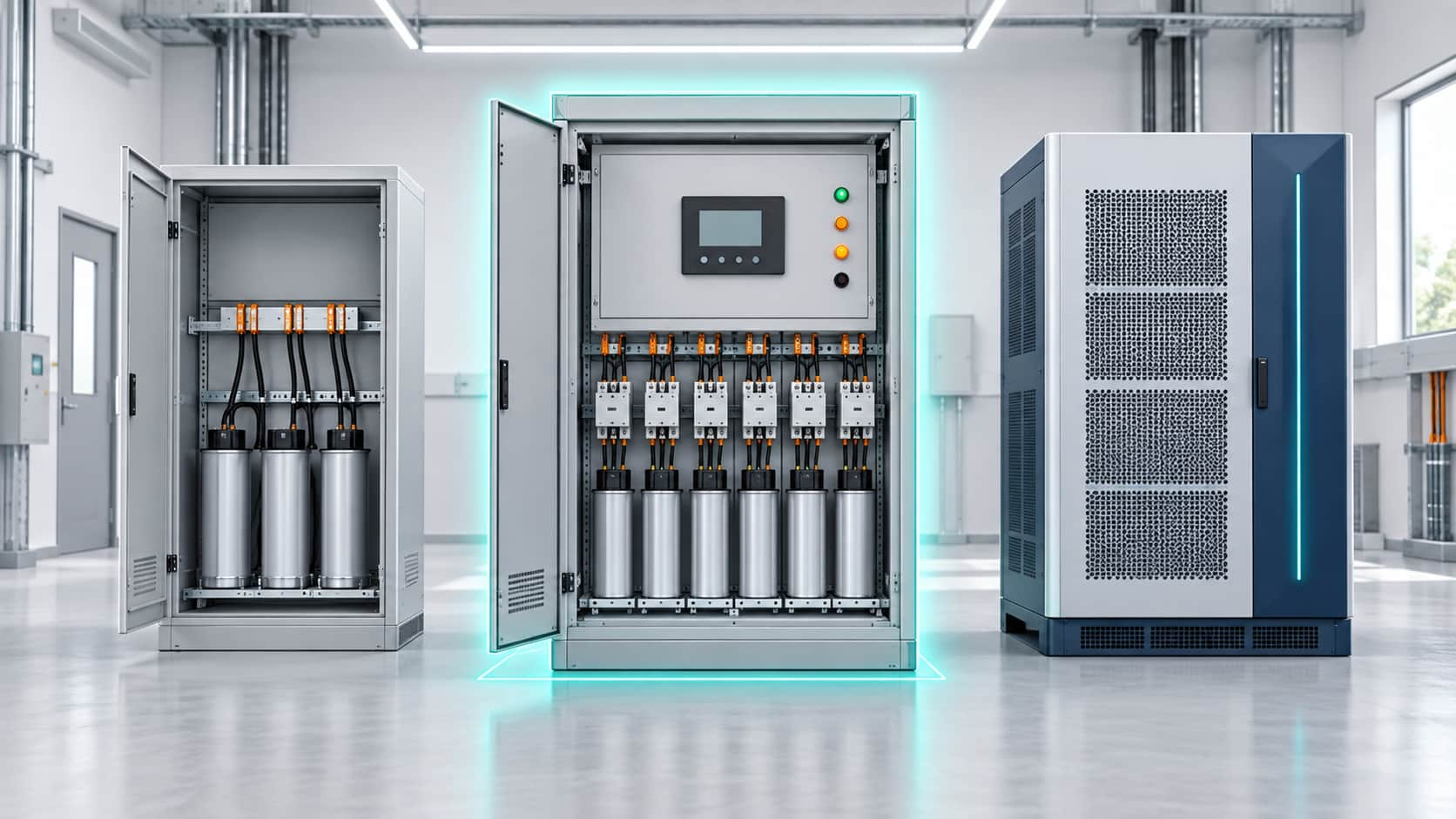
A fixed capacitor bank is often the most economical way to correct power factor — provided the load stays reasonably steady. When motors cycle or production changes by shift, it may overcompensate overnight and undercompensate at peak. An Automatic Power Factor Correction (APFC) panel switches capacitor steps as demand changes; a Static Var Generator (SVG) adjusts reactive power continuously...
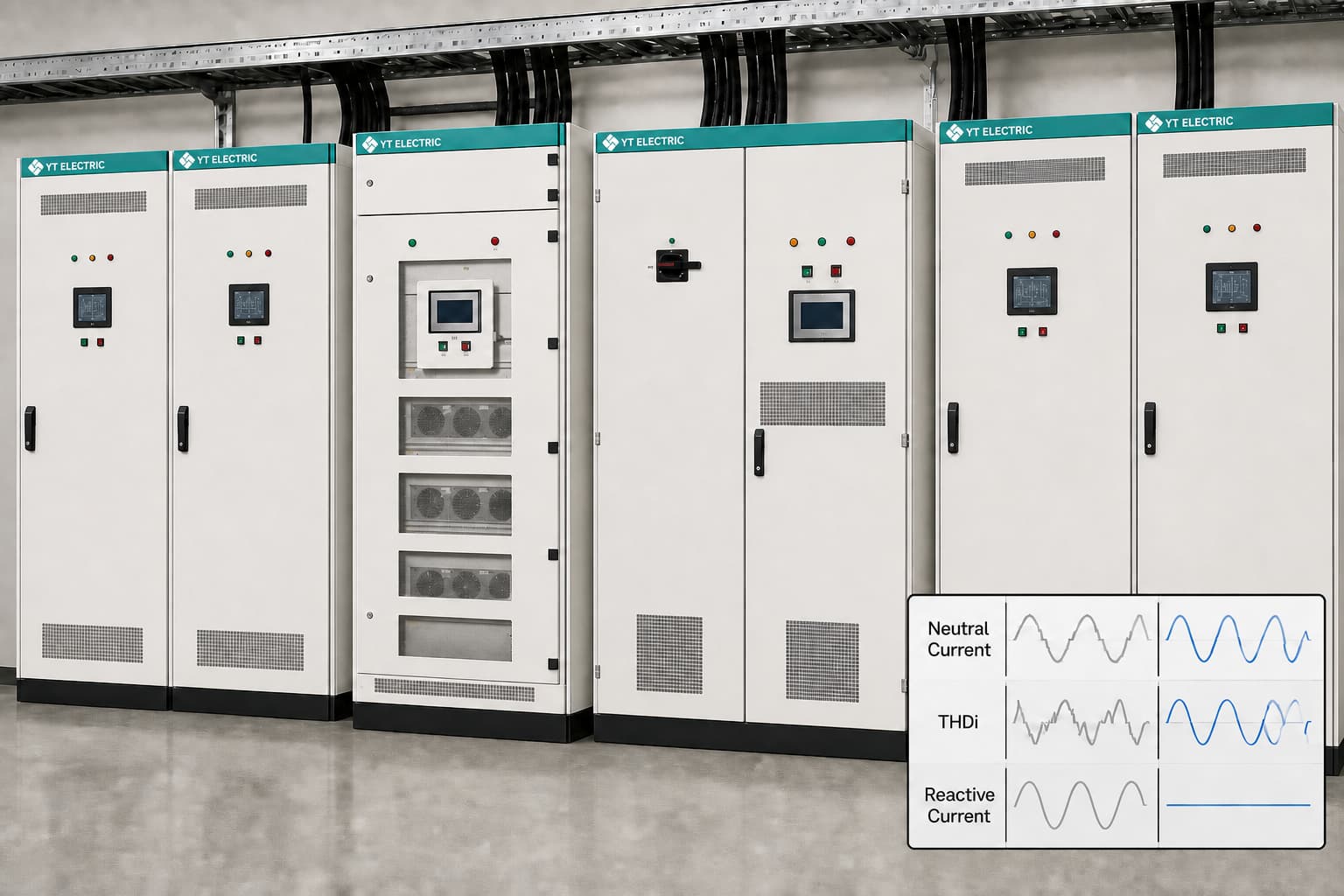
From Energy Waste to Energy Intelligence: How AHF and SVG Transform Industrial Power Systems Why distorted current becomes energy waste A six-pulse VFD, rectifier, UPS front end, or welding supply draws current in pulses rather than a clean sine wave. Those pulses contain characteristic harmonic components, and the resulting Total Harmonic Distortion increases RMS current even...
SVG and AHF Components: What Determines Accurate and Long-Term Performance? A 400 V plant may install two power-quality cabinets with the same rated current and expect the same result. Months later, one follows peak load while the other derates, produces more acoustic noise, or leaves compensation error at the point of common coupling (PCC). The difference lies in the sensing chain, ...
High-density data centers, semiconductor fabs, and offshore platforms expose a weakness in many silicon-based active harmonic filters (AHF) and static var generators (SVG): the correction target moves faster than the thermal design. At 20–25.6 kHz, a conventional silicon IGBT converter can correct current distortion, but switching loss, 45°C full-load temperature rise, heatsink volume, a...
Transformer Overheating from Harmonics: K-Factor vs AHF Mitigation In heavy industry, large data centers, and plants packed with VFDs and six-pulse rectifiers, a distribution transformer can run within its nameplate kVA and still develop abnormal temperature rise, oil-temperature alarms, or accelerated winding insulation ageing. The usual load-current check misses the frequency content of that cur...
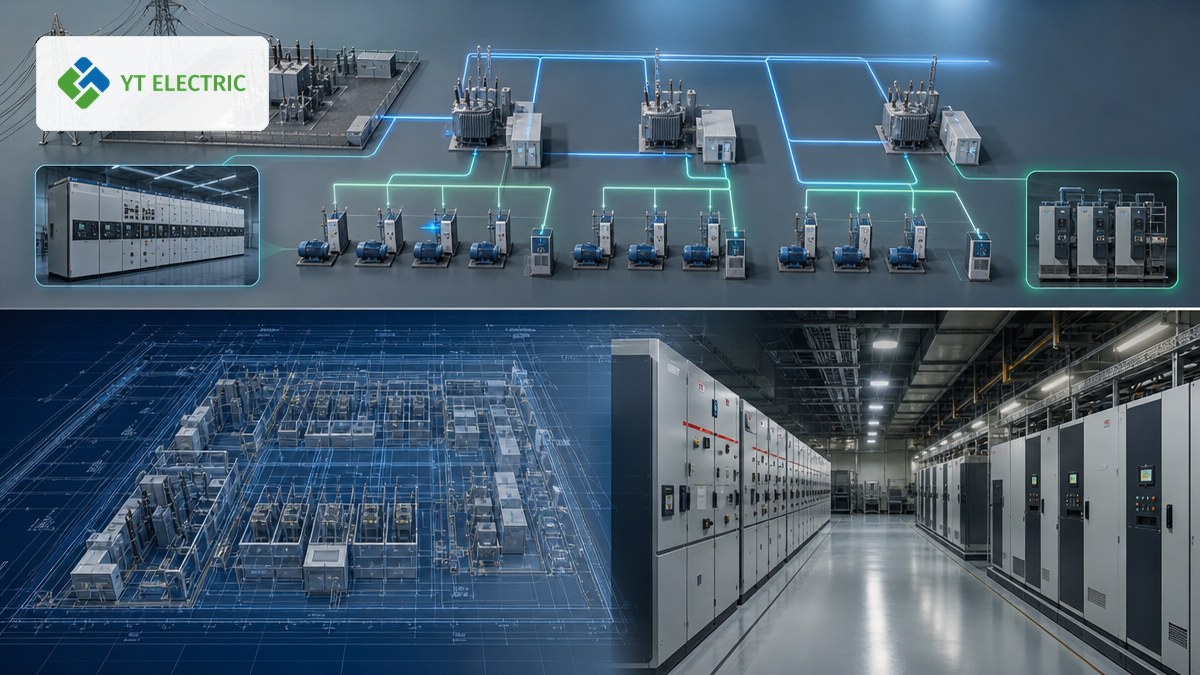
Centralized vs. Distributed Compensation: Strategic AHF and SVG Placement in Multi-Transformer Facilities Quick Engineering Answer: In multi-transformer industrial plants and commercial complexes, choosing between centralized compensation at the main low-voltage switchboard (PCC) and distributed compensation at regional sub-distribution panels depends on transformer loading, cable run lengths, and...
SVG Reactive Power Compensation: Beyond PF Correction For decades, plant electrical engineers and facility managers viewed reactive power compensation through a single, narrow lens: avoiding utility low power factor penalty surcharges. Traditional solutions—primarily fixed capacitor banks and automatic power factor correction (APFC) panels—were designed solely to supply bulk capacitive...
Why Does an APFC Panel Keep Switching? Causes of Capacitor Step Hunting and How to Stop It In commercial buildings, manufacturing plants, and distribution substations, Automatic Power Factor Correction (APFC) panels are deployed to maintain target power factor (typically 0.95 to 0.98 lagging) and avoid costly utility reactive power penalties. An APFC panel relies on a microprocessor-based power fa...


 English
 français
 Deutsch
 español
 العربية
 中文




 IPv6 network supported

