Power Quality Revolution: How Active Harmonic Filters Unlock Sustainable Waste-to-Energy Operations Quick Engineering Answer: Waste-to-Energy (WtE) and municipal biomass incineration plants operate complex electrical networks where massive variable frequency drives (VFDs) on boiler draft fans, flue gas scrubbers, and leachate pumps inject severe harmonic distortion (THDi > 22%), while synchrono...
I. Why Are Non-Linear Loads So Ubiquitous in Our Daily Lives? The fundamental reason is technological advancement and our relentless pursuit of efficiency and control. The core of non-linear loads is various power electronic devices that precisely control electrical energy through rapid switching. Here are the specific reasons for their ubiquity: Demand for Energy Savings and Efficiency:...
The choice between installing an Active Harmonic Filter (AHF) on the power side (at the Point of Common Coupling - PCC) versus the load side (at the source of harmonics) is a critical design decision with significant technical and financial implications. Here is a detailed analysis comparing both installation strategies. Executive Summary Load-Side Installation (Local Compensation): Targets s...
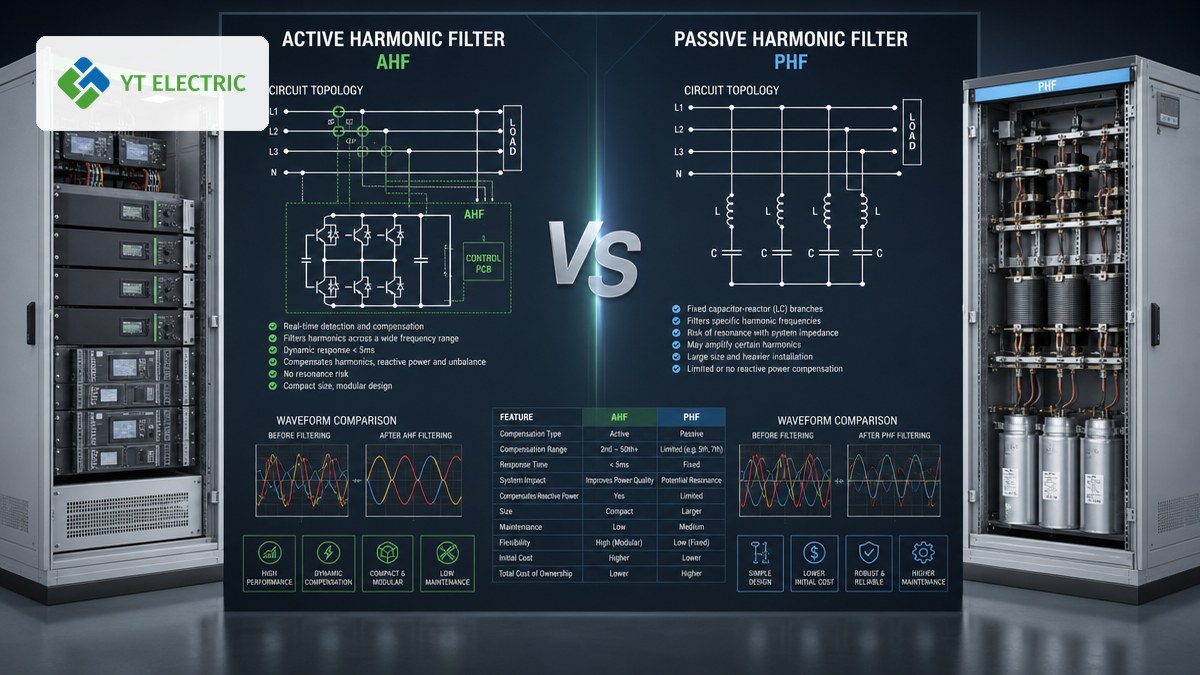
Active Harmonic Filter vs. Passive Harmonic Filter: The Definitive Engineering & TCO Comparison Quick Engineering Answer: The fundamental difference between an Active Harmonic Filter (AHF) and a Passive Harmonic Filter (PHF) lies in circuit topology: PHFs use fixed inductor-capacitor (LC) tuned shunt branches that can only target 1 or 2 specific harmonic orders (e.g., 5th or 7th) and suffer fr...
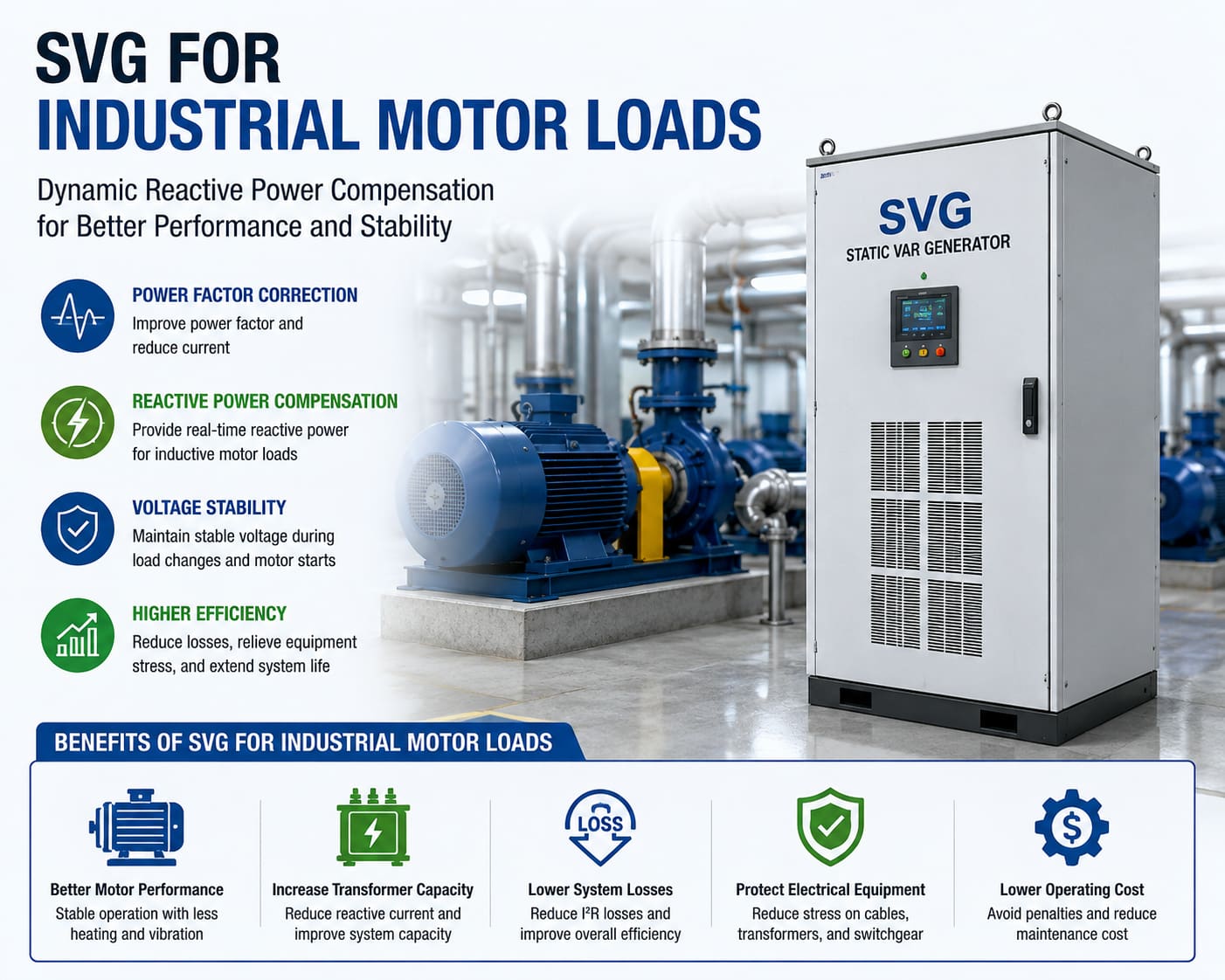
SVG for Industrial Motor Loads Motor loads are common in factories, mines, water treatment plants, commercial buildings, and pumping systems. These loads are reliable and useful, but they also create reactive power demand. When reactive power is not controlled, the system may face poor power factor, higher current, voltage instability, and extra stress on electrical equipment. This is why S...
Introduction: The High Cost of the "Invisible Killer" in July 2026 As we move further into the industrial energy transition of 2026, the reliance on diesel generators, gas turbines, and isolated microgrids remains a mission-critical reality for remote mining operations, large-scale agriculture, and telecommunication base stations. Yet, an "invisible killer" continues to bleed operational bu...
Capacitor bank overheating is a common problem in modern electrical systems. Many facilities install capacitor banks for power factor correction, but the capacitor bank still runs hot, trips, or fails early. In many cases, capacitor bank overheating is caused by harmonic distortion. Harmonic distortion puts extra electrical stress on the capacitor bank. A capacitor bank is designed to supply react...
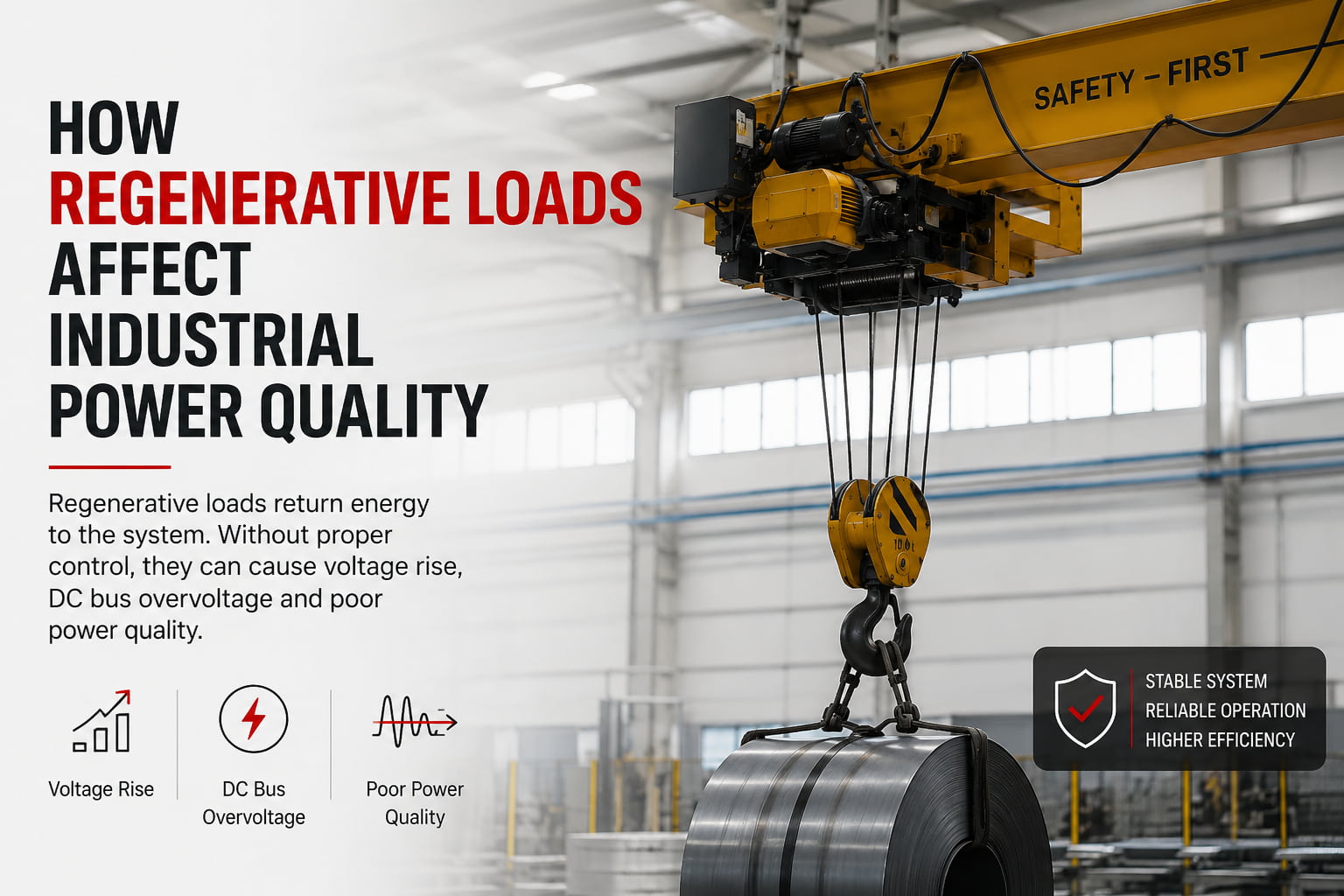
How Regenerative Loads Affect Industrial Power Quality Regenerative loads are common in modern industrial systems. They appear when a motor changes from consuming power to returning power.This often happens during braking, lowering, deceleration, or rapid speed changes.Cranes, hoists, elevators, rolling mills, centrifuges, test benches, and conveyor systems can all create regenerative loads.These ...


 English
 français
 Deutsch
 español
 العربية
 中文




 IPv6 network supported

