

 English
 français
 Deutsch
 español
 العربية
 中文
中文
With the large-scale grid connection of new energy power generation, the surge in industrial impact loads, and the continuous improvement of users' requirements for power quality, medium-voltage power grids are facing many challenges such as reactive power imbalance, voltage fluctuation, and harmonic pollution. As a new generation of dynamic reactive power compensation devices, Medium-Voltage Static Var Generator (SVG), relying on its advanced IGBT-based topology and precise control technology, has become a core equipment to solve power quality problems and ensure the stable and efficient operation of power grids. This article will comprehensively analyze the technical and practical value of medium-voltage SVG from three aspects: application scenarios, core functions, and core advantages.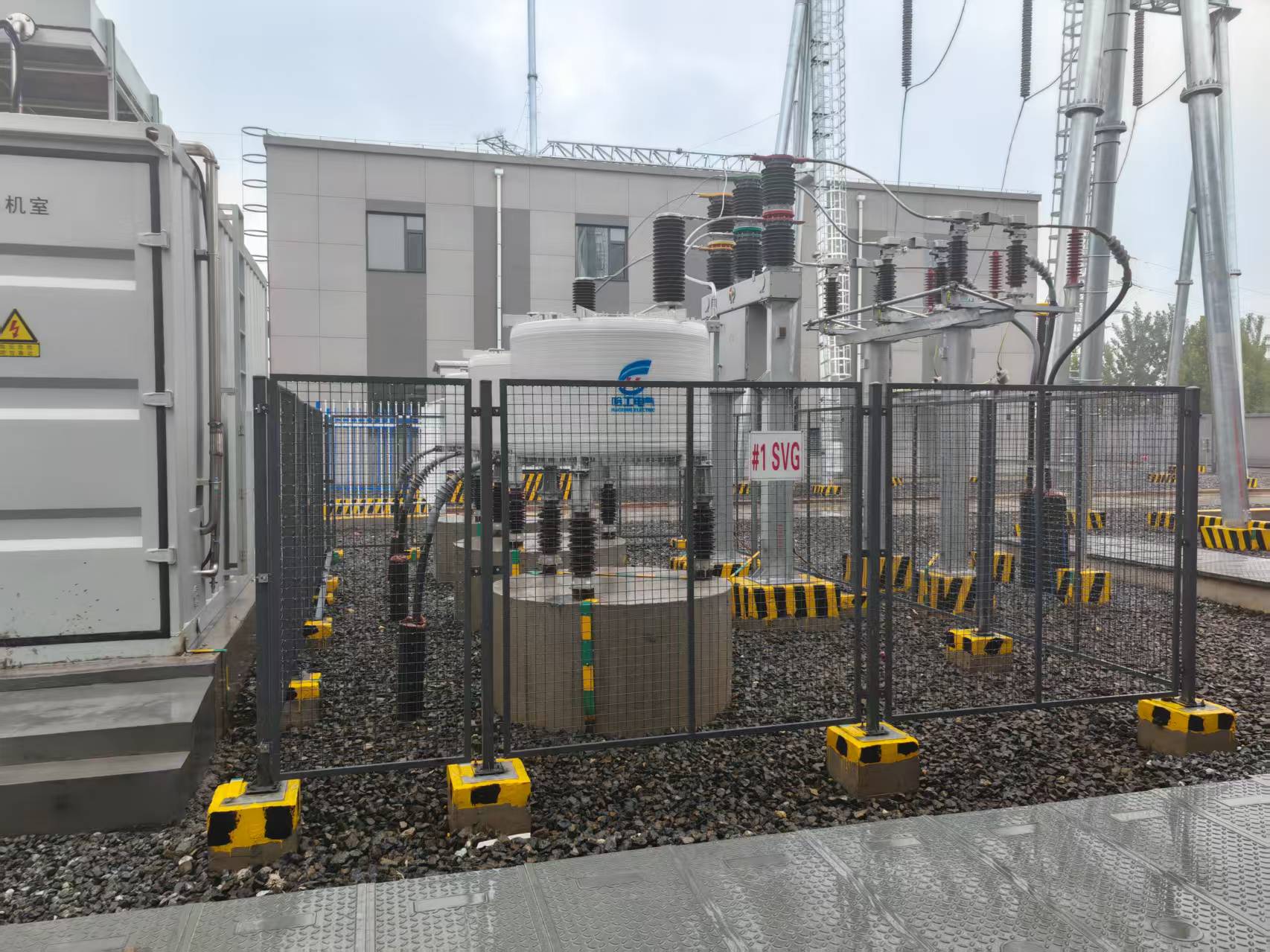
With its flexible compensation characteristics and stable operating performance, medium-voltage SVG is widely used in many core fields such as new energy power generation, industrial production, power systems, and transportation power supply, accurately matching the personalized power quality governance needs of different scenarios.
The intermittency and volatility of wind power and photovoltaic power generation are likely to cause voltage fluctuations at the sending end of power stations, substandard power factors, and even flicker and harmonic problems, seriously affecting the grid connection efficiency of clean energy. Medium-voltage SVG can quickly and dynamically adjust the voltage on the power station side, achieve precise compensation of reactive power, and at the same time have complete high/low voltage ride-through capabilities to ensure the stable delivery of new energy power. Whether it is newly built wind farms, photovoltaic power stations, or the upgrading and transformation of old power stations, medium-voltage SVG can achieve coordinated control through flexible communication interfaces, maximizing the improvement of new energy consumption capacity.
Equipment such as electric arc furnaces, refining furnaces, and rolling mills in industries such as iron and steel metallurgy, chemical industry, and mining are typical impact and non-linear loads. During operation, they will generate severe reactive power fluctuations, a large number of harmonics, and serious three-phase imbalance, which not only increase enterprise energy consumption and production costs but also may trigger fines from power supply departments. Medium-voltage SVG can respond to load changes instantaneously, effectively suppress voltage flicker, filter out main sub-harmonics such as 3rd, 5th, and 7th, balance three-phase currents at the same time, raise the power factor to above 0.98, significantly improve production stability, and reduce energy consumption losses. After a stainless steel factory applied the SVG+FC hybrid system, the energy consumption per ton of steel was reduced by 15%, and the average monthly cost savings exceeded 160,000 yuan, showing remarkable economic benefits.
With the centralized and large-scale development of new energy power stations, the demand for reactive power capacity of centralized step-up stations has increased significantly. Medium-voltage SVG can achieve ultra-large capacity reactive power output of 120MVar per unit, and 20 sets of devices can operate in coordination through the coordinated control system, meeting the dynamic reactive power support needs of large power hubs, improving the voltage stability and transmission capacity of the power grid, damping power oscillations, and ensuring the safe operation of the power system.
Traction loads of electrified railways and urban rail transit are characterized by high harmonic content and significant three-phase imbalance, which are likely to cause voltage distortion of the power supply network and affect the normal operation of surrounding electrical equipment. Medium-voltage SVG can specifically achieve harmonic governance, three-phase imbalance compensation, and power factor improvement, providing stable and reliable power quality guarantee for transportation power supply systems, and is an important support for the safety of rail transit power supply.
Based on the voltage source converter topology, medium-voltage SVG achieves comprehensive and dynamic governance of power quality problems by precisely controlling the on-off sequence of IGBTs. Its core functions cover multiple dimensions such as reactive power compensation, voltage regulation, and harmonic governance, and it has a high degree of flexibility and adaptability.
This is the most core basic function of SVG. It can realize continuous and smooth adjustment of reactive power from inductive to capacitive, with an adjustment accuracy of up to 0.1kVar increment. It can quickly track the dynamic changes of load reactive current and achieve local balance of reactive power. Compared with the step-by-step adjustment of traditional compensation devices, SVG avoids the problem of over-compensation or under-compensation, can stably maintain the power factor above 0.98, and greatly reduce the reactive power loss of lines.
Voltage fluctuations in the power grid are mainly caused by reactive power fluctuations, especially in the scenario of impact loads, where voltage flicker problems are prominent. SVG has an extremely fast response speed, with a full response time as low as 10ms, which can almost instantaneously offset the voltage impact caused by load changes, effectively suppress voltage fluctuations and flicker with a suppression efficiency of up to 80%, ensuring that the voltage at the receiving end is stable within the qualified range, and avoiding damage or failure of sensitive equipment due to abnormal voltage.
Relying on advanced PWM control technology, SVG has extremely low harmonic content itself, and at the same time has the function of actively filtering harmonics. It can effectively govern main sub-harmonics such as 3rd, 5th, 7th, 11th, and 13th, meeting the GB/T 14549-93 Power Quality Harmonics in Public Supply Networks standard. For the negative sequence current problem caused by load imbalance, SVG can quickly eliminate negative sequence current through the phase-separated compensation mode, controlling the three-phase imbalance of the system within 3%, and improving the symmetry and reliability of power grid power supply.
SVG supports multiple control modes such as constant power, constant voltage, and constant power factor, which can be flexibly switched according to the needs of different scenarios; at the same time, it has complete protection functions, including overcurrent, overvoltage, overheating, power grid phase loss and phase sequence error protection, etc. It also has advanced strategies such as online bypass of power units and high/low voltage ride-through, ensuring the long-term stable operation of the device with a design life of up to 20 years.
Compared with traditional reactive power compensation devices (such as SVC, synchronous condensers, capacitor + reactor banks, etc.), medium-voltage SVG has significant advantages in many aspects such as technical performance, operating efficiency, and installation and maintenance, and has become the preferred solution for modern power quality governance.
The response time of traditional SVC is usually 20-40ms, which is difficult to cope with high-speed changing impact loads such as electric arc furnaces; while the response time of medium-voltage SVG can be controlled within 10ms, which can complete reactive power compensation adjustment within one power frequency cycle, realizing "instantaneous tracking" of load fluctuations, and fundamentally suppressing voltage flicker and fluctuations.
Traditional compensation devices (such as SVC) are impedance-type devices, and their output capacity decays in a square relationship with the drop of power grid voltage. Under fault conditions where the power grid voltage is low, the compensation capacity is greatly weakened; while SVG is a current-source-type device. Even if the power grid voltage drops by 40%, it can still maintain full-rated reactive current output, ensuring stable reactive power support for the power grid during faults and improving the transient stability of the power grid.
The TCR (Thyristor Controlled Reactor) + FC (Fixed Capacitor) structure of traditional SVC is likely to amplify system harmonics and may also cause dangerous resonance phenomena, requiring additional configuration of filtering devices; while SVG has extremely low harmonic content (THD<3%) through precise IGBT PWM control.
Traditional SVC requires large-scale components such as reactors and capacitor banks, occupying a large floor space and having high energy consumption; medium-voltage SVG adopts a modular and compact design, with a floor space only 50% of that of traditional SVC, and even smaller in some scenarios. At the same time, the active power loss of SVG is less than 0.8%, which is much lower than 3%-5% of traditional SVC, significantly reducing operating energy consumption. In addition, SVG adopts standardized power units with strong interchangeability and simple maintenance, and the core energy storage components adopt film capacitors with a service life of up to 20 years, greatly reducing long-term maintenance costs.
SVG can realize full-range continuous compensation from inductive to capacitive, while traditional devices mostly adopt step-by-step compensation with limited adjustment accuracy; at the same time, SVG can adapt to multiple voltage levels such as 3.3kV, 6kV, 10kV, and 35kV, with a rated capacity covering 500kvar-75Mvar. Capacity expansion can be achieved through multi-unit parallel connection to meet the capacity needs of different scenarios. Its flexible control mode and communication capability also enable it to adapt to various application scenarios such as new projects and the transformation of old power stations.
Against the background of accelerated new energy transformation and increasingly complex power grid load structure, power quality has become a key factor to ensure the safe and efficient operation of the power system. With its diversified scene adaptation capabilities, full-dimensional compensation functions, and core advantages far exceeding traditional schemes, medium-voltage SVG can not only effectively solve core problems such as reactive power imbalance, voltage fluctuation, and harmonic pollution but also reduce energy consumption, improve production efficiency, and ensure power grid stability, providing reliable power quality guarantee for fields such as new energy grid connection, industrial production, and transportation power supply. With the continuous upgrading of intelligent control technology, medium-voltage SVG will be further integrated into the process of power grid intelligence, becoming a core supporting equipment for building an efficient, safe, and clean modern power system.



 IPv6 network supported