

 English
 français
 Deutsch
 español
 العربية
 中文
中文
Improving Chemical Plant Sustainability with Power Quality
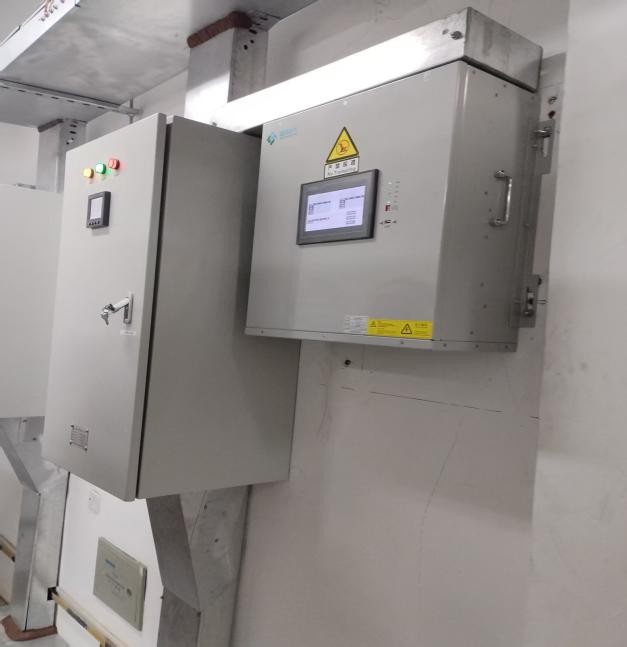
Chemical manufacturing facilities in Turkey face unique challenges regarding grid stability and rising energy costs.
Maintaining high power quality is no longer just a technical preference for these plants.
It has become a fundamental pillar of operational sustainability and long-term financial health.
A major chemical plant in Turkey recently reported significant equipment downtime due to voltage fluctuations.
The facility operates heavy inductive loads, including large compressors and specialized pumping systems.
These components frequently cause reactive power surges, leading to poor power factor and harmonic distortion.
The local utility providers impose strict penalties for low power factor across the Turkish industrial sector.
Furthermore, poor power quality causes internal overheating in sensitive control systems and electric motors.
This heat shortens the lifespan of critical assets, creating unnecessary industrial waste and replacement costs.
The SVG operates through a sophisticated digital feedback loop to ensure electrical stability.
1. Detection: External Current Transformers (CT) monitor the load current in real-time.
2. Analysis: The internal DSP analyzes the reactive components and harmonic content.
3. Compensation: The IGBT power module generates a reverse-phase compensation current.
4. Injection: The corrective current is injected into the grid to neutralize the distortion.
To address these issues, the plant integrated a modern Static Var Generator into its electrical infrastructure.
Unlike traditional capacitor banks, the SVG provides instantaneous and continuous reactive power compensation.
This technology allows the plant to maintain a power factor close to unity regardless of load changes.
The SVG acts as a controlled current source, injecting the exact amount of reactive power required.
It responds in less than 20 milliseconds, which is crucial for the fast-cycling loads found in chemical processing.
This precision eliminates the risk of over-compensation and prevents resonance issues with existing equipment.
The table below illustrates why the chemical plant chose SVG technology for their sustainability goals.
| Feature | Traditional Capacitor Banks | Static Var Generator (SVG) |
| Response Speed | 200ms to several seconds | Less than 20ms |
| Compensation Type | Step-wise (Fixed) | Stepless (Continuous) |
| Service Life | 3 to 5 years (deteriorates) | 10+ years (stable) |
| Harmonic Handling | May cause resonance | Actively filters harmonics |
Implementing an SVG solution follows a structured engineering pathway to ensure maximum ROI.
Step 1: Site Survey: Measure THD (Total Harmonic Distortion) and existing Power Factor levels.
Step 2: Capacity Sizing: Calculate the required kVAR based on peak inductive load demands.
Step 3: Installation: Mount the SVG in parallel with the main distribution board (MDB).
Step 4: Commissioning: Set target Power Factor (usually 0.99) and activate CT polarity checks.
Step 5: Monitoring: Use cloud-based platforms to track energy savings and heat reduction.
Improving power quality directly supports the sustainability targets of the Turkish chemical industry.
By optimizing the power factor, the facility reduces the amount of apparent power drawn from the grid.
This decrease in current flow reduces line losses within the plant's internal distribution network.
Reduced line losses mean the facility requires less energy to perform the same chemical manufacturing tasks.
Lower energy consumption translates directly into a smaller carbon footprint for the entire operation.
Additionally, the extended lifespan of motors and drives reduces the environmental impact of electronic waste.
Engineers should first conduct a comprehensive power quality audit to identify specific harmonic profiles.
Select an SVG capacity that accounts for both current peak loads and future expansion plans.
Ensure that the SVG is installed at the main distribution point to maximize system-wide efficiency.
Regular monitoring of the SVG's performance through integrated digital interfaces is highly recommended.
Modern units provide real-time data that can be used to predict motor fatigue and grid anomalies.
Investing in power quality is the most direct route to achieving a sustainable industrial future.



 IPv6 network supported