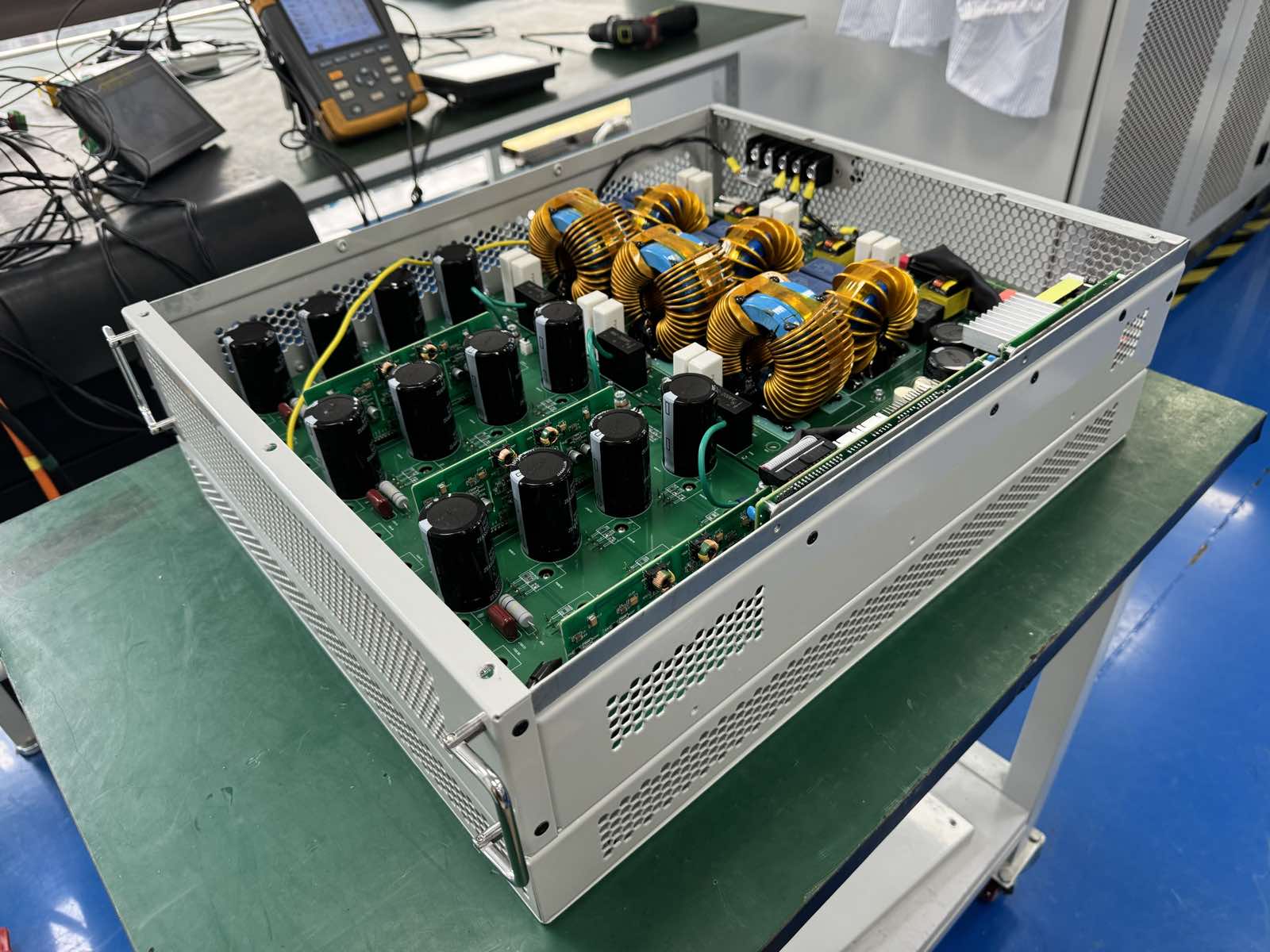
When Power Quality Equipment Must Also Be Quiet A Static Var Generator is normally evaluated by reactive power capacity, response time, power factor control and harmonic compensation. In many installations, the equipment room adds another requirement: the solution must also control noise, dust exposure and maintenance demands. YT Electric’s Fanless Static Var Generator uses natural he...
When a PV plant reaches MW scale, inverter control stops being the same thing as grid code compliance. Compliance is judged at the point of common coupling (PCC), where the utility measures voltage and current quality — not at the inverter terminals. A plant with well-behaved inverters can still fail its connection test for that reason, and a medium-voltage STATCOM is usually the device that...
SVG sizing for power factor correction cannot be estimated from transformer capacity or a motor nameplate alone. Those figures describe how much load a site could connect, not how much reactive power the load actually exchanges with the supply at the point of common coupling (PCC). A Static Var Generator chosen from nameplate data will either leave the power factor short of target or spend on capa...
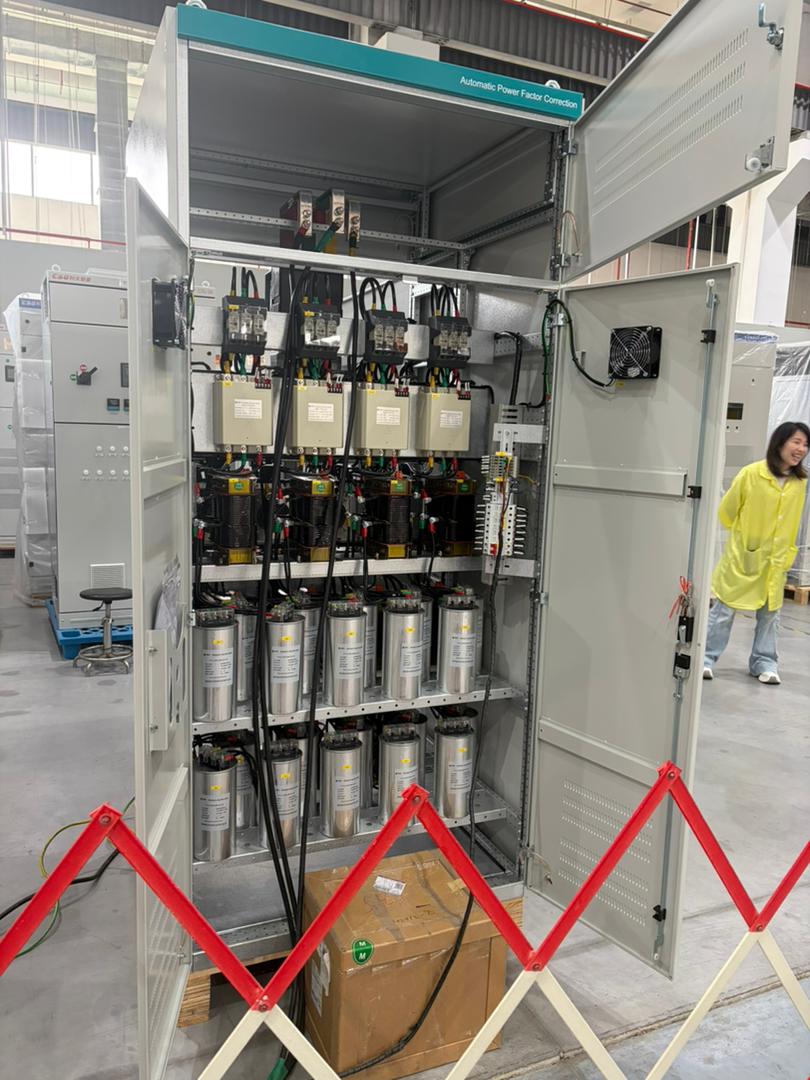
SVG Reactive Power Compensation: Beyond PF Correction For decades, plant electrical engineers and facility managers viewed reactive power compensation through a single, narrow lens: avoiding utility low power factor penalty surcharges. Traditional solutions—primarily fixed capacitor banks and automatic power factor correction (APFC) panels—were designed solely to supply bulk capacitive...
The same capacitor bank that improves power factor during full production can push a facility into leading power factor when the load falls. This overcompensation often appears at night, on weekends, or after large motors stop while capacitors remain connected. A meter may remain close to 1.00, but “leading,” “capacitive,” or the direction of kVAr shows that the syst...
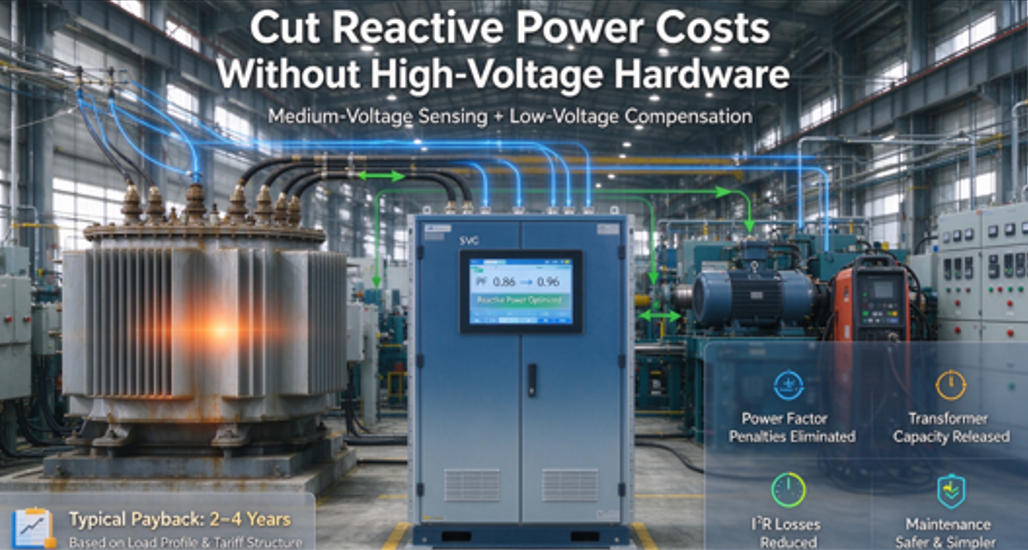
Medium-Voltage Sensing, Low-Voltage SVG Architecture Industrial plants, manufacturing complexes, and large commercial facilities frequently face a challenging power quality engineering dilemma: utility metering occurs on the medium-voltage (MV) intake bus (such as 6.6 kV, 10 kV, 13.8 kV, or 35 kV), while the vast majority of non-linear and inductive loads operate on the low-voltage (LV) 400V, 480V...
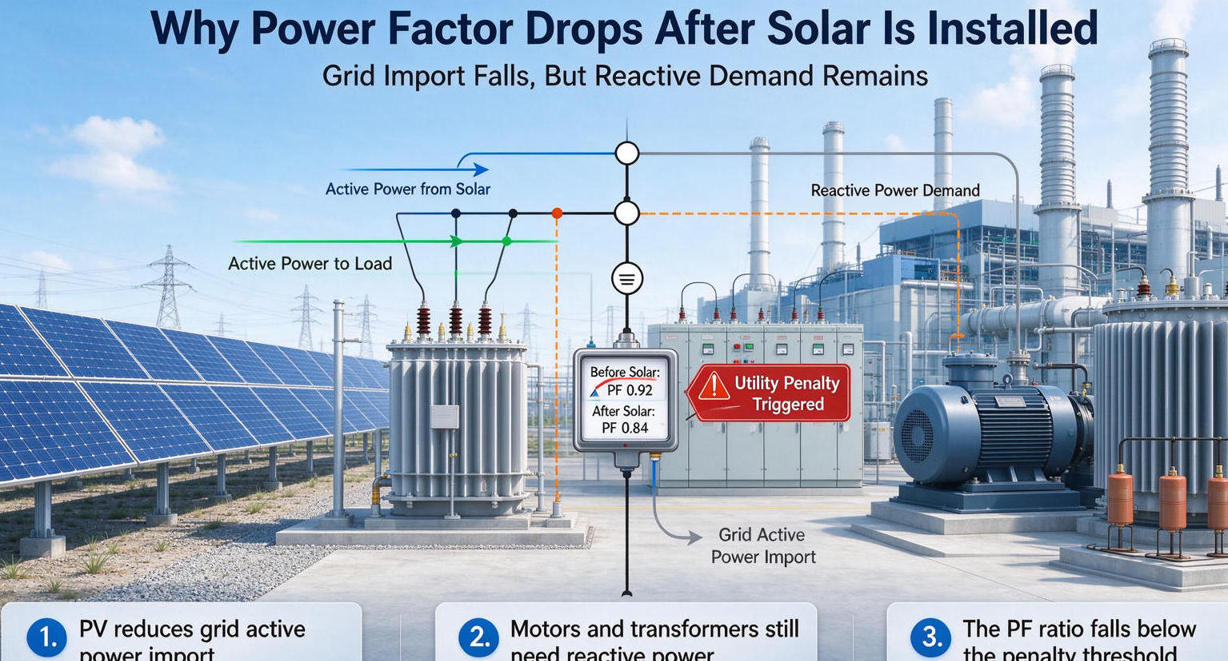
Solar Farm Power Factor Penalties: How SVG Stops Grid Fees Utility-scale and distributed solar photovoltaic (PV) plant operators worldwide face escalating monthly utility penalties for power factor (PF) non-compliance at the Point of Common Coupling (PCC). While solar farm developers engineer their systems for maximum active power generation during peak irradiance, grid codes such as IEEE 1547, IE...
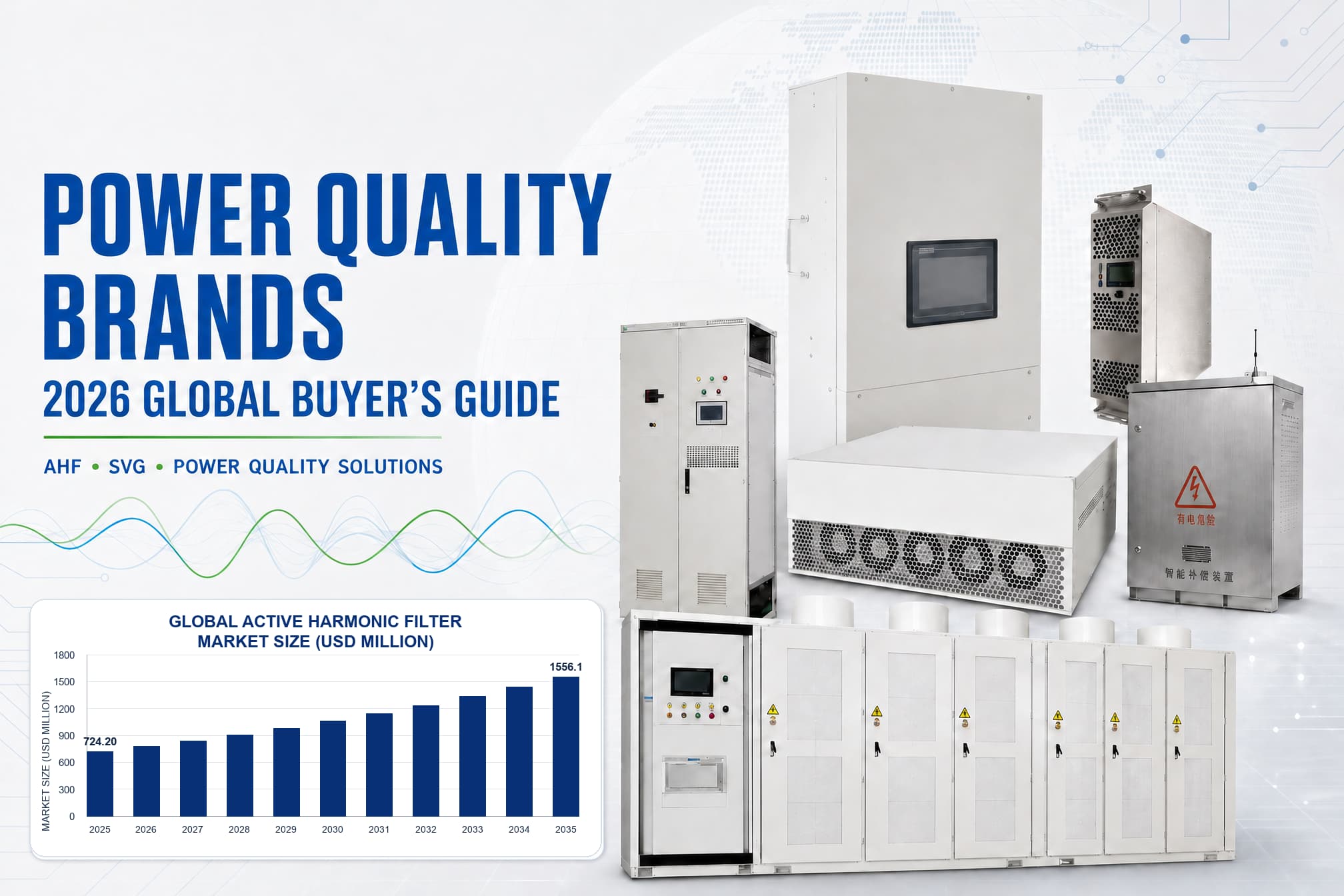
Power Quality Brands: 2026 Global Buyer’s Guide Procuring power quality equipment for mission-critical industrial plants, hyperscale AI data centers, port electrification terminals, and grid-connected renewable substations has evolved from a routine component purchase into a strategic capital investment. In 2026, severe harmonic pollution generated by megawatt-scale non-linear loads, rigid u...


 English
 français
 Deutsch
 español
 العربية
 中文




 IPv6 network supported

