Introduction: When the Protector Needs Protection Every facility manager knows the UPS is the last line of defense — the safety net that keeps critical operations alive when the grid fails or voltage sags. But there is an irony discovered only after equipment fails: the very load the UPS protects can quietly damage the UPS itself. Modern critical loads are almost always nonlinear. Rad...
A 120 kW DC fast charger is not a resistive load, and ten of them are not ten kettles. When a highway charging hub starts a batch of charging sessions within the same minute, the transformer, cables and switchgear see a load profile closer to a small welding workshop than a retail site. The consequences—harmonic distortion, reactive power and three-phase imbalance—surface as tripped br...
In modern industrial environments, automated manufacturing lines, variable frequency drives (VFDs), dynamic robotics, and heavy inductive loads have placed unprecedented demands on power distribution networks. While investing in power quality equipment is vital to reduce downtime, avoid utility penalties, and improve energy efficiency, selecting the wrong solution can lead to costly equipment fail...
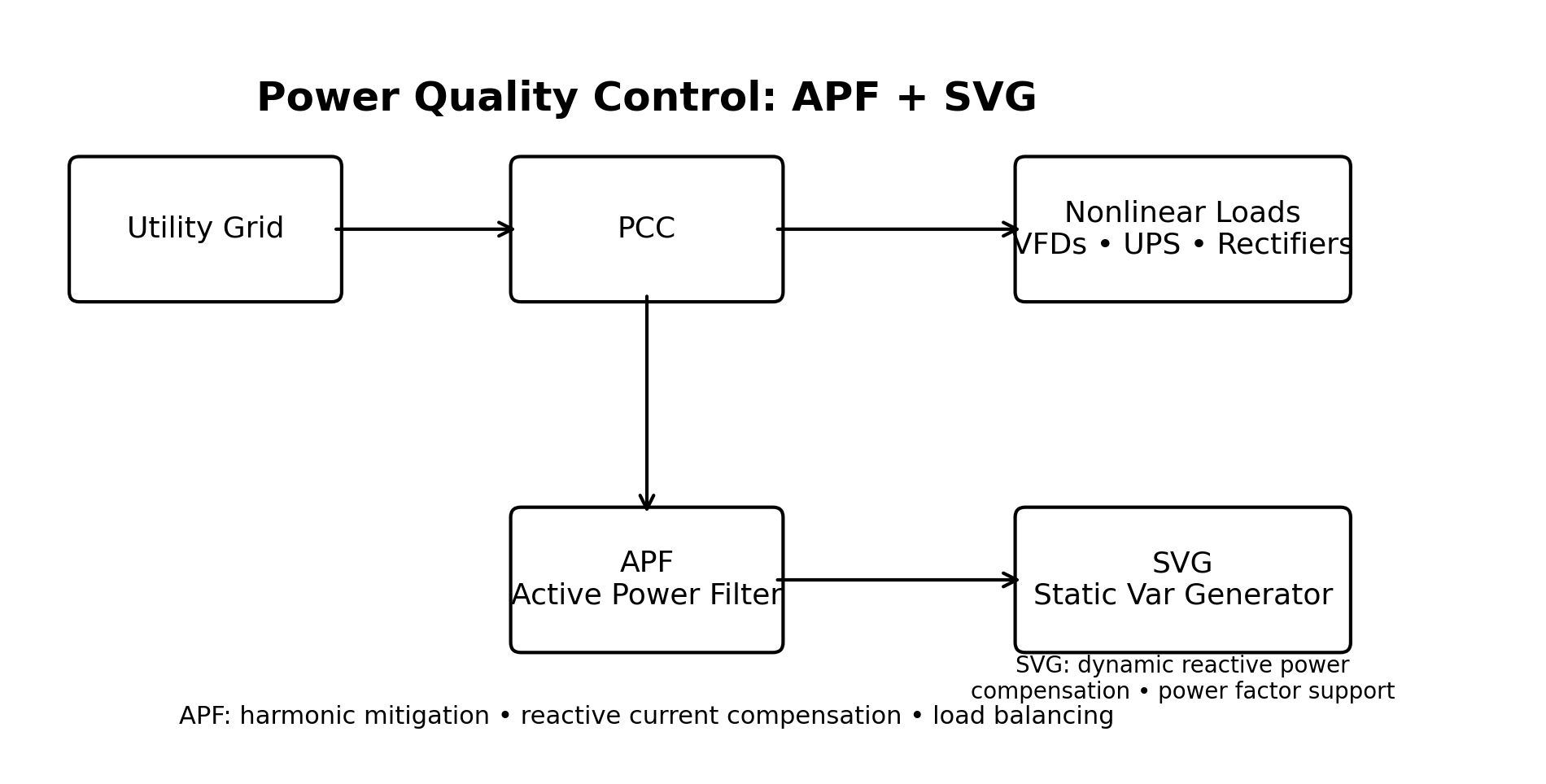
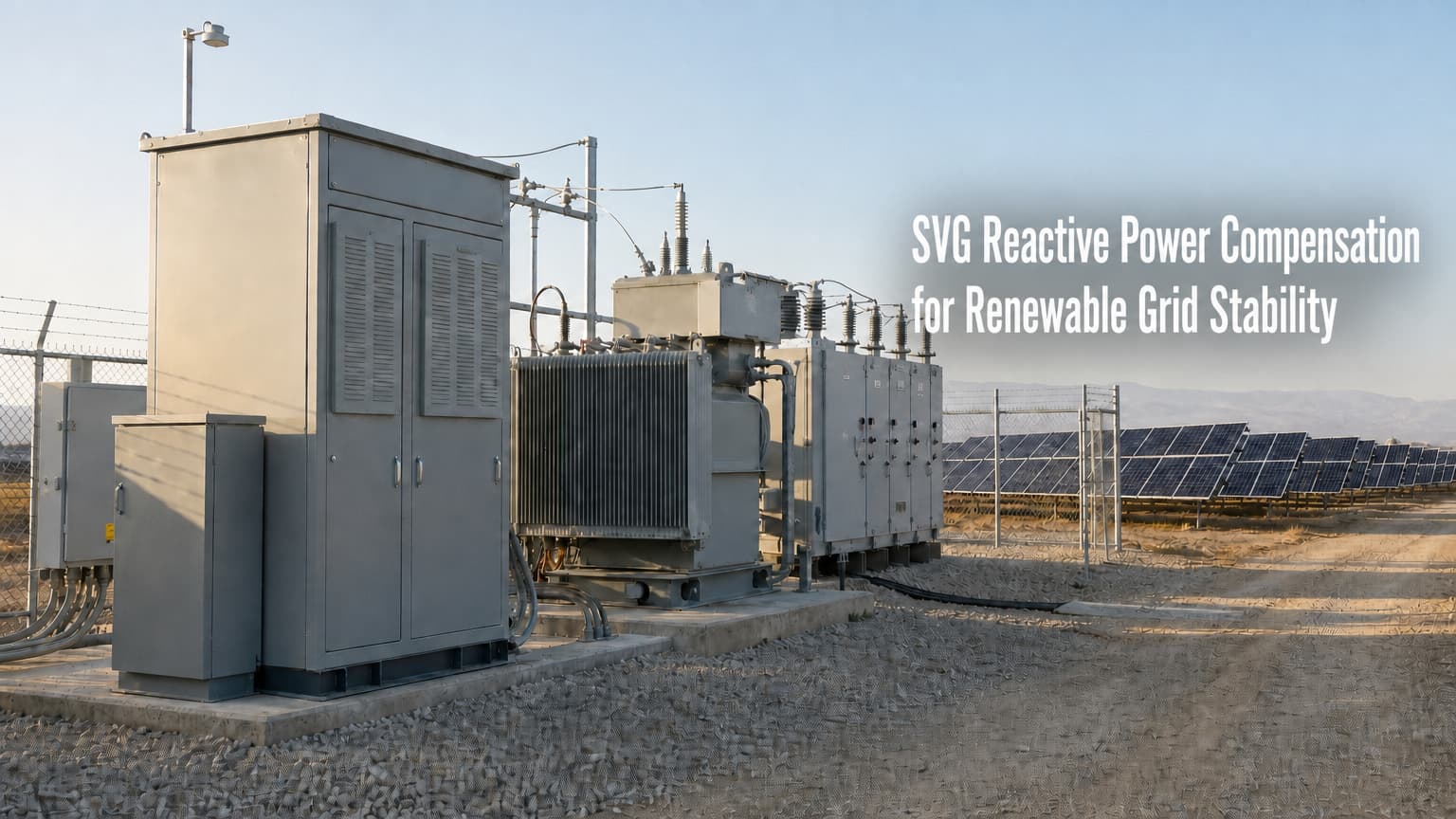
A photovoltaic plant can lose inverter blocks even when irradiance is stable. The immediate trigger is often a point-of-common-coupling (PCC) voltage excursion after cloud movement, feeder switching, or a neighboring motor load change. SVG Reactive Power Compensation addresses that engineering problem by injecting or absorbing reactive current fast enough to support the PCC rather than waiting for...
A vehicle body shop can run hundreds of welding points per minute, while robots, presses, conveyors, paint lines and HVAC systems change their electrical demand continuously. The production line may look mechanically stable, but the electrical load seen by the transformer is not. Rapid reactive-power changes, low power factor, voltage fluctuation and harmonic current can appear whenever several we...
Hybrid SVG + Capacitor Bank Reactive Power Compensation Your capacitor bank trips once a month, the contactor welds shut, and the DISCOM bill still carries a penalty line. The 250 kVA rectifier load from your new VFDs is the reason, and adding more capacitors will make it worse. A hybrid SVG + capacitor bank system fixes the root cause instead of compensating for it. This article explains why fixe...
SVG and AHF maintenance is the scheduled inspection, measurement and component-replacement programme that keeps a static var generator (SVG) and an active harmonic filter (AHF) inside their design limits — stable reactive power compensation, a corrected power factor, and harmonic current below the limits agreed at the point of common coupling (PCC). Most plants do not lose power quality equi...
Why a Solar Plant Needs Active Compensation A Static Var Generator (SVG) is an active, IGBT-based power-electronics compensator that stabilises voltage, supplies or absorbs reactive power and filters harmonic current at the point of common coupling (PCC) of a solar plant. It turns unstable PV output into grid-compliant power for EPC contractors, electrical engineers, procurement teams and power-qu...


 English
 français
 Deutsch
 español
 العربية
 中文
中文



 IPv6 network supported