In the realm of power systems, achieving top-notch power quality is a constant pursuit. One key technology that comes to the rescue is the Active Power Filter (APF). The Active Power Filter Production Line plays a crucial role in ensuring the efficient and reliable operation of power systems. Often, we only notice power quality problems when disasters strike. System malfunctions, equ...
kVAr and Amps in power quality Reactive Power (kVAR) Reactive power, measured in kilovolt-amperes reactive (kVAR), is the component of alternating current (AC) power that does not perform any actual work but is necessary for maintaining the voltage levels required for the active (real) power to do useful work. It is associated with the energy storage in inductive and capacitive elements of the pow...
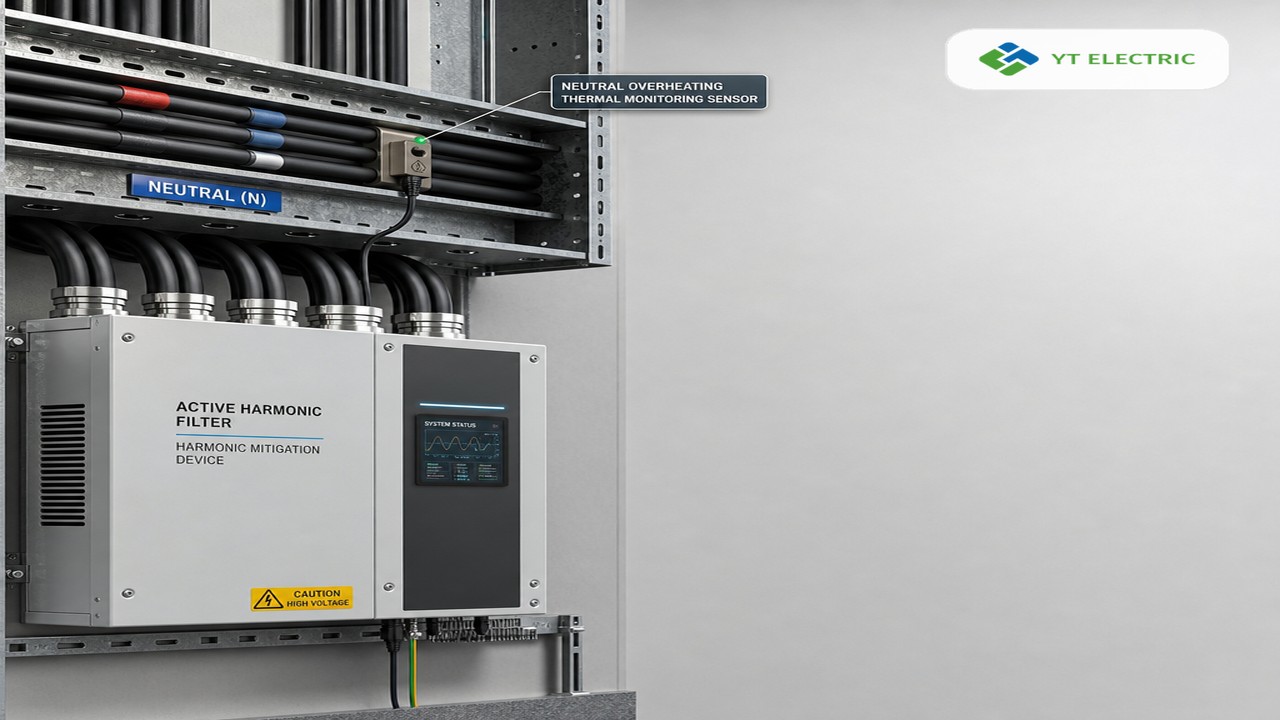
Mitigating Multi-Frequency Triplen Harmonics and Thermal Aging in Industrial Transformer Neutral Bushings Quick Engineering Answer: In industrial distribution substations supplying non-linear rectifiers, commercial lighting, and data center IT loads, circulating zero-sequence triplen harmonic currents (150 Hz, 450 Hz, 750 Hz) concentrate in the secondary neutral bushing of Dyn11 transformers. Due ...
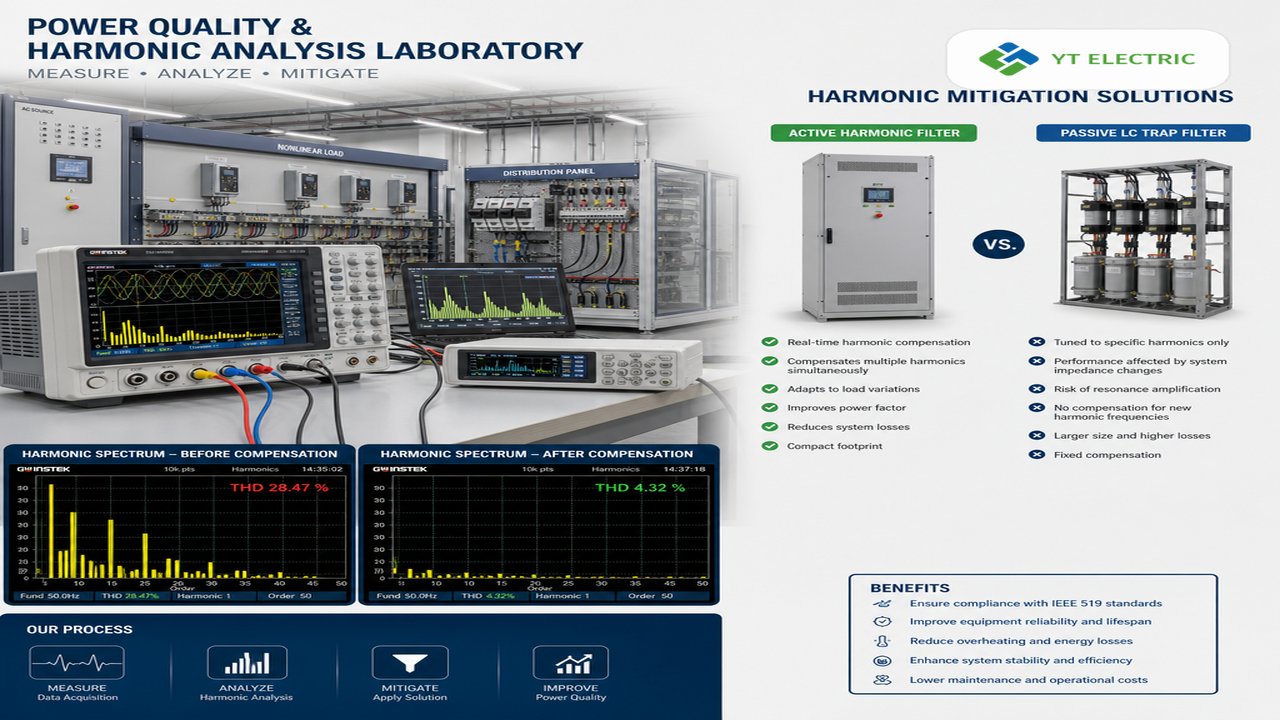
Understanding the IEEE 519–2014 Standard for Harmonics The IEEE 519-2014 standard establishes criteria for voltage and current harmonics distortion in electrical system design. It provides detailed explanations of the existing voltage and current waveforms throughout the system and sets waveform distortion goals for system designers. The standard undergoes periodic updates to stay align...
Neutral current and Active harmonic filter Active Harmonic Filter (AHF) and Neutral Current Active Harmonic Filter (AHF) is used to improve power quality, by harmonics filtering, reactive power compensation and 3 phase balancing in power systems. Harmonics are voltage or current waveforms that are integer multiples of the fundamental frequency. They can cause various power quality issues, includin...
Overview As regulatory authorities impose ever-stricter requirements for power quality, utilities increasingly want to know which customer is imposing harmonics and flicker on the utility power system. As a result, we are often asked if we can determine the “direction” of harmonic power flow, and what can be done about flicker. Harmonic Power Flow Harmonics, like fundamental frequencie...
How Harmonics Form, Spread, and Clean Up in Non-Linear Loads 1. Introduction The industrial revolution changed life with technology, notably electrical power globally distributed by utilities. Today, power quality is essential for constant equipment operation, demanding glitch-free, stable power for domestic and industrial users. Utilities mandate high-quality equipment to prevent system power iss...


 English
 français
 Deutsch
 español
 العربية
 中文




 IPv6 network supported

