Capacitor bank overheating after adding VFDs is a power quality symptom, not a capacitor defect. VFD rectifiers inject harmonic current, the bank offers a low-impedance path at those frequencies, and parallel resonance between the bank and the supply can amplify that current until fuses open, contactors chatter and capacitor cans swell. A capacitor bank supplies reactive power to correct power fac...
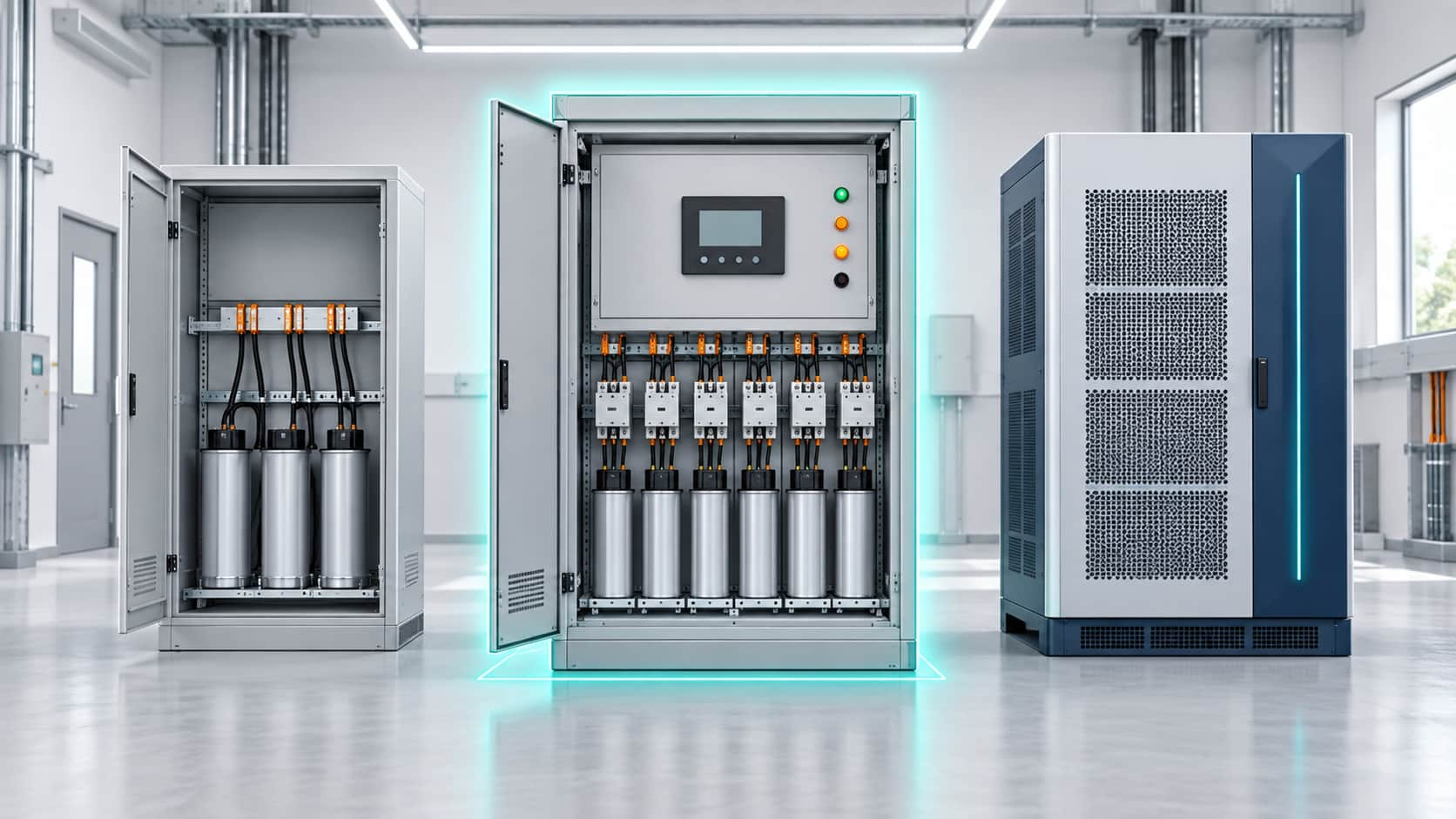
Capacitor Banks vs. Active SVG: Which Power Factor Correction Is Right for You? When your electricity bill suddenly spikes — or your utility sends a power-factor penalty notice — a common fix is to install power factor correction (PFC). For decades, that meant one thing: capacitor banks. Today you have a second, modern option: the Static Var Generator (SVG). Both i...
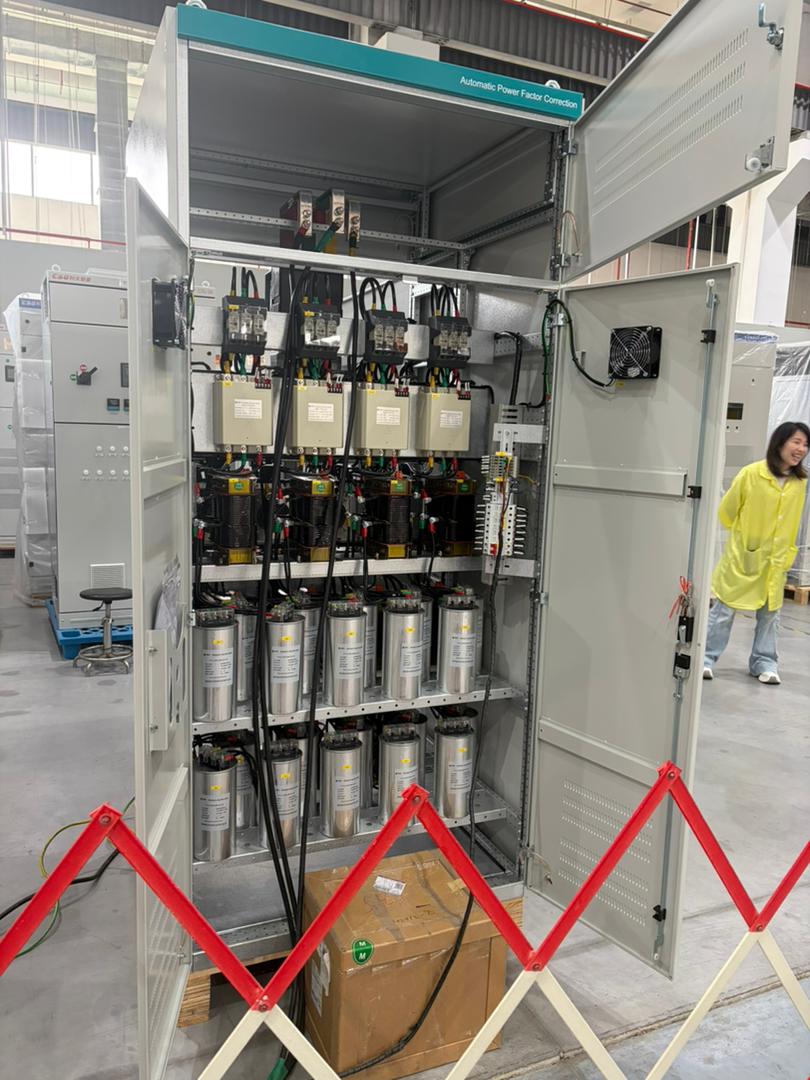
A fixed capacitor bank is often the most economical way to correct power factor — provided the load stays reasonably steady. When motors cycle or production changes by shift, it may overcompensate overnight and undercompensate at peak. An Automatic Power Factor Correction (APFC) panel switches capacitor steps as demand changes; a Static Var Generator (SVG) adjusts reactive power continuously...
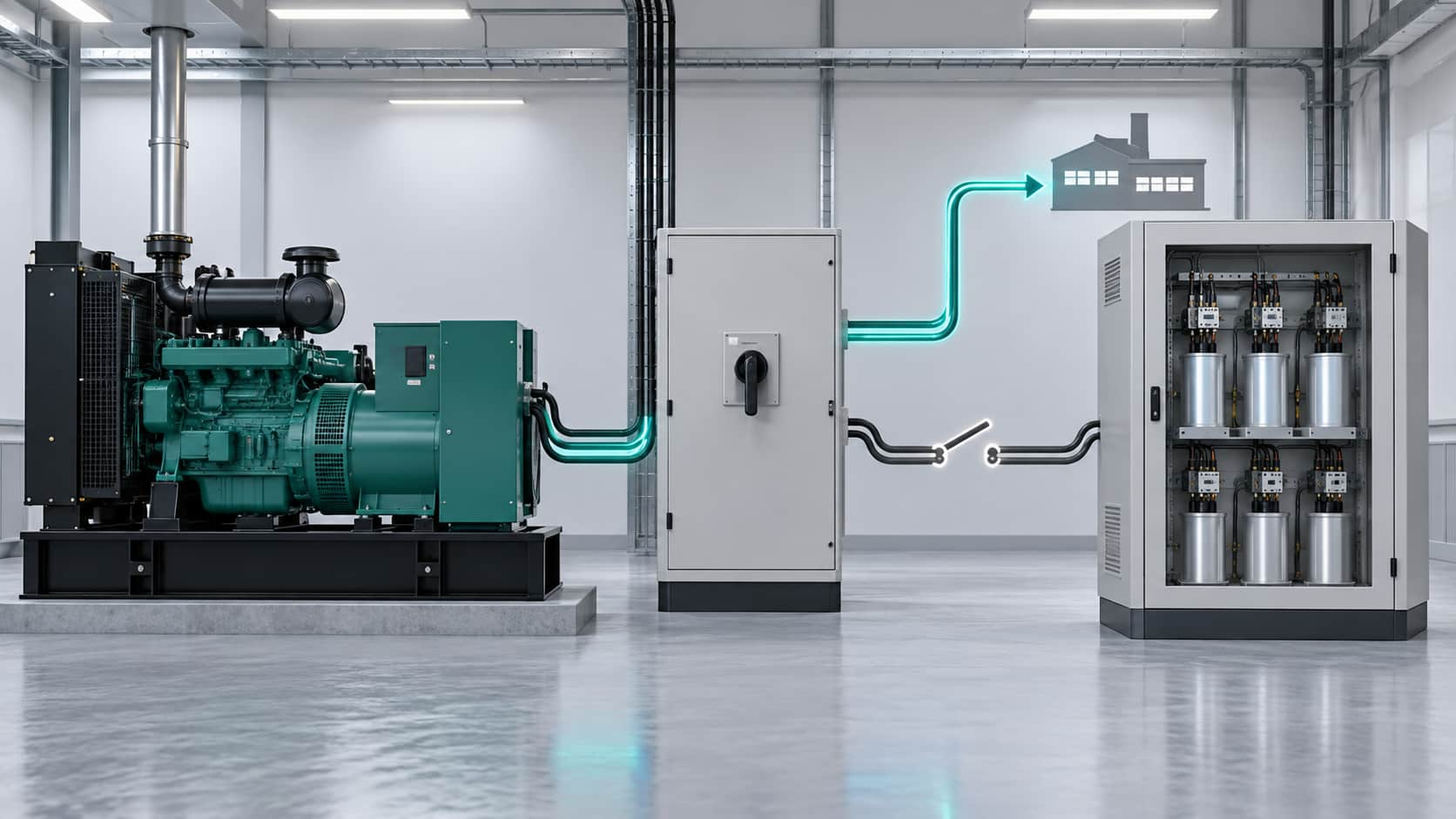
Quick Answer An APFC panel is not simply permitted or forbidden on generator power. Compatibility depends on generator capacity, the power factor of the load that stays online, the size of each load step, harmonic distortion, available short-circuit capacity, governor and excitation response, the generator manufacturer’s limits, and the logic inside the APFC controller. On many standby syste...
Transformer Overheating from Harmonics: K-Factor vs AHF Mitigation In heavy industry, large data centers, and plants packed with VFDs and six-pulse rectifiers, a distribution transformer can run within its nameplate kVA and still develop abnormal temperature rise, oil-temperature alarms, or accelerated winding insulation ageing. The usual load-current check misses the frequency content of that cur...
Why Does an APFC Panel Keep Switching? Causes of Capacitor Step Hunting and How to Stop It In commercial buildings, manufacturing plants, and distribution substations, Automatic Power Factor Correction (APFC) panels are deployed to maintain target power factor (typically 0.95 to 0.98 lagging) and avoid costly utility reactive power penalties. An APFC panel relies on a microprocessor-based power fa...
The same capacitor bank that improves power factor during full production can push a facility into leading power factor when the load falls. This overcompensation often appears at night, on weekends, or after large motors stop while capacitors remain connected. A meter may remain close to 1.00, but “leading,” “capacitive,” or the direction of kVAr shows that the syst...


 English
 français
 Deutsch
 español
 العربية
 中文





 IPv6 network supported

