Hybrid power factor correction refers to a combination of capacitor banks and power electronic converters (such as Active Power Harmonic Filter or Static Var Generator) used to improve power factor and mitigate harmonics in electrical power systems. The advantages of hybrid power factor correction over capacitor banks alone include: Power Factor Correction: Hybrid solutions offer dynamic and preci...
Stepless compensation and multi-step compensation are two different approaches used in power system compensation to mitigate the effects of reactive power and voltage fluctuations. Stepless Compensation: Stepless compensation, also known as continuous compensation, involves the use of a continuously adjustable reactive power compensator to regulate voltage and control reactive power flow. The most...
Power quality is related to the characteristics of electrical power, such as voltage, frequency, and waveform, that affect the performance of electrical devices and equipment. Energy storage, on the other hand, refers to the conversion and storage of electrical energy for later use. While power quality and energy storage are distinct concepts, they can be interrelated in certain ways. Energy stora...
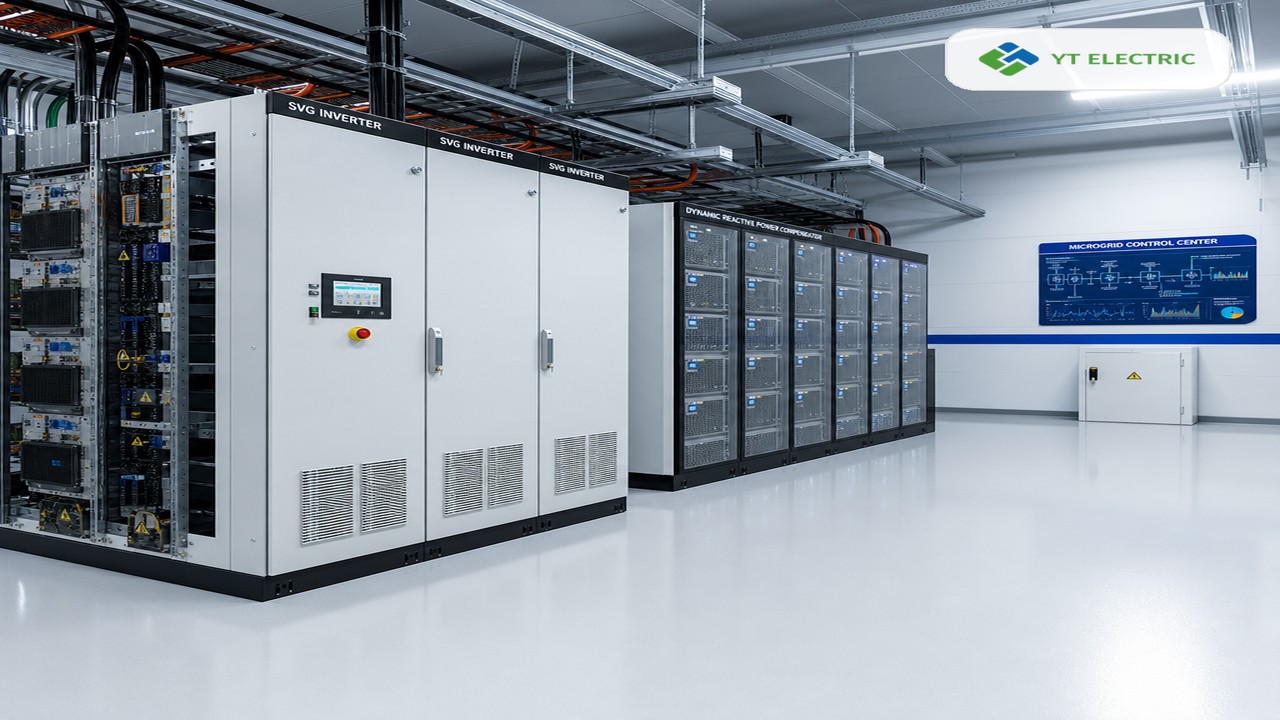
Ultra-Fast Sub-Cycle Reactive Power Compensation in Inverter-Dominated Renewable Microgrids & BESS Facilities Quick Engineering Answer: Inverter-dominated renewable microgrids and Battery Energy Storage System (BESS) installations suffer from low physical rotational inertia and rapid solar irradiance ramping ($> 50\%\text{ MW/s}$), causing severe voltage flicker, transient reactive imbalanc...
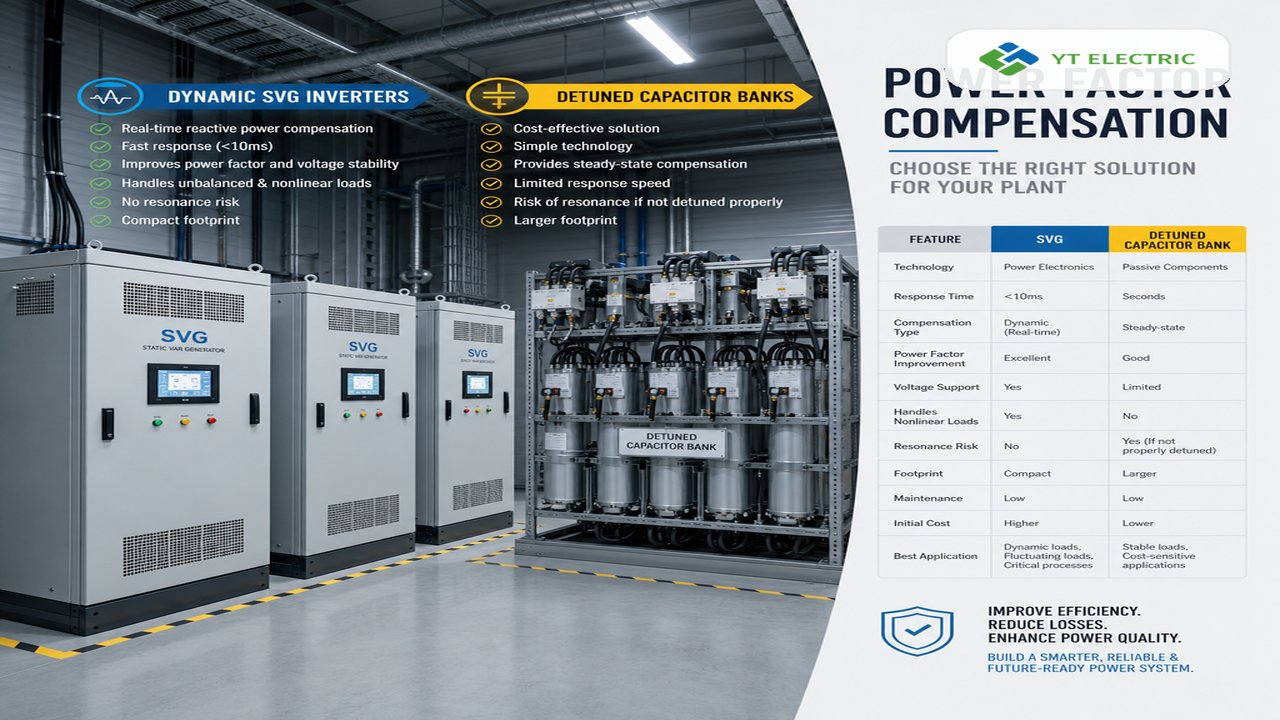
CT position of SVG and and capacitor banks SVG (Static Var Generators) and capacitor bank can work together in a power system to provide a comprehensive solution for reactive power compensation and power quality improvement. Here’s how they can complement each other: Combined Use of SVG and Capacitor Banks 1. Complementary Functions Capacitor Banks: Provide bulk reactive power compensation. ...
General Reference – Power Quality Assessment Procedure Abstract: Power quality is a frequently used term that means different things to different people. Common power quality problems occur because of the mismatch between a utility's power and the customer's energy-using equipment, leading to faulty operation. Some common power issues are sudden changes in voltage, electrical d...
Benefits of reactive power compensation What is reactive power? Reactive power is the electrical energy used to establish and maintain a circuit's electric and magnetic fields, particularly in devices with electromagnetic coils. Reactive power is measured in VAR (volt-amperes reactive) or kVAR (kilovolt-ampere active). The formula for reactive power is: Q=V×I×sinϕ Q: reacti...


 English
 français
 Deutsch
 español
 العربية
 中文




 IPv6 network supported