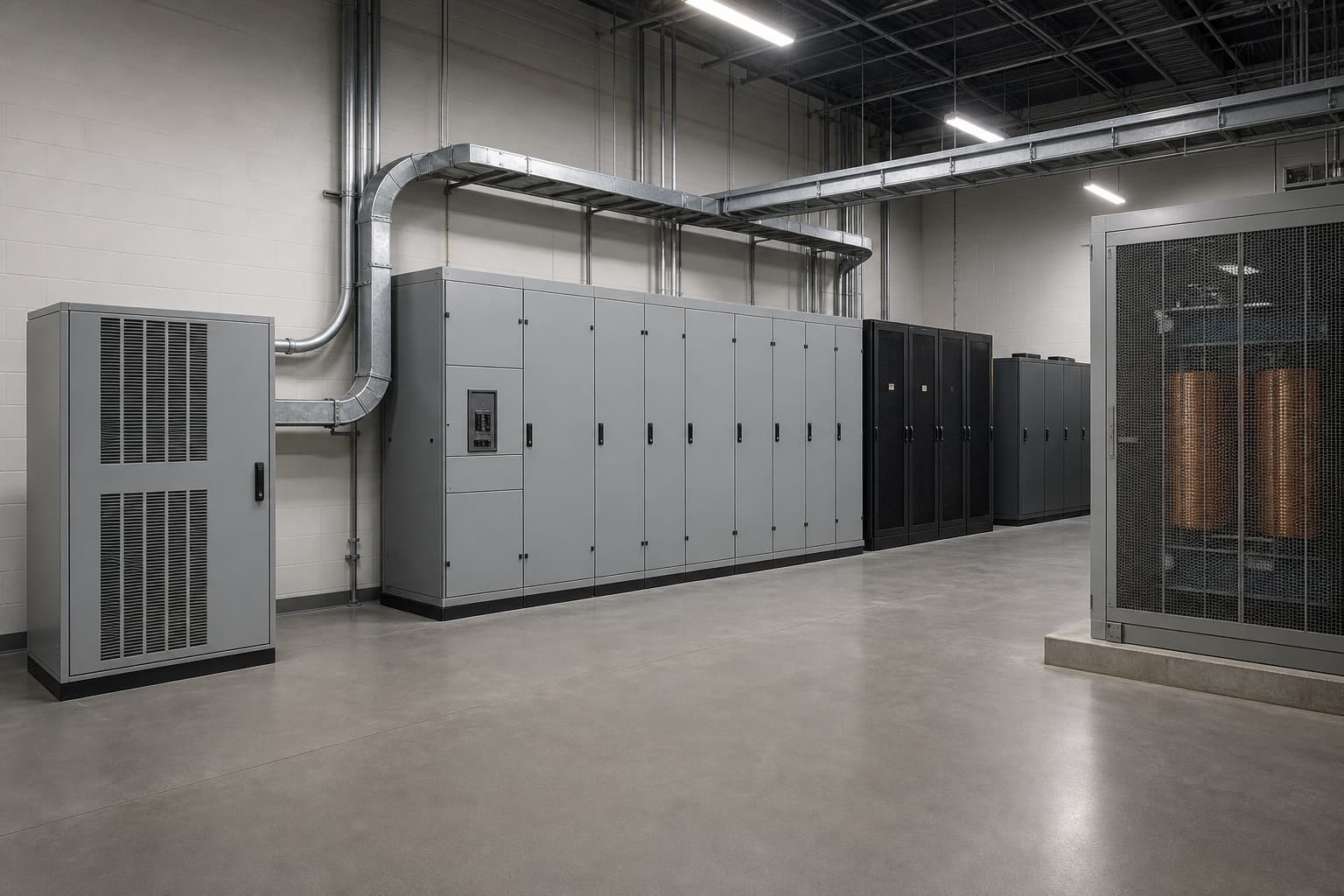
A 480 V transformer that runs within nameplate kVA can develop abnormal temperature rise when VFDs, UPS rectifiers, and switched-mode loads inject high harmonic current into its secondary bus. The transformer does not see only useful fundamental current; it carries distorted current through its windings, terminations, and neutral conductor hour after hour. An Active Harmonic Filter measures...
Hybrid SVG + Capacitor Bank Reactive Power Compensation Your capacitor bank trips once a month, the contactor welds shut, and the DISCOM bill still carries a penalty line. The 250 kVA rectifier load from your new VFDs is the reason, and adding more capacitors will make it worse. A hybrid SVG + capacitor bank system fixes the root cause instead of compensating for it. This article explains why fixe...
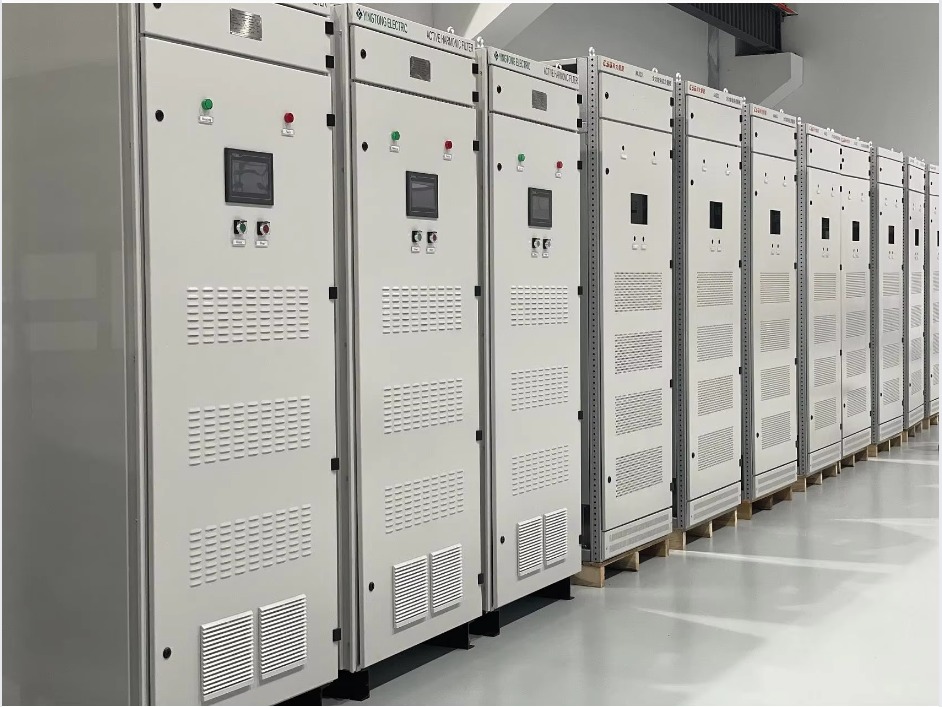
SVG and AHF maintenance is the scheduled inspection, measurement and component-replacement programme that keeps a static var generator (SVG) and an active harmonic filter (AHF) inside their design limits — stable reactive power compensation, a corrected power factor, and harmonic current below the limits agreed at the point of common coupling (PCC). Most plants do not lose power quality equi...
Why a Solar Plant Needs Active Compensation A Static Var Generator (SVG) is an active, IGBT-based power-electronics compensator that stabilises voltage, supplies or absorbs reactive power and filters harmonic current at the point of common coupling (PCC) of a solar plant. It turns unstable PV output into grid-compliant power for EPC contractors, electrical engineers, procurement teams and power-qu...
A 1,000 kVA transformer feeding six-pulse VFDs, spot welders and single-phase loads is a textbook harmonic source. Field measurements on such busbars typically show current THD of 25–40 % at the PCC, with the 5th and 7th orders dominant. Third-order currents add up in the neutral conductor and overheat it. Fixed capacitor banks rarely survive this environment. When the natural resonan...
Poor power quality rarely appears as its own line on an electricity bill, but it can raise the charges a facility already pays by increasing current, losses and power-factor or demand penalties. When a bill climbs the tariff is blamed first — yet low power factor, harmonic distortion and voltage imbalance make a plant draw more current than the useful work it produces requires. This article ...
Harmonics are extra currents and voltages at integer multiples of the supply frequency that non-linear loads draw on top of the fundamental sine wave. Their effect is costly: transformers, motors and neutral conductors overheat, relays mis-trip, and equipment life shortens even below rated load. This guide covers measurement at the point of common coupling (PCC) and how to compare the main mitigat...
Power Factor and Reactive Power: The Hidden Cost on Your Electricity Bill Your electricity bill may be higher than it needs to be — not because you use more energy, but because of how you use it. The culprit is power factor, and it's one of the most overlooked opportunities in energy management. Active, Reactive and Apparent Power To understand power factor...


 English
 français
 Deutsch
 español
 العربية
 中文
中文



 IPv6 network supported