1. Summary Due to the advantages of simple control and low cost of uncontrolled rectifying converter, it is widely used in switching power supply, frequency converter and other equipment. However, this kind of converter will inject a large amount of harmonic current into the power grid, and increasingly become the most important harmonic source in the power grid. Most of the frequency converters o...
Harmonics: Not a Problem Unless They Become One Harmonics in modern power systems are now considered “the new normal” due to the widespread use of non-linear loads. While harmonics can lead to issues such as overheating, overloads, and resonance, they don’t always pose immediate problems. The key is understanding when harmonics are actually causing harm. When Should You Ac...
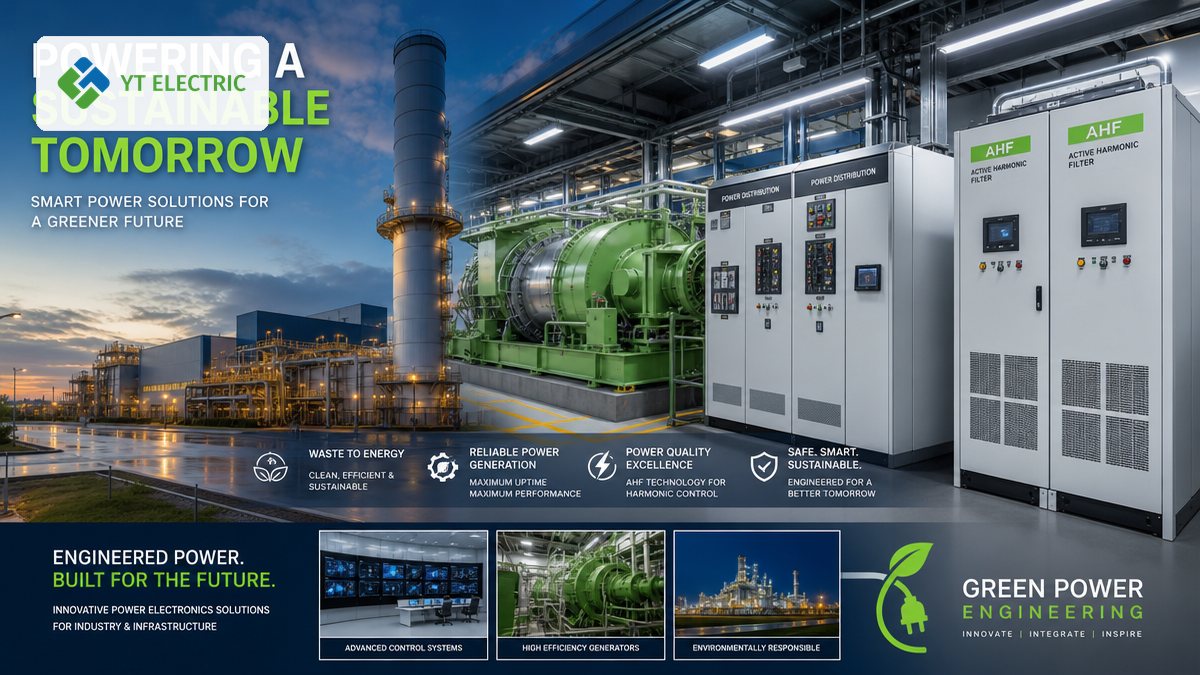
Power Quality Revolution: How Active Harmonic Filters Unlock Sustainable Waste-to-Energy Operations Quick Engineering Answer: Waste-to-Energy (WtE) and municipal biomass incineration plants operate complex electrical networks where massive variable frequency drives (VFDs) on boiler draft fans, flue gas scrubbers, and leachate pumps inject severe harmonic distortion (THDi > 22%), while synchrono...
I. Why Are Non-Linear Loads So Ubiquitous in Our Daily Lives? The fundamental reason is technological advancement and our relentless pursuit of efficiency and control. The core of non-linear loads is various power electronic devices that precisely control electrical energy through rapid switching. Here are the specific reasons for their ubiquity: Demand for Energy Savings and Efficiency:...
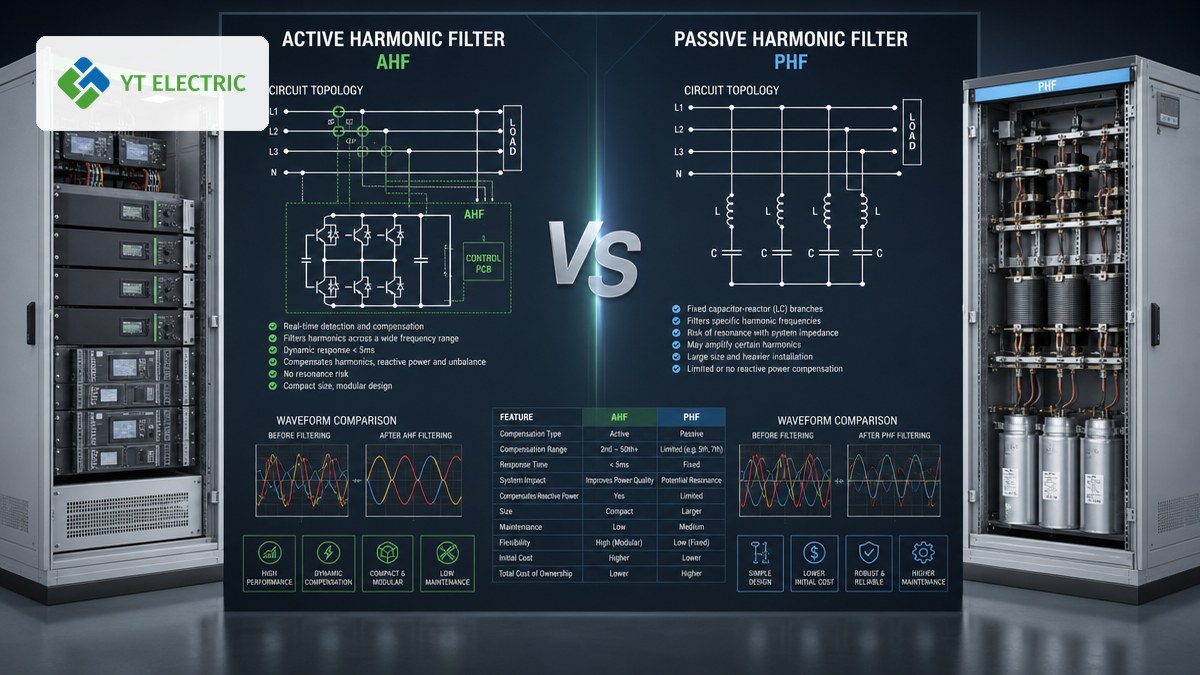
Active Harmonic Filter vs. Passive Harmonic Filter: The Definitive Engineering & TCO Comparison Quick Engineering Answer: The fundamental difference between an Active Harmonic Filter (AHF) and a Passive Harmonic Filter (PHF) lies in circuit topology: PHFs use fixed inductor-capacitor (LC) tuned shunt branches that can only target 1 or 2 specific harmonic orders (e.g., 5th or 7th) and suffer fr...
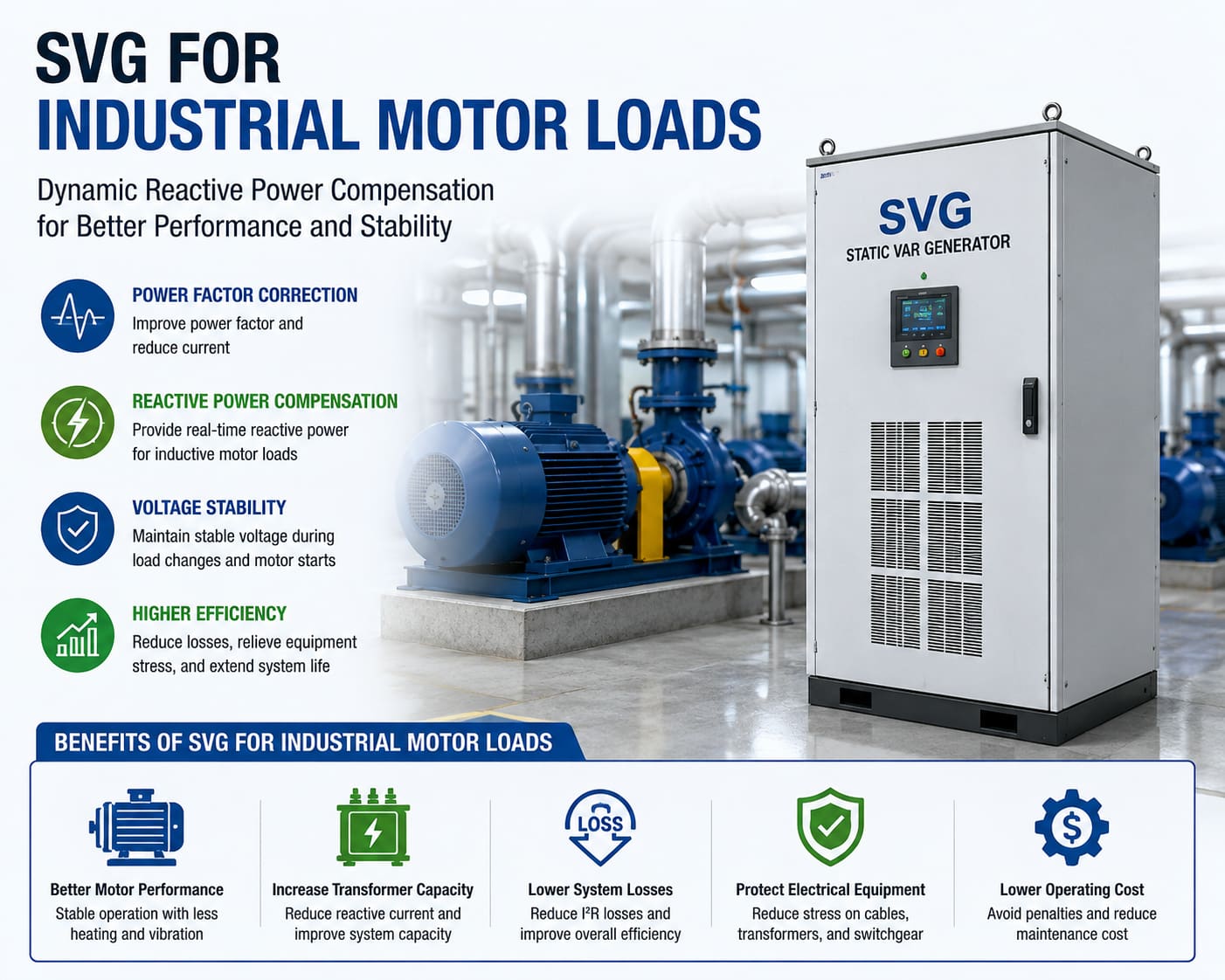
SVG for Industrial Motor Loads Motor loads are common in factories, mines, water treatment plants, commercial buildings, and pumping systems. These loads are reliable and useful, but they also create reactive power demand. When reactive power is not controlled, the system may face poor power factor, higher current, voltage instability, and extra stress on electrical equipment. This is why S...
Capacitor bank overheating is a common problem in modern electrical systems. Many facilities install capacitor banks for power factor correction, but the capacitor bank still runs hot, trips, or fails early. In many cases, capacitor bank overheating is caused by harmonic distortion. Harmonic distortion puts extra electrical stress on the capacitor bank. A capacitor bank is designed to supply react...
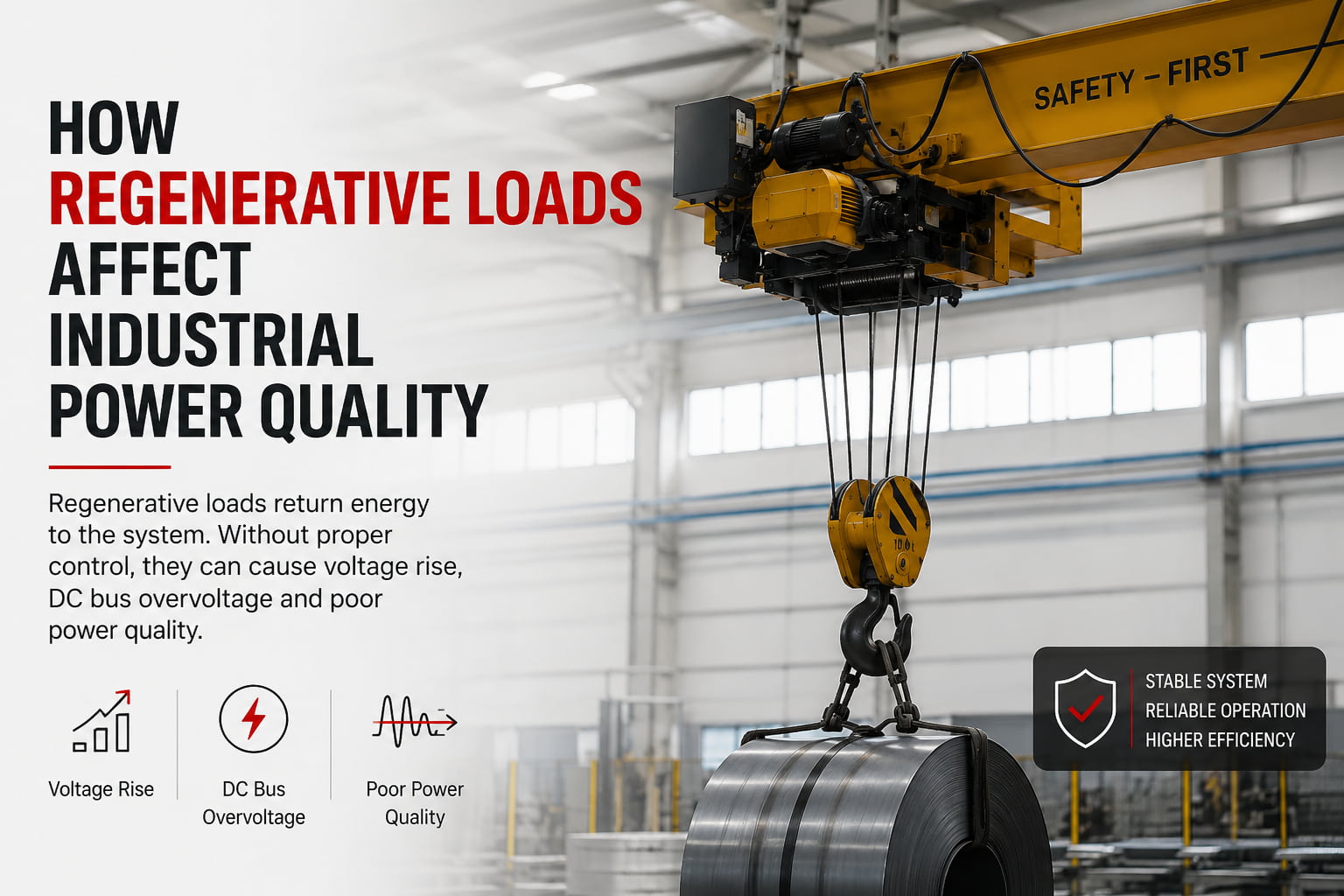
How Regenerative Loads Affect Industrial Power Quality Regenerative loads are common in modern industrial systems. They appear when a motor changes from consuming power to returning power.This often happens during braking, lowering, deceleration, or rapid speed changes.Cranes, hoists, elevators, rolling mills, centrifuges, test benches, and conveyor systems can all create regenerative loads.These ...


 English
 français
 Deutsch
 español
 العربية
 中文




 IPv6 network supported

