Introduction To Capacitors And Reactors Reactance includes inductive reactance and capacitive reactance, and reactor includes inductive reactance (inductor) and capacitive reactance (capacitor). Inductance has the function of blocking AC and blocking DC, that is, in the AC circuit, the characteristics of inductive reactance are used to pass low-frequency DC and block high-frequency AC. The capacit...
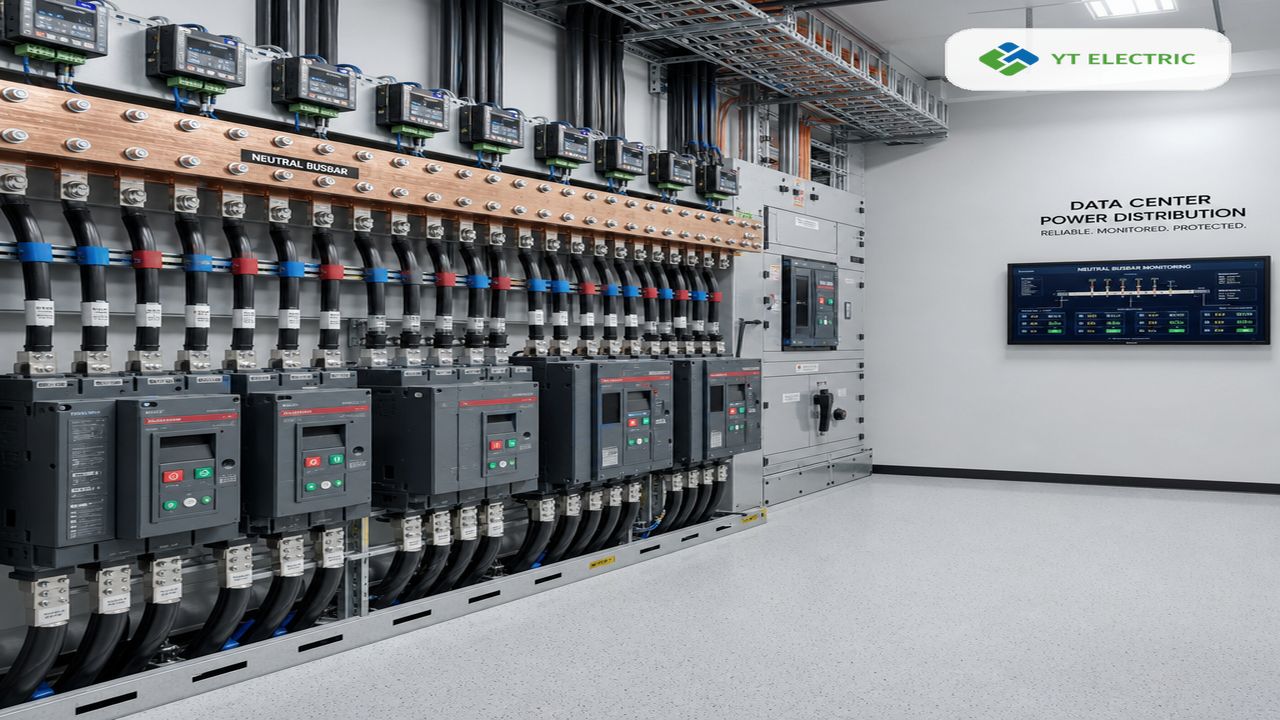
What Causes Excessive Neutral Line Current in Modern Commercial and Industrial Power Distribution Systems? Quick Engineering Answer: Excessive neutral line current in three-phase four-wire (3P4W) distribution systems is caused by two distinct physical mechanisms: (1) Linear Phase Load Unbalance ($I_N = I_A + I_B + I_C$), where unequal single-phase fundamental currents create a vector return curren...
kVAr and Amps in power quality Reactive Power (kVAR) Reactive power, measured in kilovolt-amperes reactive (kVAR), is the component of alternating current (AC) power that does not perform any actual work but is necessary for maintaining the voltage levels required for the active (real) power to do useful work. It is associated with the energy storage in inductive and capacitive elements of the pow...
Mitigating Multi-Frequency Triplen Harmonics and Thermal Aging in Industrial Transformer Neutral Bushings Quick Engineering Answer: In industrial distribution substations supplying non-linear rectifiers, commercial lighting, and data center IT loads, circulating zero-sequence triplen harmonic currents (150 Hz, 450 Hz, 750 Hz) concentrate in the secondary neutral bushing of Dyn11 transformers. Due ...
Neutral Current and Single-Phase Loads Neutral current is an essential aspect to consider in electrical systems, especially when dealing with single-phase loads in a three-phase system. The presence of single-phase loads can lead to various issues related to N line current, impacting the overall power quality and safety of the system. Understanding N line Current in Systems with Single-Phase Loads...
Understanding the IEEE 519–2014 Standard for Harmonics The IEEE 519-2014 standard establishes criteria for voltage and current harmonics distortion in electrical system design. It provides detailed explanations of the existing voltage and current waveforms throughout the system and sets waveform distortion goals for system designers. The standard undergoes periodic updates to stay align...
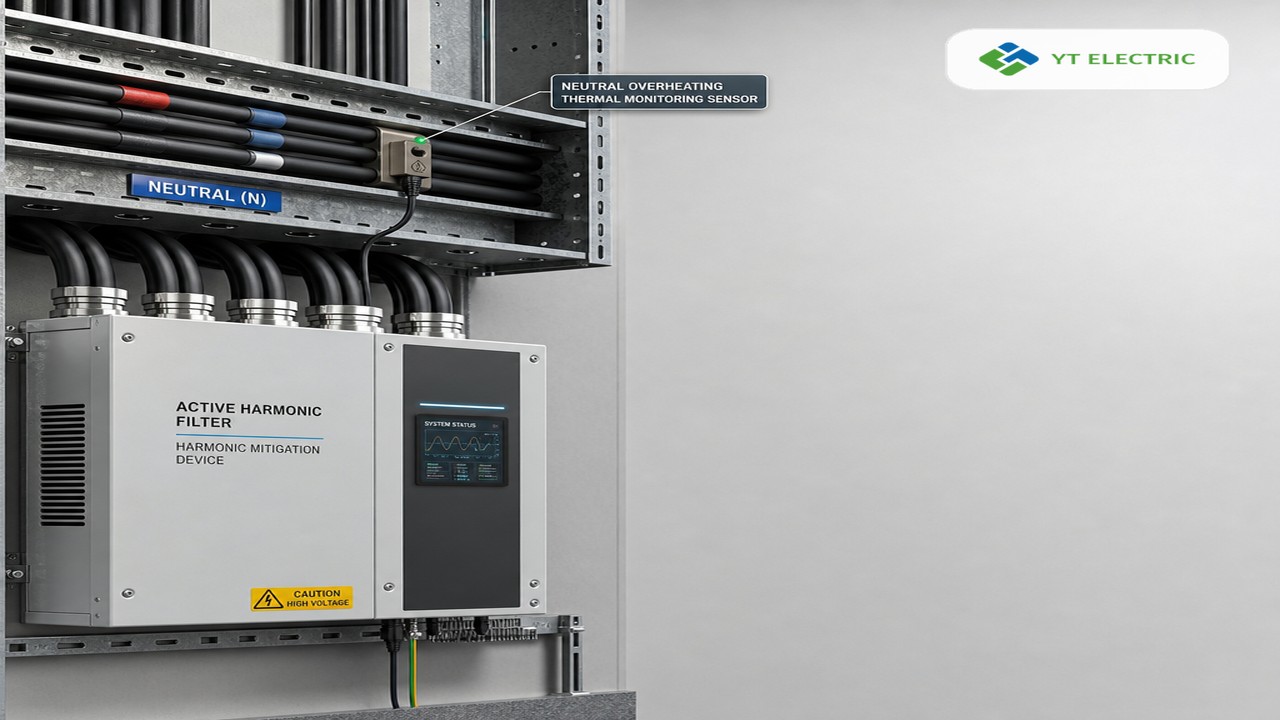
Neutral current and Active harmonic filter Active Harmonic Filter (AHF) and Neutral Current Active Harmonic Filter (AHF) is used to improve power quality, by harmonics filtering, reactive power compensation and 3 phase balancing in power systems. Harmonics are voltage or current waveforms that are integer multiples of the fundamental frequency. They can cause various power quality issues, includin...
Introduction The best distribution system is one that will, cost-effectively and safely, supply adequate electric service to both present and future probable loads. The function of the electric power distribution system in a building or an installation site is to receive power at one or more supply points and to deliver it to the individual lamps, motors and all other electrically operated devices...


 English
 français
 Deutsch
 español
 العربية
 中文




 IPv6 network supported

