

 English
 français
 Deutsch
 español
 العربية
 中文
中文
How Voltage Fluctuation Affects Industrial Equipment
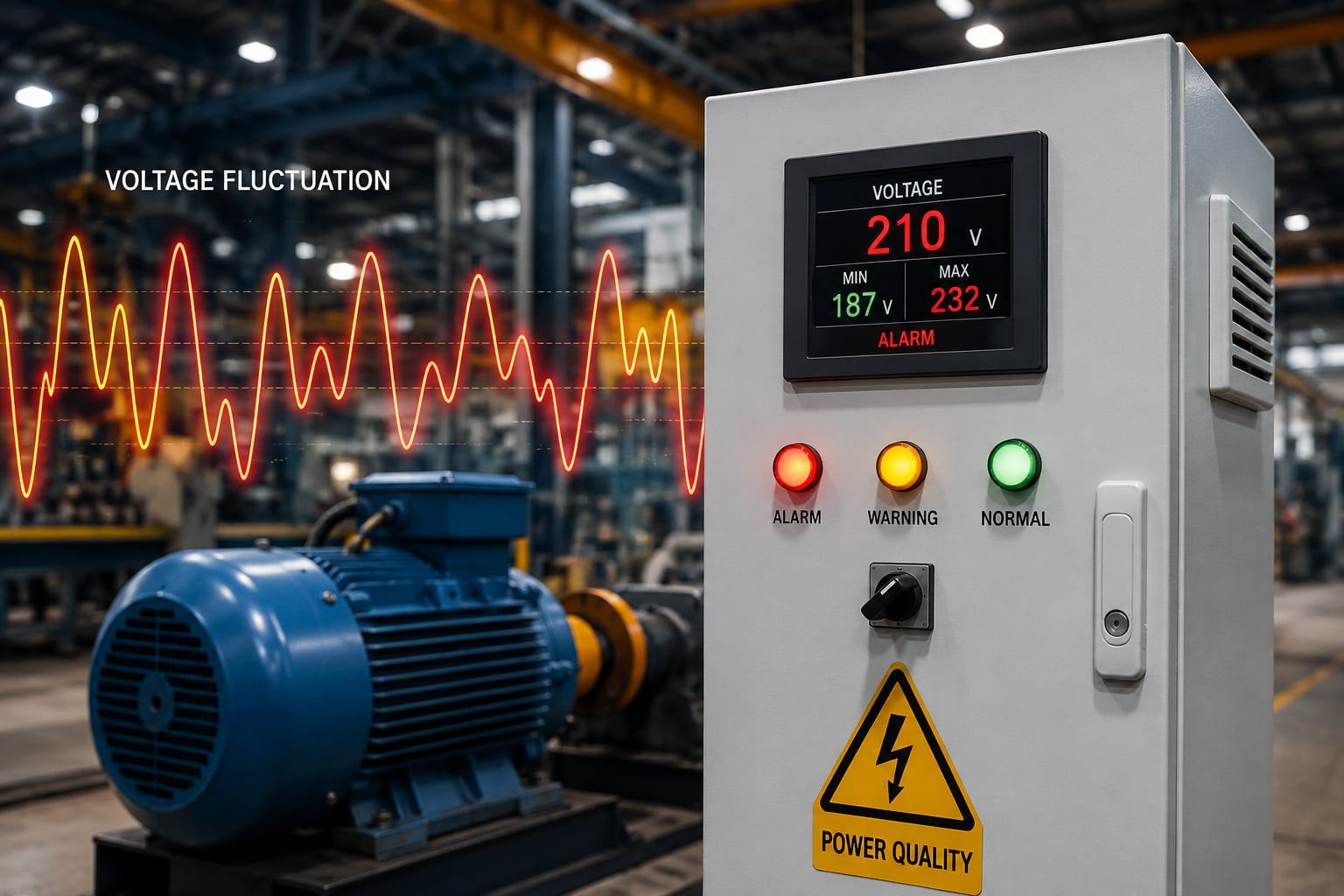 Voltage fluctuation is a common power quality problem in factories and commercial sites. It happens when the voltage level rises or falls instead of staying stable.
A small change may not stop production at once. However, repeated voltage fluctuation can damage industrial equipment over time. It can also cause motor overheating, drive trips, control errors, and unstable production.
Modern facilities use motors, pumps, compressors, variable frequency drives, welding machines, and automated control systems. All of this industrial equipment needs stable electrical power.
When voltage stability becomes poor, the whole electrical system becomes less reliable.
This article explains the main causes of voltage fluctuation, the effect on industrial equipment, and the role of dynamic reactive power compensation.
Voltage fluctuation means repeated changes in the voltage level of an electrical system.
The voltage may fall below its normal level. It may also rise above it. In some sites, the voltage keeps moving up and down during normal production.
Common types of voltage fluctuation include:
Voltage fluctuation is not the same as a full power outage. The electrical power is still available, but its level is not stable.
This makes the problem harder to notice. Industrial equipment may continue to run while it receives poor-quality electrical power.
Over time, this can increase heat, reduce efficiency, and shorten equipment life.
Several conditions can cause voltage fluctuation in an industrial electrical system.
Large motors draw high current when they start.
This sudden demand can cause a voltage drop. When many motors start and stop during the day, the site may face repeated voltage fluctuation.
This is common in facilities that use:
The problem becomes worse when the transformer or cable size is too small.
Some industrial equipment changes load very quickly.
Welding machines, cranes, hoists, presses, furnaces, and rolling mills can create sudden changes in electrical power demand.
These changes also affect reactive power demand.
If the electrical system cannot respond fast enough, voltage stability becomes poor.
Poor power factor increases current in the electrical system.
Higher current causes more voltage drop in cables, transformers, and switchgear.
When the load changes, the voltage drop also changes. This creates voltage fluctuation.
Poor power factor is common in facilities with motors, transformers, pumps, compressors, and other inductive loads.
A weak grid can also cause unstable voltage.
This often happens in remote factories, mines, farms, water plants, and rural industrial sites.
Long cables, overloaded transformers, and limited grid capacity make voltage fluctuation more likely.
A weak grid has less ability to support industrial equipment when the load changes.
Solar systems can also affect voltage stability.
Solar output changes with cloud cover, sunlight, and time of day.
If a factory also has changing industrial loads, the site may face both changing generation and changing demand.
This can create voltage fluctuation at the connection point.
Capacitor banks improve power factor in many electrical systems.
However, they work in fixed steps.
If the load changes quickly, the capacitor bank may respond too slowly. It may also provide too much or too little compensation.
This can create unstable power factor and poor voltage stability.
Voltage fluctuation affects different types of industrial equipment in different ways.
The damage may appear slowly. In many cases, the equipment keeps running until the stress becomes serious.
Motors are sensitive to unstable electrical power.
When voltage falls, a motor may draw more current to keep the same output. Higher current creates more heat in the windings.
When voltage rises, the motor may face more insulation and magnetic stress.
Repeated voltage fluctuation can cause:
A motor may look normal from the outside while its internal temperature keeps rising.
Variable frequency drives need stable input voltage.
A sudden voltage drop can cause an undervoltage fault. A voltage rise can cause an overvoltage fault.
Repeated voltage fluctuation may lead to:
When several drives share one electrical system, one large load can affect many machines.
Modern industrial equipment depends on PLCs, sensors, relays, and communication devices.
These control systems use less power than motors, but they are often more sensitive to voltage fluctuation.
A short voltage change can cause:
The main power may remain on, but the production line can still stop.
Contactors and relays also need stable voltage.
Low voltage can prevent a contactor from closing correctly. It may also cause contactor chatter.
Contactor chatter means the contacts open and close many times in a short period.
This causes:
Many sites replace damaged contactors without checking voltage stability.
Voltage fluctuation can also increase stress on transformers.
Poor power factor and changing reactive power demand increase current. Higher current creates more heat and electrical loss.
This may cause:
A transformer can overheat even when the active load is below its rated value.
Voltage fluctuation does not only damage industrial equipment. It can also reduce product quality.
Many processes need stable speed, pressure, temperature, torque, and timing.
Unstable electrical power can affect:
Small voltage changes can create product defects and production waste.
Facilities should monitor the warning signs before major equipment failure occurs.
Common signs include:
When several signs appear together, the site may have a voltage fluctuation problem.
A single voltage reading is not enough.
Engineers need to measure the electrical system over time. The test should include normal production, peak load, motor starting, and fast-changing equipment.
A power quality study should check:
The study should also find where the voltage fluctuation starts.
The source may be:
Correct measurement prevents wrong equipment selection.
Reactive power has a direct effect on voltage stability.
Motors and transformers need reactive power to create magnetic fields.
When reactive power demand rises, current also rises. Higher current creates more voltage drop in the electrical system.
If reactive power changes quickly, the voltage level can also change quickly.
This is why sites with motors, cranes, pumps, and welding machines often experience voltage fluctuation.
Reactive power compensation reduces unnecessary current. This helps improve power factor and voltage stability.
However, the compensation must respond fast enough.
A Static Var Generator provides dynamic reactive power compensation.
It measures voltage, current, power factor, and reactive power in real time.
The SVG then supplies or absorbs reactive power based on the actual load.
This helps reduce voltage fluctuation because the SVG can:
Unlike a fixed capacitor bank, SVG does not rely on large switching steps.
It provides smooth and continuous compensation.
This makes it useful for industrial equipment with fast-changing loads.
Better voltage stability is important in many industries.
Welding machines create fast load changes. These changes can cause voltage fluctuation and poor weld quality.
Dynamic compensation helps keep electrical power more stable.
Mining sites use large motors, pumps, crushers, and conveyors.
They often operate on weak grids and long cables.
Better voltage stability helps protect industrial equipment and reduce production stops.
Water plants use many pumps and variable frequency drives.
As pumps start and stop, reactive power demand changes.
Dynamic compensation helps reduce voltage fluctuation and drive trips.
Presses, furnaces, welding machines, and rolling mills create rapid load changes.
Stable electrical power supports better production quality and equipment life.
Factories with solar systems may face changing generation and changing load at the same time.
SVG can support voltage stability at the point of connection.
Reducing voltage fluctuation can improve the full electrical system.
Main benefits include:
The goal is not only to improve one voltage reading.
The goal is to create stable electrical power for all connected industrial equipment.
Common causes include large motor starting, welding machines, weak grids, poor power factor, long cables, and fast-changing industrial loads.
Yes. It can cause motor overheating, VFD trips, PLC resets, contactor damage, transformer stress, and shorter equipment life.
Poor power factor increases current. Higher current creates more voltage drop in the electrical system.
They can help in stable systems. However, fixed capacitor steps may be too slow for fast-changing loads.
SVG provides dynamic reactive power compensation. It reacts in real time and helps control voltage fluctuation.
Voltage fluctuation is a serious power quality problem.
It affects motors, drives, transformers, PLCs, contactors, and other industrial equipment.
The main causes include large motor starting, poor power factor, weak grids, fast-changing loads, and unstable reactive power demand.
The first step is proper measurement.
When voltage fluctuation comes from changing reactive power, SVG can provide fast and dynamic compensation.



 IPv6 network supported