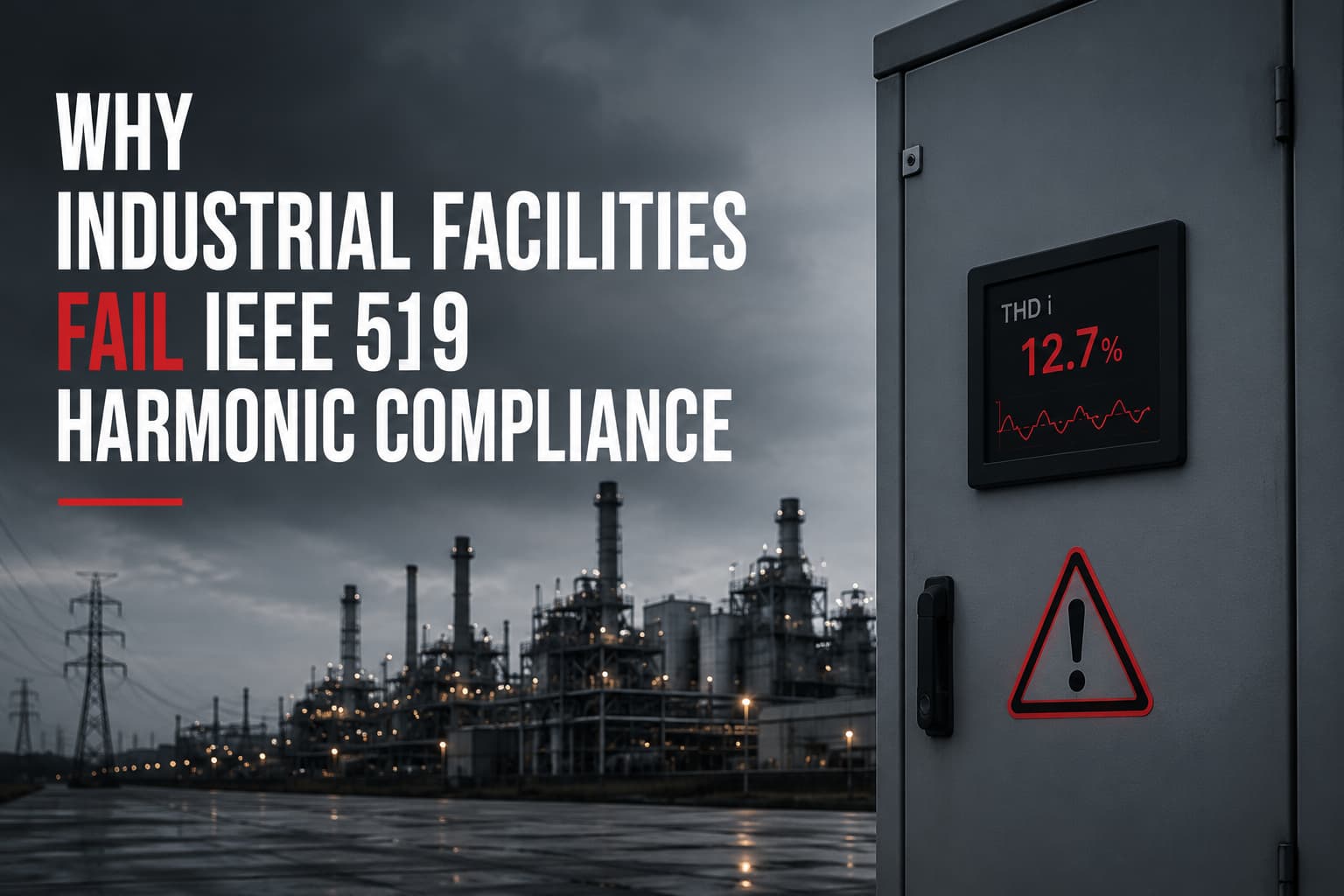
Why Industrial Facilities Fail IEEE 519 Harmonic Compliance Introduction As industrial facilities become increasingly dependent on variable frequency drives (VFDs), automated production lines, switch-mode power supplies, and renewable energy systems, maintaining good power quality has become more challenging than ever. While these technologies improve efficiency and reduce energy con...
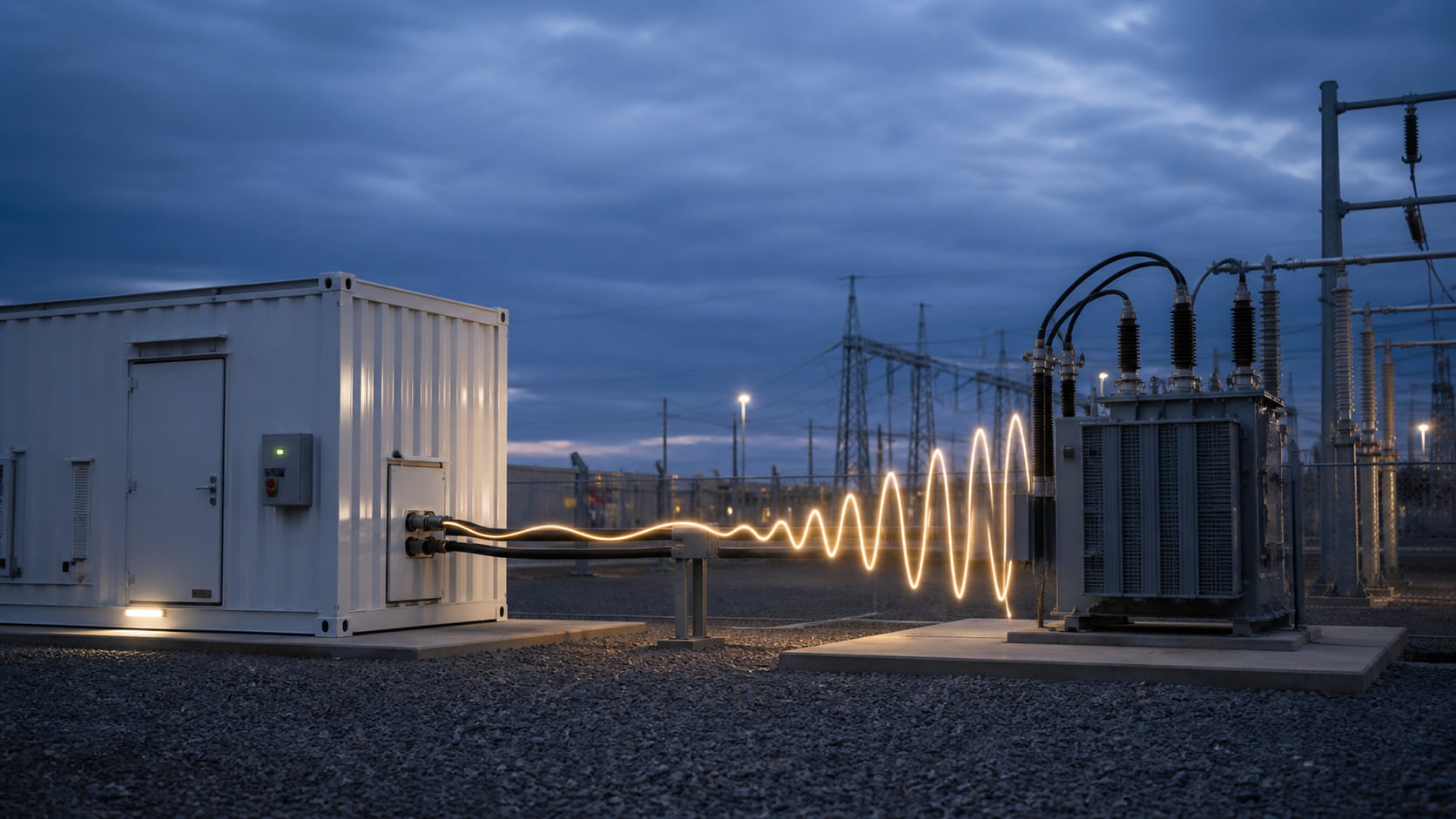
A battery energy storage system can satisfy the harmonic limits at its point of common coupling and still introduce a resonant frequency into the electrical network. This is not a contradiction.Grid compliance confirms that voltage and current distortion remain within defined limits under the conditions assessed. Harmonic resonance describes how the complete electrical system responds at different...
When a PV plant reaches MW scale, inverter control stops being the same thing as grid code compliance. Compliance is judged at the point of common coupling (PCC), where the utility measures voltage and current quality — not at the inverter terminals. A plant with well-behaved inverters can still fail its connection test for that reason, and a medium-voltage STATCOM is usually the device that...
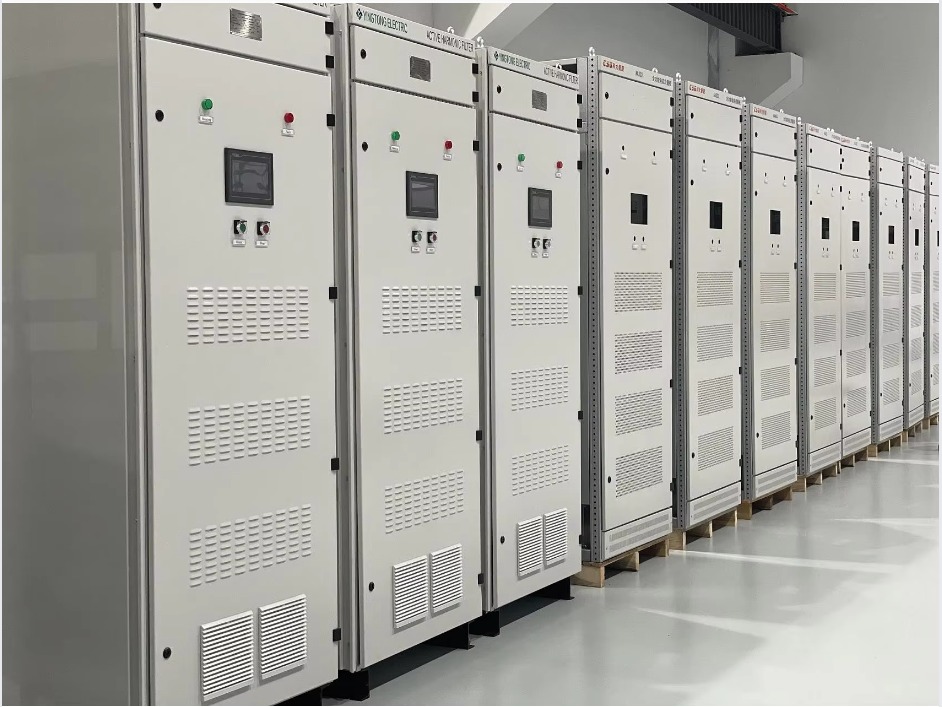
BESS & Microgrid Power Quality: SVG & AHF Integration Utility-scale Battery Energy Storage Systems (BESS) and industrial renewable microgrids are fundamentally reshaping modern electrical infrastructure. However, interconnecting gigawatt-scale inverter-based resources (IBR) into weak transmission corridors and distribution grids with low Short-Circuit Ratios (SCR < 2.0) introduces unpre...
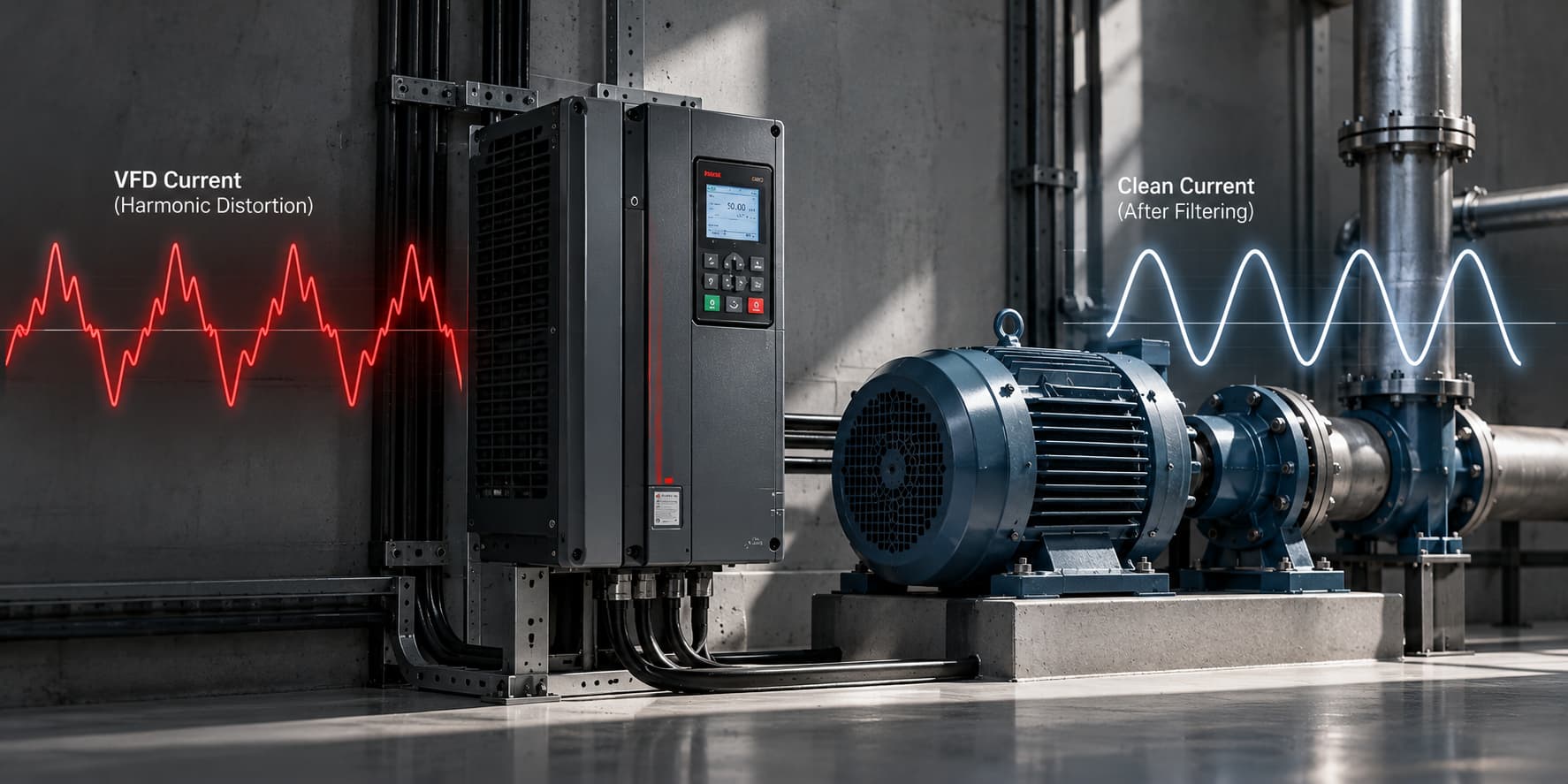
How to Reduce Harmonic Distortion in VFD Systems Variable Frequency Drives (VFDs) are the backbone of modern industrial automation, driving heavy centrifugal pumps, HVAC fans, ammonia refrigeration compressors, plastic extruders, and conveyor systems with unmatched process precision and energy savings. However, standard 6-pulse diode bridge rectifiers inside VFDs convert AC utility power into inte...


 English
 français
 Deutsch
 español
 العربية
 中文




 IPv6 network supported

