Introduction: The High Cost of the "Invisible Killer" in July 2026 As we move further into the industrial energy transition of 2026, the reliance on diesel generators, gas turbines, and isolated microgrids remains a mission-critical reality for remote mining operations, large-scale agriculture, and telecommunication base stations. Yet, an "invisible killer" continues to bleed operational bu...
How to Size an Active Harmonic Filter Correctly: A Complete Industrial Sizing Guide As industrial facilities continue adopting Variable Frequency Drives (VFDs), UPS systems, robotics, servo drives, EV chargers, and renewable energy systems, harmonic distortion has become one of the most common power quality issues. These nonlinear loads improve efficiency but also inject harmonic currents b...
Medium Voltage Harmonic Filters: A Complete Selection Guide Medium voltage harmonic filters help industrial facilities, renewable energy plants, utilities, and infrastructure projects control harmonic distortion in their electrical systems. Harmonics can reduce power quality, increase equipment losses, create overheating, and interfere with normal system operation. A correctly designed harmonic fi...
Your UPS (Uninterruptible Power Supply) is supposed to be your safeguard—the insurance policy that keeps your critical operations running when the grid fails. But here's the irony: that very same UPS might be quietly damaging your equipment, inflating your electricity bills, and threatening the stability of your entire electrical system. How? Through harmonic distortion. Let's break dow...
Power Quality in Steel Mills — A Silent Threat to Production Steel manufacturing is one of the most energy-intensive industries in the world. Within a typical steel mill, you will find a diverse range of electrical loads: water pumps circulating cooling systems, medium-frequency induction furnaces for melting, overhead cranes for material handling, LED lighting for workspaces, rolling mills,...
Introduction: When the Protector Needs Protection Every facility manager knows the UPS is the last line of defense — the safety net that keeps critical operations alive when the grid fails or voltage sags. But there is an irony discovered only after equipment fails: the very load the UPS protects can quietly damage the UPS itself. Modern critical loads are almost always nonlinear. Rad...
Installing a capacitor bank should improve power factor, reduce reactive power demand and release capacity in transformers and cables. However, some facilities find that their power factor remains below the utility target even after the capacitor bank has been commissioned. This does not necessarily mean the capacitor bank is defective. The cause may be incorrect sizing, changing loads, harmonic d...
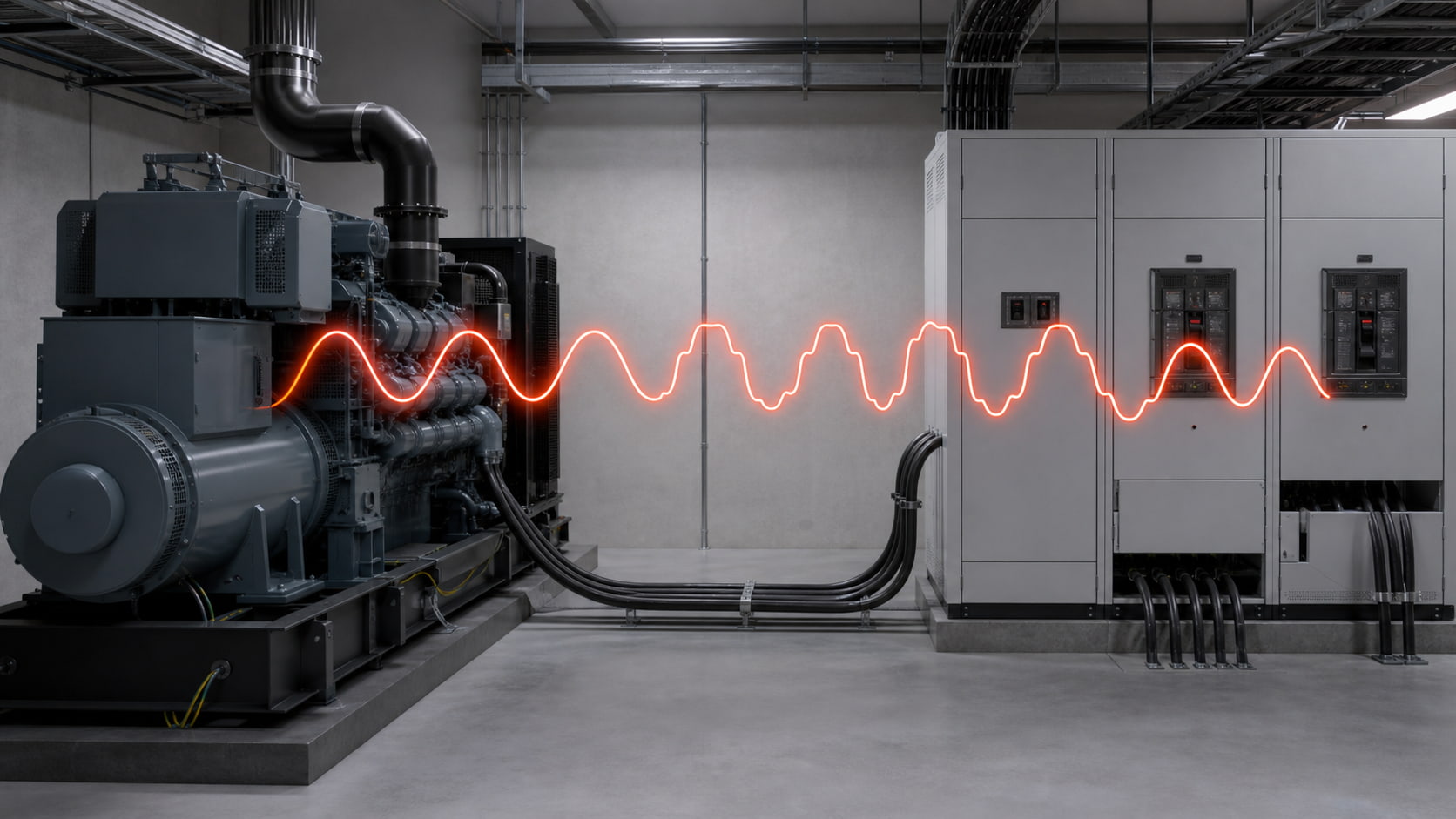
A facility can operate normally on utility power and develop power quality problems after transferring to a standby generator. Drives trip, UPS systems report input faults and lights flicker—even though the load has not changed. Nonlinear loads are usually already generating harmonic current. The generator provides a weaker source, allowing the same current distortion to create greater volta...


 English
 français
 Deutsch
 español
 العربية
 中文
中文



 IPv6 network supported