Reactive power charges and power factor assessments are common in electricity billing, especially for industrial and commercial consumers. Here's a detailed explanation: 1. Reactive Power Charge Reactive power (measured in kVARh) is the power consumed by inductive or capacitive loads (e.g., motors, transformers, fluorescent lights) that do not perform actual work but are necessary for maintai...
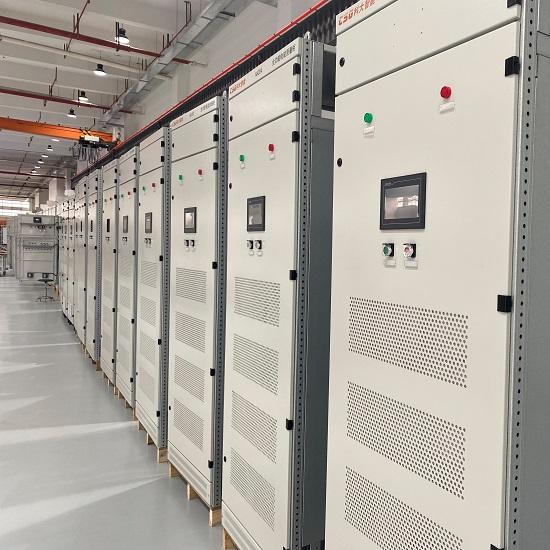
Modern industry runs on precision—yet harmonic distortions, voltage fluctuations, and reactive power imbalances remain costly adversaries. These silent disruptors erode efficiency, inflate energy bills, and jeopardize compliance. Enter the YTPQC-AHF Active Power Filter (APF): an intelligent solution engineered not just to mitigate power quality issues, but to eliminate them at thei...
Design of Power Quality Optimization Scheme for Wind Farms I. Typical Power Quality Issues in Wind Farms Voltage Fluctuations & Flicker Sudden wind speed changes → Power fluctuations → Bus voltage variations (especially in weak grids) Harmonics & Interharmonics Converter switching frequencies (2-6kHz) generate characteristic harmonics (e.g., 5th, 7th, 11th, 13th) Tower shadow eff...
The 4 quadrants of reactive power refer to the different combinations of active (real) power (P) and reactive power (Q) flow in an AC electrical system. These quadrants are defined based on whether power is being generated or consumed and whether the system is supplying or absorbing reactive power. Four Quadrants of Reactive Power: The quadrants are categorized based on th...
Reducing Harmonics in Photovoltaic Grid Integration As solar penetration accelerates, photovoltaic (PV) plants are increasingly connected to distribution networks through power-electronic interfaces. While modern inverters are far cleaner than their predecessors, they still inject non-sinusoidal currents that distort the grid voltage. Left unchecked, these harmonics overheat transfor...
Introduction Did you know that over 80 percent of EV charging in Europe and many Asia‑Pacific markets already happens at home? That simple statistic explains why residential AC chargers have become the unsung heroes of the e‑mobility revolution. In this post we’ll explore: How AC charging actually works Key hardware & smart‑software features ...
Yes, sometimes. Plug‑in AC chargers (e.g., NEMA 5‑15, 6‑20, 14‑50, or IEC plug types) are realistic DIY if an appropriately rated, existing receptacle is already present and code‑compliant. Hardwired EVSE, new circuits, or panel upgrades generally require permits, inspection, and often a licensed electrician. Many jurisdictions mandate it. The safe path: complete the eligibili...
Protecting Your EV Battery: The Role of Smart Home Charging Solutions EV batteries are expensive, sophisticated electrochemical systems. How you charge them—especially at home, where most charging happens—has a direct impact on long-term capacity, performance, and resale value. Smart home charging solutions turn a simple power outlet into a battery-aware system that manag...


 English
 français
 Deutsch
 español
 العربية
 中文




 IPv6 network supported