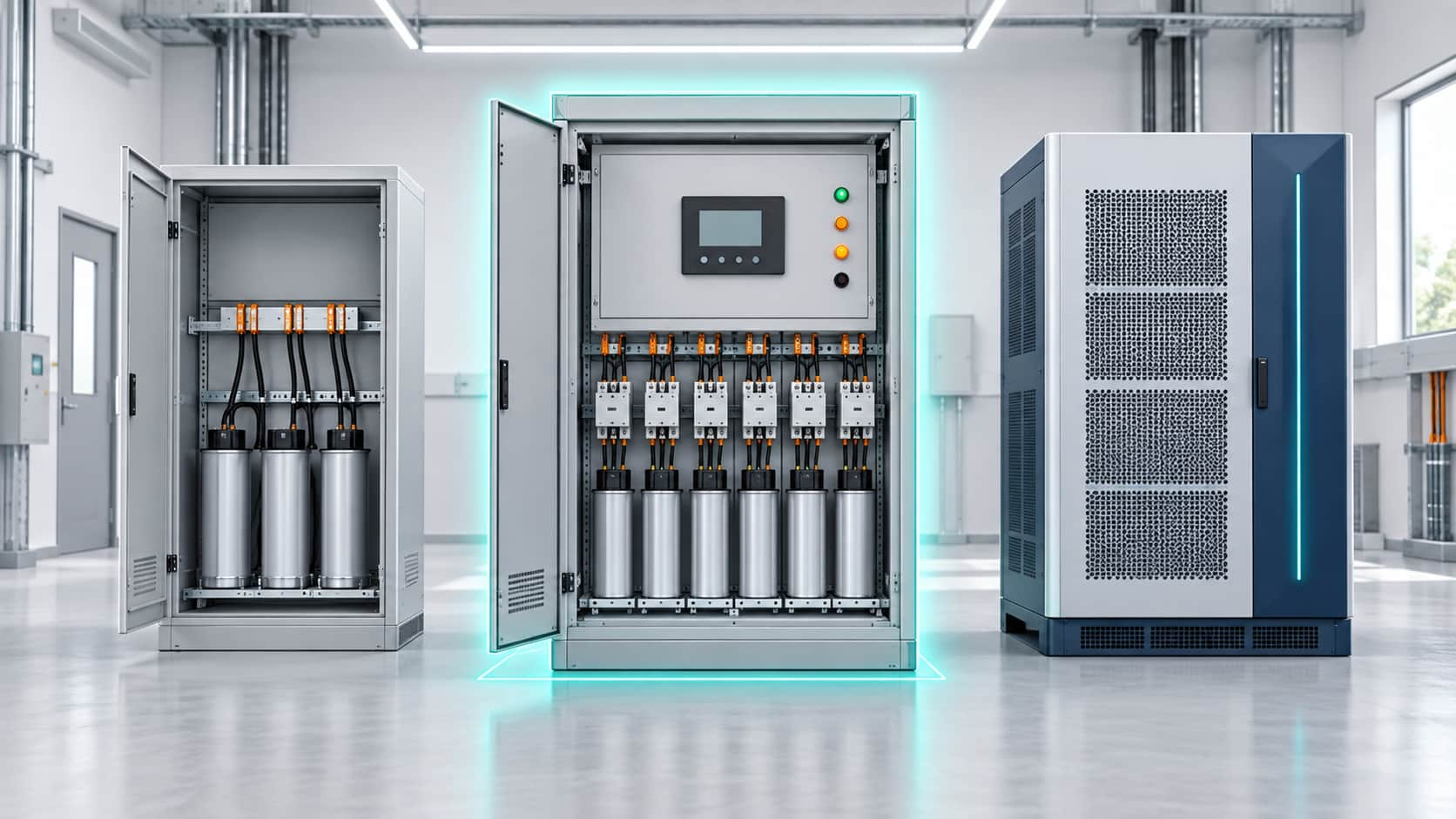
A fixed capacitor bank is often the most economical way to correct power factor — provided the load stays reasonably steady. When motors cycle or production changes by shift, it may overcompensate overnight and undercompensate at peak. An Automatic Power Factor Correction (APFC) panel switches capacitor steps as demand changes; a Static Var Generator (SVG) adjusts reactive power continuously...
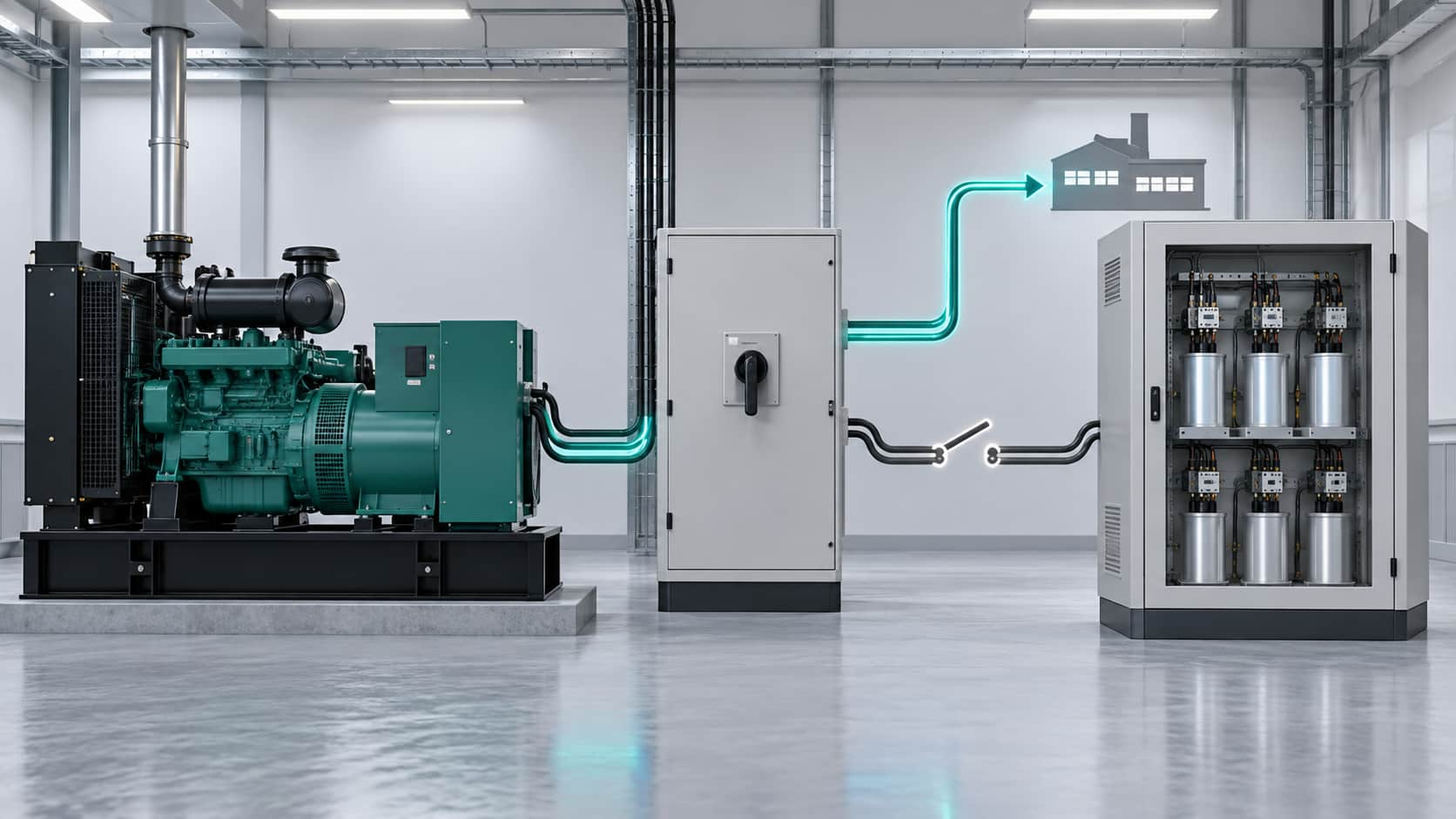
Quick Answer An APFC panel is not simply permitted or forbidden on generator power. Compatibility depends on generator capacity, the power factor of the load that stays online, the size of each load step, harmonic distortion, available short-circuit capacity, governor and excitation response, the generator manufacturer’s limits, and the logic inside the APFC controller. On many standby syste...
Why Does an APFC Panel Keep Switching? Causes of Capacitor Step Hunting and How to Stop It In commercial buildings, manufacturing plants, and distribution substations, Automatic Power Factor Correction (APFC) panels are deployed to maintain target power factor (typically 0.95 to 0.98 lagging) and avoid costly utility reactive power penalties. An APFC panel relies on a microprocessor-based power fa...
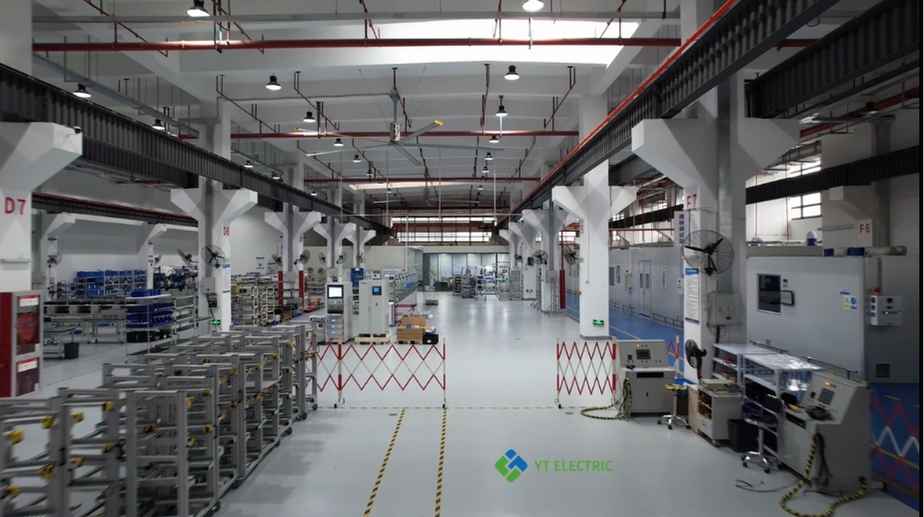
APF in Automotive Manufacturing: Where Harmonics Come From, What They Cost, and How to Mitigate Them In high-throughput automotive manufacturing plants, electrical power reliability directly dictates production output and vehicle yield. An assembly plant does not suffer from a single, uniform harmonic problem—it contends with three fundamentally distinct harmonic generation profiles across i...


 English
 français
 Deutsch
 español
 العربية
 中文




 IPv6 network supported