

 English
 français
 Deutsch
 español
 العربية
 中文
中文
Understand an UDEM Certification.
Your procurement team is shortlisting vendors for your plant's power quality solution upgrade. Suppliers have submit quotes with nearly identical specifications on paper. Only one submits a signed, dated third-party attestation covering both the EMC and LVD directives.
That single document changes the shortlist. Certification is the only objective filter between a supplier who tested their design and one who copied a datasheet.
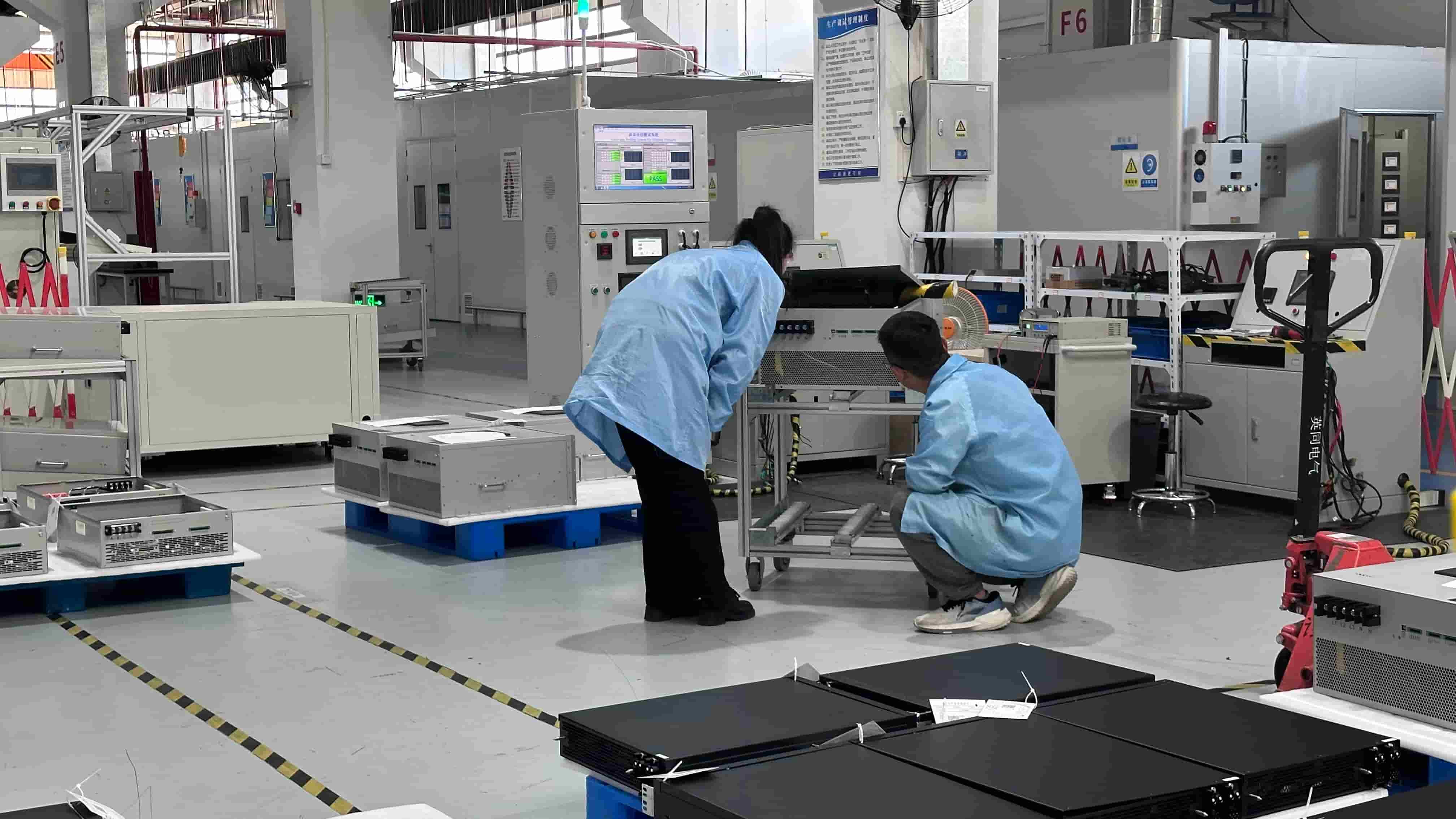
YT Electric quality-control staff are testifying prducts in its UDEM certified EMC LVD compliance testing area.
For Power Quality Products, LVD and EMC tests are the most valuable ones.
UDEM operates an LVD and EMC test laboratory in Turkey, accredited by the Turkish Accreditation Agency (TURKAK) to the TS EN ISO/IEC 17025 standard. This accreditation governs laboratory competence — an independent body audited UDEM's test methods, equipment calibration, and result traceability before any attestation was issued.
The LVD testing scope covers dielectric withstand voltage, creepage and clearance distances, and protective earthing continuity against the EN standards harmonized under 2014/35/EU. For an Active Harmonic Filter with a 3 level DC bus, this means the insulation between power stages was physically subjected to high voltage pulses, not merely reviewed on paper.
The EMC testing scope covers conducted and radiated emissions plus immunity, measured against the EN standards harmonized under 2014/30/EU that define industrial environment limits.
The certificate references the completed technical file audit and the underlying test data. It certifies a specific product line's design and test results met the referenced clause values at the time of assessment.
|
Directive |
Standard |
Title |
Test / Assessment Scope |
|
EMC2014/30/EU |
EN 61000-6-2 |
Generic standards — Immunity for industrial environments |
ESD immunity, radiated RF immunity, EFT/burst immunity, surge immunity, conducted RF immunity, power frequency magnetic field immunity, voltage dips and interruptions |
|
EMC2014/30/EU |
EN 61000-6-4 |
Generic standards — Emission standard for industrial environments |
Conducted emissions (150 kHz – 30 MHz), radiated emissions (30 MHz – 400 GHz) |
|
EMC2014/30/EU |
EN 61000-3-2 |
Limits — Harmonic current emissions (equipment input current ≤ 16 A per phase) |
Harmonic current amplitude limits by equipment class (A/B/C/D) |
|
EMC2014/30/EU |
EN 61000-3-12 |
Limits — Harmonic current emissions (equipment input current > 16 A and ≤ 75 A per phase) |
Harmonic current amplitude limits and total harmonic current (THC) limits |
|
LVD2014/35/EU |
EN 61010-1 |
Safety requirements for electrical equipment for measurement, control and laboratory use — Part 1: General requirements |
Dielectric strength test, creepage and clearance distances, protective earthing continuity, protection against electric shock, mechanical strength, fire protection |
UDEM EMC/LVD Certification Standards and Test Scope
UDEM certification values
Independence. The EMC and LVD directives permit manufacturer self declaration — a CE mark can legally exist without any outside testing. UDEM's attestation is the accredited third party evidence that the dielectric, creepage, emission, and immunity tests were actually run. The CE mark tells a buyer the manufacturer claims compliance. The UDEM certificate tells a buyer an accredited laboratory verified the data behind that claim.
Laboratory competence. UDEM's TURKAK accreditation under ISO/IEC 17025 means test methods, equipment calibration, and result traceability are independently audited — not subject to the inconsistencies of in house manufacturer testing.
Technical file completeness. UDEM certification covers a full technical file audit, not just a batch sample test. For a buyer, this distinction determines what happens during a safety audit or insurance claim. A CE mark with no supporting test report leaves the manufacturer's word as the only evidence. A CE mark backed by a UDEM attestation gives the buyer a named laboratory, a technical file reference, and traceable data to present.
Zero sequence harmonic currents on 4 wire systems create the same neutral heating risk regardless of which country's standard is applied. What differs by market is which body's numbers a buyer's compliance team recognizes as sufficient evidence. This is why the certification conversation cannot stop at "does it have a CE mark" — it has to reach "whose test data sits behind that mark."
CE marking itself carries no legal weight outside the EU. However, the EN standards behind an EMC/LVD attestation are not exclusively European.
Most EN standards in this scope are the European adoption of IEC publications, carrying the same clause numbers and, in most cases, the same limit values as the IEC original. This is the mechanism that lets UDEM's test data travel.
The Gulf Standardization Organization (GSO) adopts thousands of IEC standards directly as GCC regional standards, generally without altering the technical limits. China's GB 7251 series for switchgear assemblies is drafted to directly conform to IEC 61439, and China's EMC test standards under GB/T 17626 mirror the IEC 61000 4 series clause for clause. Malaysia's SIRIM and similar Southeast Asian bodies follow the same IEC adoption model for industrial EMC and low voltage equipment standards.
North America is the exception, not the rule. UL 508A and IEEE 519 are independent schemes with their own test protocols and administering bodies — they are not IEC derivatives. A UDEM attestation supports a North American buyer's internal engineering review but does not substitute for a UL listing.
The table below details the numerical differences between CE (EN/IEC), UL, and IEEE requirements across relevant test parameters.
|
Test Area |
Test Parameter |
CE / EN IEC Standard and Limit |
UL Standard and Requirement |
IEEE Standard and Requirement |
|
LVD / Safety |
Dielectric strength |
EN 61010-1: test voltage determined by equipment rated voltage |
UL 508A: insulation withstand test, 1000 V + 2 × rated voltage |
Not directly specified (relies on UL or NEC) |
|
LVD / Safety |
Creepage / clearance |
EN 61010-1: determined by pollution degree and overvoltage category |
UL 508A: per component specific standards |
Not directly specified |
|
LVD / Safety |
Protective earthing |
EN 61010-1: earthing continuity test |
UL 508A: earthing path continuity verification |
Not directly specified |
|
EMC / Immunity |
ESD |
EN 61000-4-2: ±4 kV contact, ±8 kV air discharge |
Not required (EMC outside UL scope) |
Not required |
|
EMC / Immunity |
Radiated RF immunity |
EN 61000-4-3: 10 V/m, 80 MHz – 1 GHz |
Not required |
Not required |
|
EMC / Immunity |
EFT / burst |
EN 61000-4-4: ±2 kV (power ports) |
Not required |
Not required |
|
EMC / Immunity |
Surge immunity |
EN 61000-4-5: ±2 kV line earth, ±1 kV line line |
Not required |
Not required |
|
EMC / Immunity |
Conducted RF immunity |
EN 61000-4-6: 10 V, 150 kHz – 80 MHz |
Not required |
Not required |
|
EMC / Emissions |
Harmonic current emissions |
EN 61000-3-2 (≤16 A) / EN 61000-3-12 (>16 A and ≤75 A) |
Not required |
IEEE 519: voltage distortion limits — ≤1 kV: individual harmonic ≤5.0%, THD ≤8.0% |
|
EMC / Emissions |
Conducted emissions |
EN 61000-6-4: 150 kHz – 30 MHz |
Not required |
Not required |
|
EMC / Emissions |
Radiated emissions |
EN 61000-6-4: 30 MHz – 400 GHz |
Not required |
Not required |
CE (EN/IEC), UL, and IEEE Test Parameter Comparison — EMC and LVD
Note: UL 508A is asafety standardfor industrial control panels and does not cover EMC testing. IEEE 519 is arecommended practicefor power quality, specifying voltage and current distortion limits at the point of common coupling (PCC) — a different layer from equipment level EMC testing. CE certification requiressimultaneouscompliance with both LVD (safety) and EMC (electromagnetic compatibility) directives in their entirety.
A certification is the dividing line between a supplier who tested their design and one who copied a datasheet. UDEM certification is the accredited evidence behind YT Electric's CE declaration for the EMC and LVD directives — it confirms that the product passed the core harmonized standards: EN 61000 6 2 (immunity), EN 61000 6 4 (emissions), EN 61000 3 2 / EN 61000 3 12 (harmonics), and EN 61010 1 (safety), supported by a traceable third party technical file audit.
Because GSO, China's GB series, and most Southeast Asian standards adopt the same IEC based limits UDEM tested against, this evidence carries direct weight in those markets without duplicate local testing. In North America, UDEM certification does not replace a UL Listing, but it provides supporting technical data that can streamline a buyer's internal engineering review.
1. If EMC and LVD allow self declaration, why does UDEM's involvement matter at all?
Self declaration means a CE mark can legally exist without any outside testing. UDEM's attestation is the accredited third party evidence a buyer can request when they want proof beyond the manufacturer's own word — it is optional under the law, but often mandatory under a buyer's internal procurement policy.
2. Is UDEM a Notified Body for EMC and LVD, the way it is for Medical Devices?
No. EMC and LVD do not require Notified Body involvement for CE marking, so UDEM's role here is as a TURKAK accredited testing and certification body, not a Notified Body under those two directives specifically. The value of the attestation comes from laboratory accreditation and test traceability, not from a legal mandate.
3. Does a UDEM certificate automatically satisfy North American UL requirements?
No. UL 508A and IEEE 519 are independent schemes with their own protocols, so a UDEM attestation does not replace a UL listing. It does provide supporting technical evidence — dielectric withstand data and EMC test results — that can shorten a buyer's internal engineering review.
4. Why do GCC and Southeast Asian buyers accept this certification more directly than North American buyers?
GSO and most Southeast Asian national bodies adopt IEC standards with the same clause numbers and limit values used in the EN standards UDEM tests against, so the data transfers directly. North American schemes were built independently of IEC, so equivalent physical performance still requires separate scheme specific evaluation.
Explore YT Electric product specifications and application guidance: https://www.ytelect.com/blog/guide-to-selecting-active-harmonic-filters_b321
Reference: IEEE 519-2022, IEEE Standard for Harmonic Control in Electric Power Systems: https://standards.ieee.org/ieee/519/10677/
EMC Directive 2014/30/EU Harmonized Standards: https://eur-lex.europa.eu/
LVD Directive 2014/35/EU Harmonized Standards: https://eur-lex.europa.eu/
Need a site-specific solution? Share your single-line diagram, load list, measured power factor, THDi/TDD data, and ambient conditions with YT Electric. Our sales engineers can review the data and prepare a technical proposal.



 IPv6 network supported