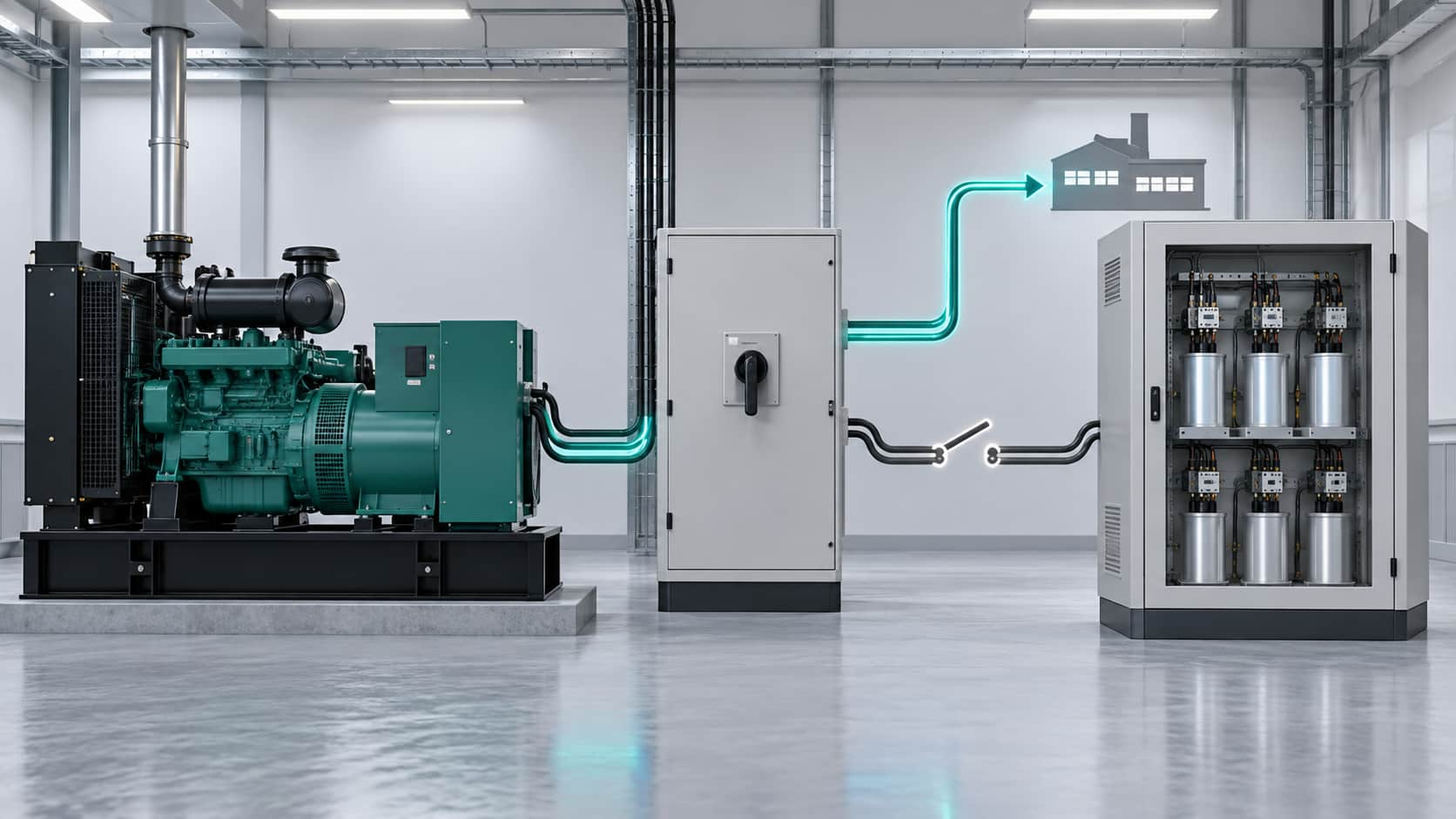
Quick Answer An APFC panel is not simply permitted or forbidden on generator power. Compatibility depends on generator capacity, the power factor of the load that stays online, the size of each load step, harmonic distortion, available short-circuit capacity, governor and excitation response, the generator manufacturer’s limits, and the logic inside the APFC controller. On many standby syste...
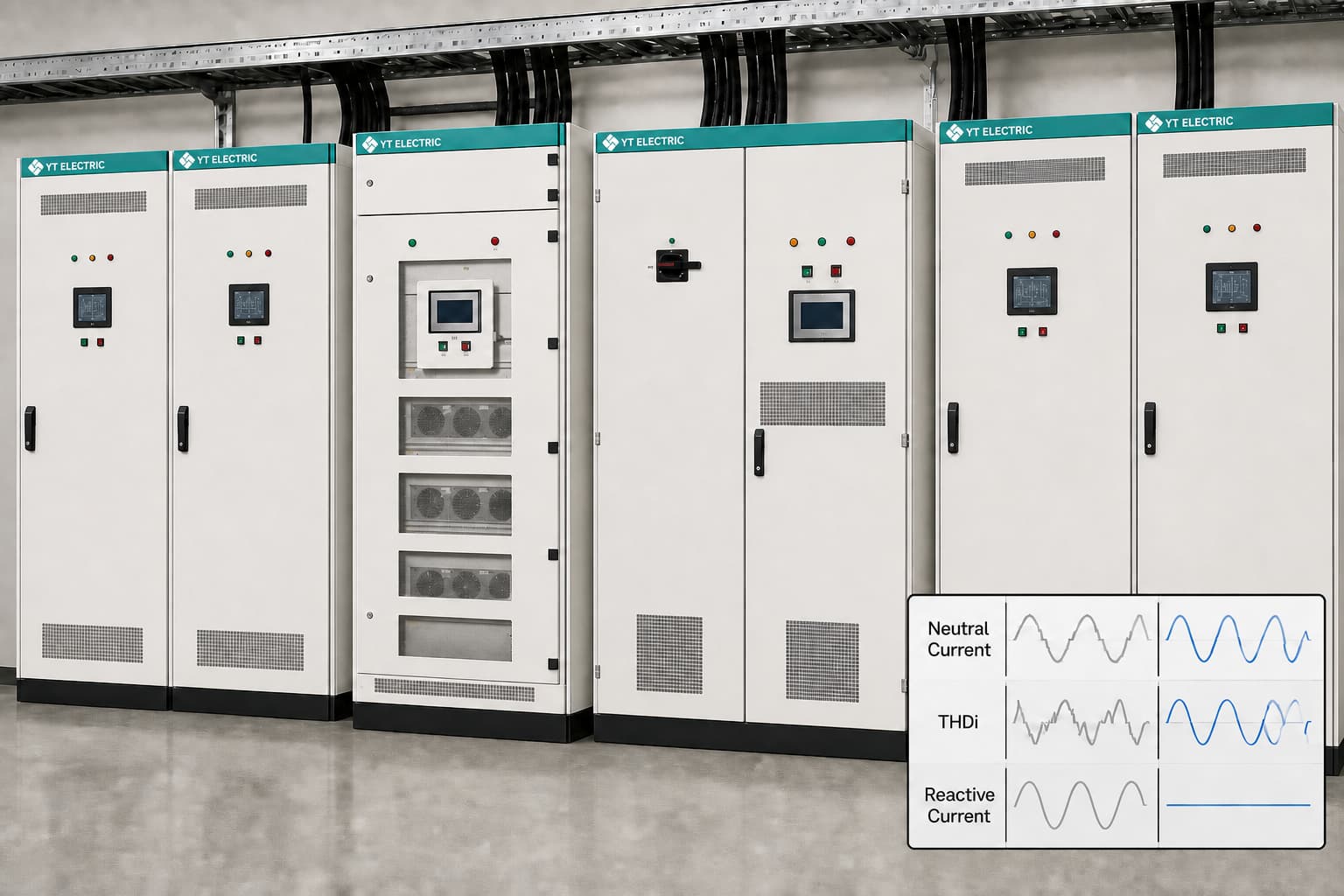
From Energy Waste to Energy Intelligence: How AHF and SVG Transform Industrial Power Systems Why distorted current becomes energy waste A six-pulse VFD, rectifier, UPS front end, or welding supply draws current in pulses rather than a clean sine wave. Those pulses contain characteristic harmonic components, and the resulting Total Harmonic Distortion increases RMS current even...
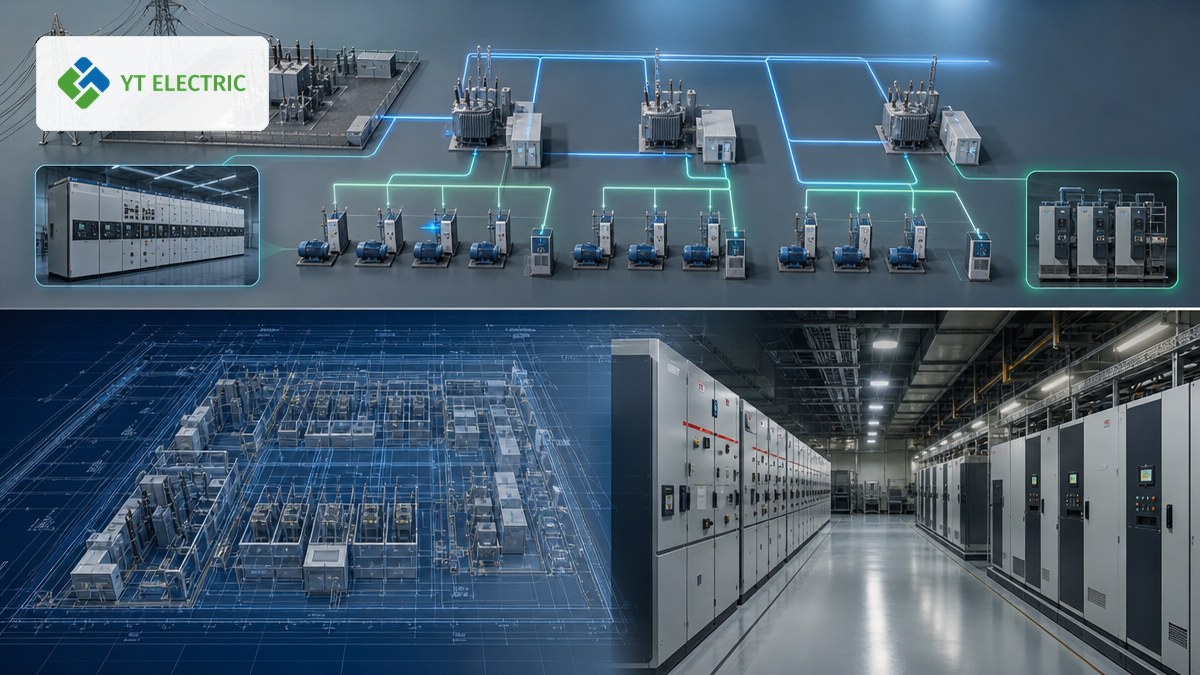
Centralized vs. Distributed Compensation: Strategic AHF and SVG Placement in Multi-Transformer Facilities Quick Engineering Answer: In multi-transformer industrial plants and commercial complexes, choosing between centralized compensation at the main low-voltage switchboard (PCC) and distributed compensation at regional sub-distribution panels depends on transformer loading, cable run lengths, and...
SVG Reactive Power Compensation: Beyond PF Correction For decades, plant electrical engineers and facility managers viewed reactive power compensation through a single, narrow lens: avoiding utility low power factor penalty surcharges. Traditional solutions—primarily fixed capacitor banks and automatic power factor correction (APFC) panels—were designed solely to supply bulk capacitive...
The same capacitor bank that improves power factor during full production can push a facility into leading power factor when the load falls. This overcompensation often appears at night, on weekends, or after large motors stop while capacitors remain connected. A meter may remain close to 1.00, but “leading,” “capacitive,” or the direction of kVAr shows that the syst...
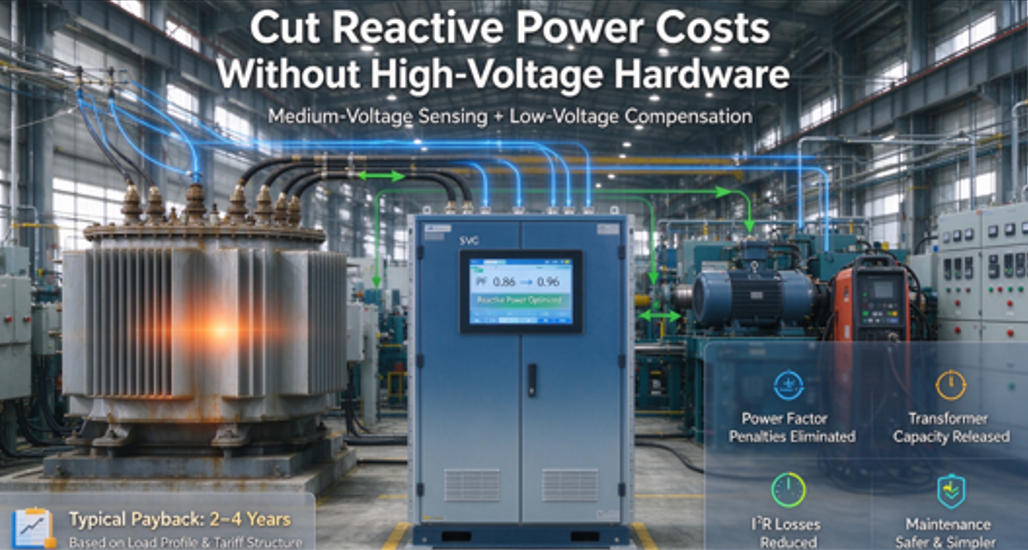
Medium-Voltage Sensing, Low-Voltage SVG Architecture Industrial plants, manufacturing complexes, and large commercial facilities frequently face a challenging power quality engineering dilemma: utility metering occurs on the medium-voltage (MV) intake bus (such as 6.6 kV, 10 kV, 13.8 kV, or 35 kV), while the vast majority of non-linear and inductive loads operate on the low-voltage (LV) 400V, 480V...
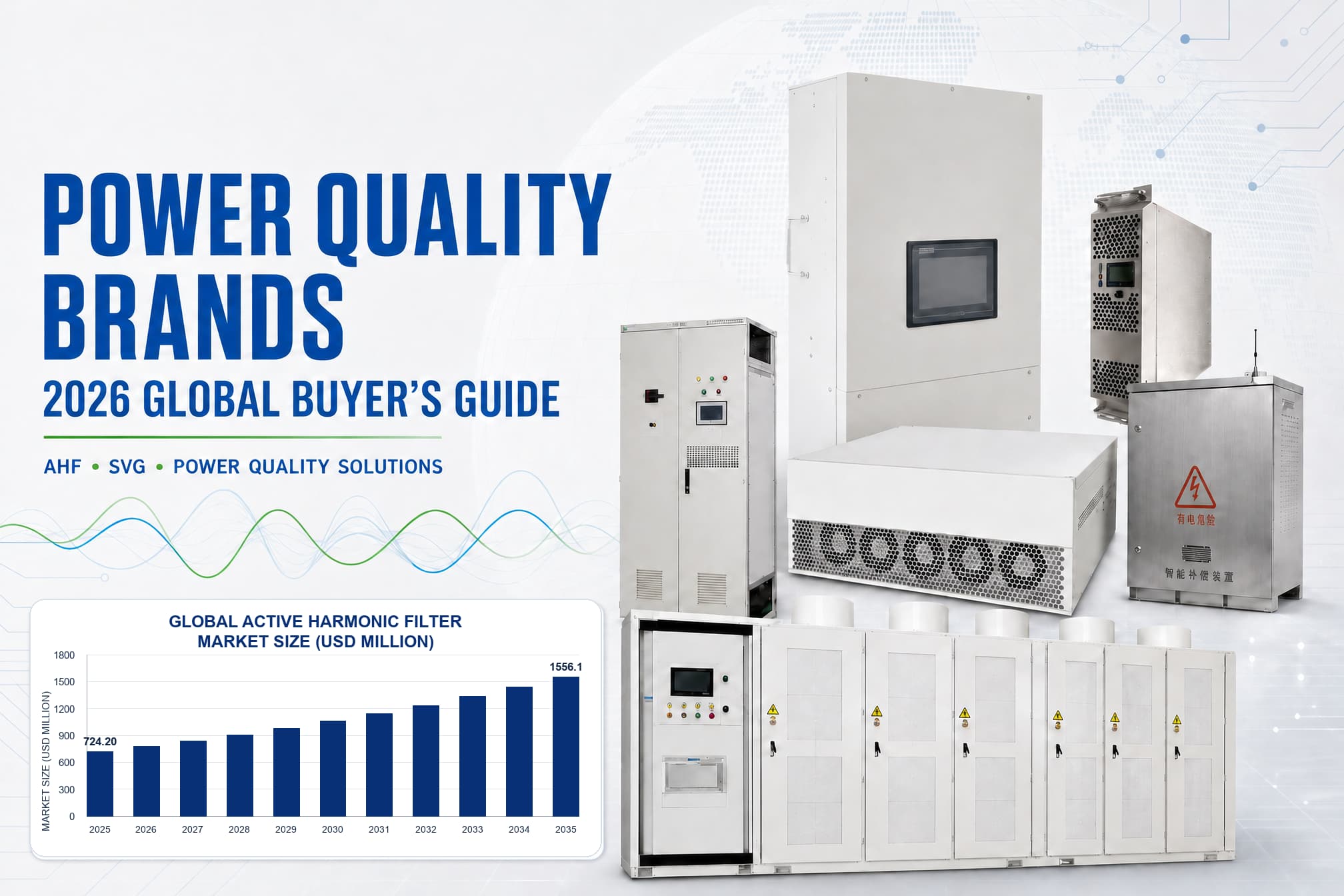
Power Quality Brands: 2026 Global Buyer’s Guide Procuring power quality equipment for mission-critical industrial plants, hyperscale AI data centers, port electrification terminals, and grid-connected renewable substations has evolved from a routine component purchase into a strategic capital investment. In 2026, severe harmonic pollution generated by megawatt-scale non-linear loads, rigid u...
Airport baggage handling systems operate under constant time pressure. Conveyors, sorters, barcode readers, security scanners and control networks must move every bag through check-in, screening and loading without interruption. Behind this process is a dense network of motors, variable frequency drives (VFDs) and electronic controls. These loads improve automation, but they also create har...


 English
 français
 Deutsch
 español
 العربية
 中文




 IPv6 network supported