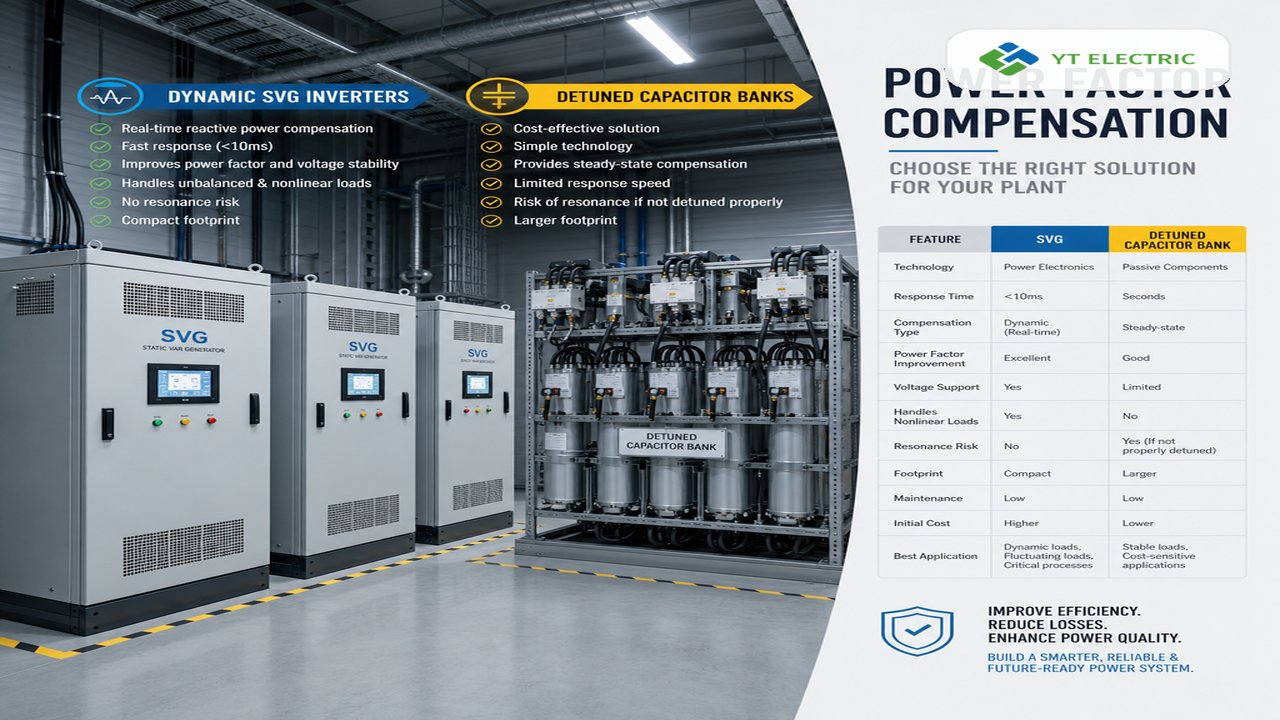
What's effect of Static var generator on power factor? Effects of a Static Var Generator (SVG) on Power Factor A Static Var Generator (SVG), also known as a Static Synchronous Compensator (STATCOM), is a device used to provide dynamic reactive power compensation in electrical power systems. It plays a crucial role in improving the power factor, which is a measure of how effectively electrical powe...
What interharmonics are & do and where they come from? Introduction The use of advanced power electronics and communication systems is improving power system efficiency, flexibility, and reliability, but it is also increasing interharmonic distortion. Knowledge of interharmonics, their sources, effects, measurement, limits, and mitigation will help the industry prevent interharmo...
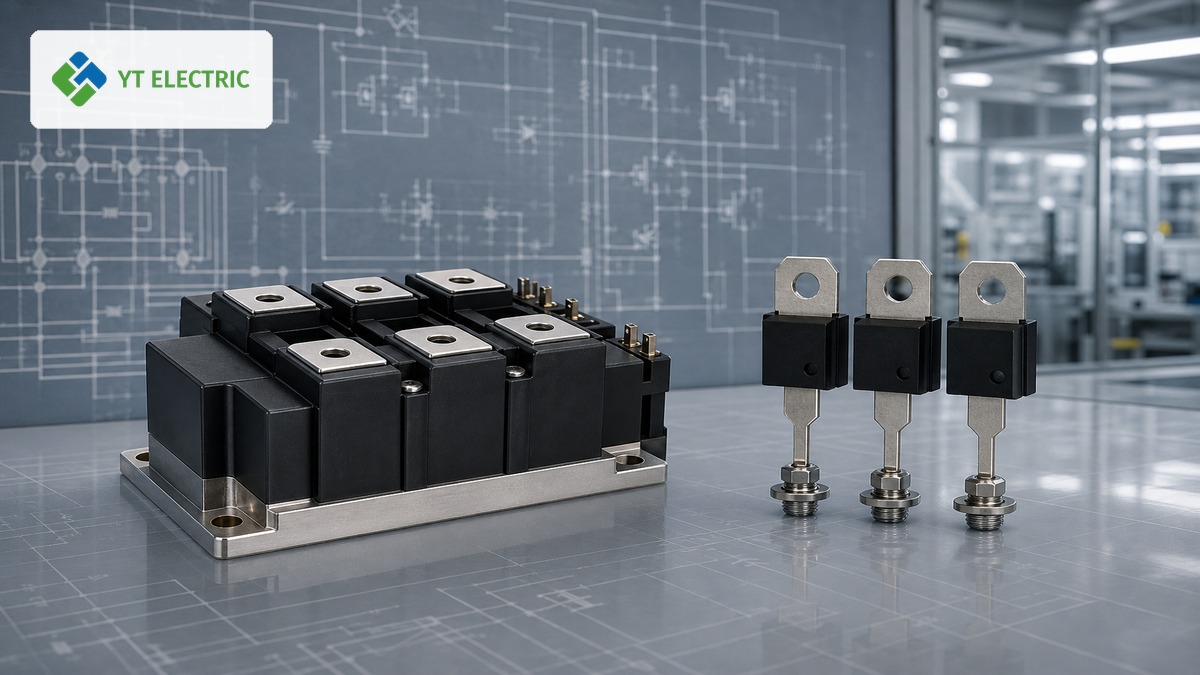
Modular IGBT Power Modules vs. Discrete Single-Tube Packages in AHF and SVG Inverters: The Engineering & Reliability Comparison Quick Engineering Answer: In active power quality equipment like Active Harmonic Filters (AHF) and Static Var Generators (SVG), integrated Modular IGBT Power Modules (e.g., EconoPACK™, PrimePACK™, or intelligent power modules with Direct Bonded Copper cera...
CT position of SVG and and capacitor banks SVG (Static Var Generators) and capacitor bank can work together in a power system to provide a comprehensive solution for reactive power compensation and power quality improvement. Here’s how they can complement each other: Combined Use of SVG and Capacitor Banks 1. Complementary Functions Capacitor Banks: Provide bulk reactive power compensation. ...
Resonance and Active Harmonic Filters Resonance in power systems can lead to significant issues such as harmonic amplification, overvoltages, and equipment damage. Active Harmonic Filters (AHFs) play a crucial role in mitigating harmonic distortion and preventing resonance. Understanding how resonance occurs and how AHF can be used to manage it is key to maintaining a stable and efficient electric...
How to calculate transformer efficiency? Transformers, like all electrical devices, experience some power losses during operation. While ideal transformers would be lossless, real-world transformers incur power losses that manifest as heat, necessitating cooling solutions. The main types of power losses in transformers are resistive loss, eddy current loss, hysteresis loss, and flux loss. R...
India's power distribution companies Discoms are responsible for the supply and distribution of energy to a variety of consumers (industrial, commercial, agriculture, domestic, etc.). This is also, according to the Brooking Institute, the weakest link in the power ecosystem from both a financial and operational sustainability perspective. The quality of power quality Of course, the provision of po...


 English
 français
 Deutsch
 español
 العربية
 中文




 IPv6 network supported