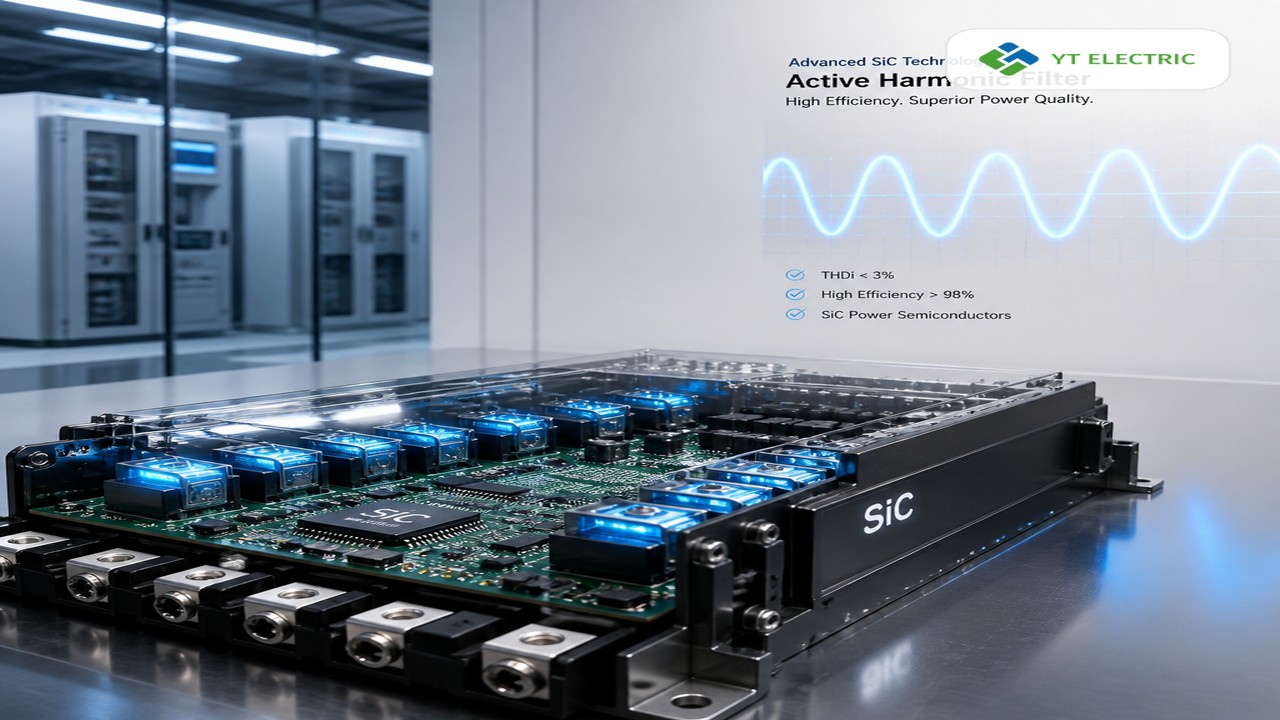
The pursuit of perfect power quality is undergoing a fundamental shift, driven by a new semiconductor material: Silicon Carbide (SiC) . Comparing a traditional Active Harmonic Filter (AHF) with a SiC-based model reveals more than incremental upgrades; it showcases a leap in performance, efficiency, and capability. For decades, traditional AHFs have relied on silicon-based IGBTs. These components w...
A robotic welding cell can run perfectly for hours and still expose a serious weakness in the factory power system when several lines start together. The symptom may be a hot neutral conductor, a nuisance trip, a voltage complaint from a servo drive, or a transformer that operates above its expected temperature. In many cases, the root cause is not a single defective machine. It is three-phase loa...
From Energy Waste to Energy Intelligence: How AHF and SVG Transform Industrial Power Systems Why distorted current becomes energy waste A six-pulse VFD, rectifier, UPS front end, or welding supply draws current in pulses rather than a clean sine wave. Those pulses contain characteristic harmonic components, and the resulting Total Harmonic Distortion increases RMS current even...
Silicon Carbide (SiC) Active Harmonic Filter Efficiency Benchmark: Why Sub-1% Loss Architecture Changes Industrial Power Quality Economics Quick Engineering Answer: Transitioning from traditional silicon IGBTs to wide-bandgap Silicon Carbide (SiC) MOSFET power architectures in Active Harmonic Filters (AHF) elevates power electronics efficiency to an unprecedented industry benchmark. Based on high-...


 English
 français
 Deutsch
 español
 العربية
 中文




 IPv6 network supported

