Research background Because the value of harmonic loss is smaller than that of fundamental loss and the calculation is difficult, it is generally ignored in the theoretical calculation of line loss. However, with the development of power electronics technology, the nature of power generation and electrical equipment is becoming increasingly complex, and various nonlinear components put into ...
what are the effects of harmonics on electrical systems In the intricate realm of electrical engineering, harmonics emerge as a subtle yet influential phenomenon that can significantly impact the efficiency, reliability, and safety of electrical systems. These unwanted frequencies, riding alongside the fundamental power waveform, can wreak havoc on various components and overall system perf...
Understanding Harmonic Loss and Its Impact on Power Quality Power quality is crucial for determining the efficiency of any motor. Several key parameters of power quality include harmonics, voltage unbalance, and voltage fluctuations. In an alternating current (AC) system, voltage potential and the current through the load circuit are described in terms of frequency and amplitude. The...
How to calculate transformer efficiency? Transformers, like all electrical devices, experience some power losses during operation. While ideal transformers would be lossless, real-world transformers incur power losses that manifest as heat, necessitating cooling solutions. The main types of power losses in transformers are resistive loss, eddy current loss, hysteresis loss, and flux loss. R...
How does Static var generator reduce kva demand? A Static Var Generator (SVG) reduces kVA demand through the following mechanisms: 1. Dynamic Reactive Power Compensation Real-Time Adjustment: SVG provide real-time reactive power support by injecting or absorbing reactive power (kVAR) as needed. This dynamic response helps maintain voltage levels, reducing the overall kVA demand. 2. Improved Power ...
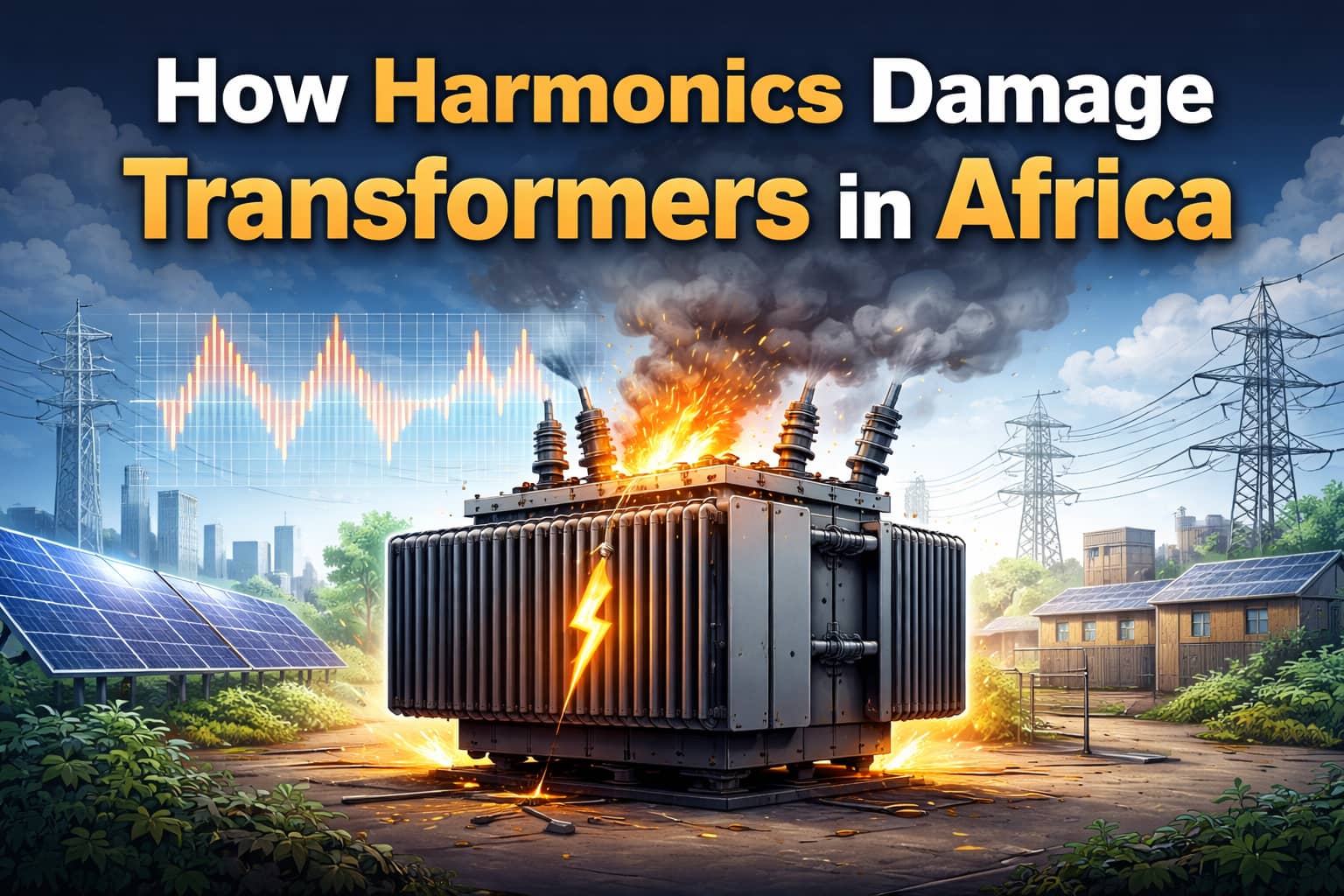
Power quality is a growing issue in Africa. Many sites now use solar inverters, VFDs, battery systems, UPS units, and LED lighting. These loads improve efficiency, but they also create harmonic currents and reactive power problems. This is one reason harmonics damage transformers in modern facilities. In many African industrial power systems, transformers carry the stress of the whole network. Whe...
How to Reduce Electrical Losses in Industrial Power Systems Electrical losses raise operating costs, heat cables and transformers, and reduce available system capacity. They usually result from conductor resistance, inefficient loading, poor power factor, harmonic currents, and aging equipment. To reduce electrical losses in industrial power systems, engineers need accurate measurements, correct e...
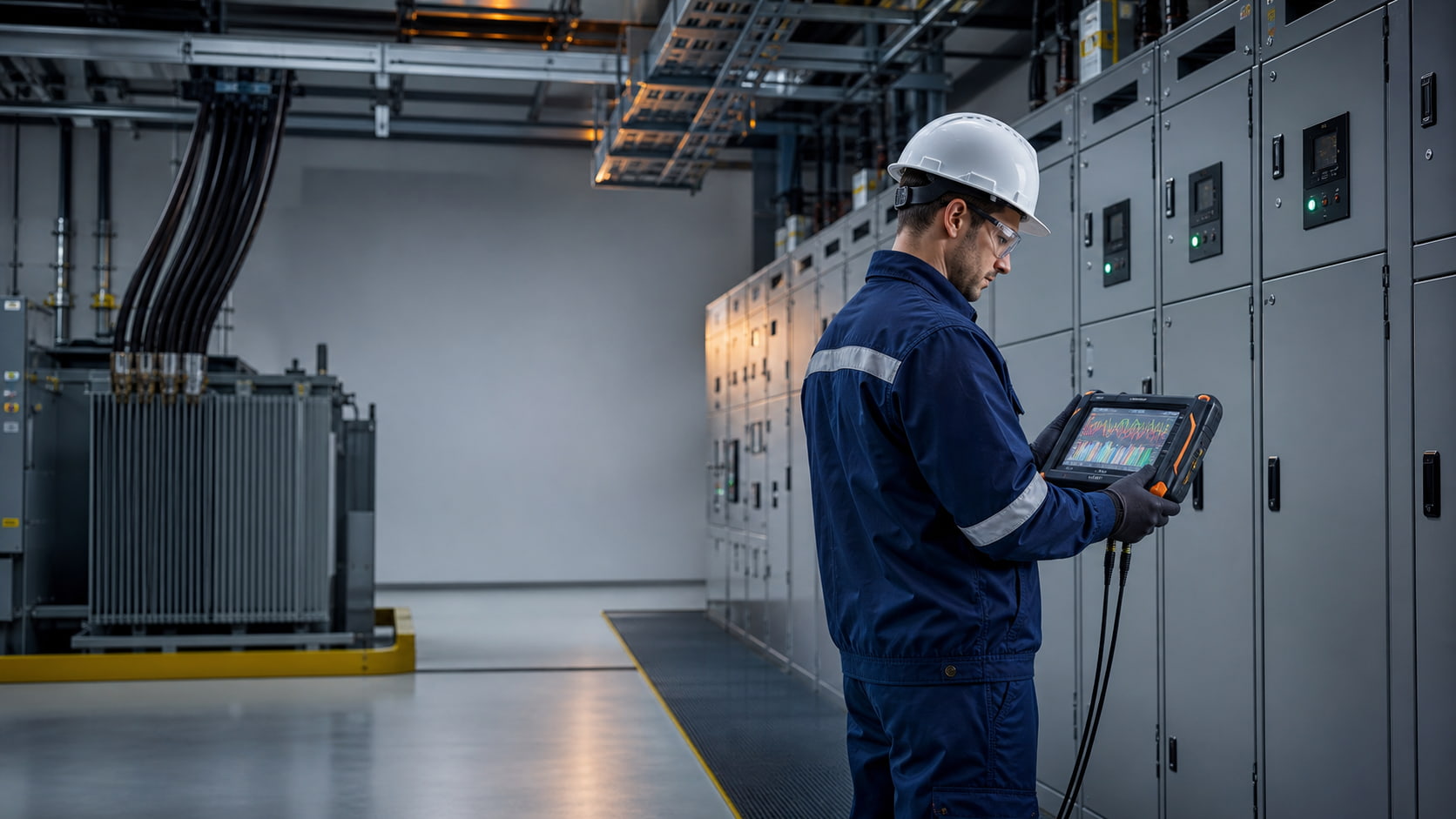
Transformer Overheating from Harmonics: K-Factor vs AHF Mitigation In heavy industry, large data centers, and plants packed with VFDs and six-pulse rectifiers, a distribution transformer can run within its nameplate kVA and still develop abnormal temperature rise, oil-temperature alarms, or accelerated winding insulation ageing. The usual load-current check misses the frequency content of that cur...


 English
 français
 Deutsch
 español
 العربية
 中文




 IPv6 network supported

