Why Is Neutral Current Higher Than Phase Current? Third Harmonics and Zero-Sequence Overload Explained Quick Engineering Answer: In three-phase four-wire electrical systems powering modern single-phase non-linear switch-mode power supplies (SMPS), neutral current frequently exceeds phase current (reaching 130% to 173% of line current) due to the in-phase arithmetic summation of zero-sequence tripl...
What Causes Voltage Unbalance in Three-Phase Systems: Root Causes, Motor Derating Physics, and Dynamic SVG Mitigation Quick Engineering Answer: Voltage unbalance in three-phase power systems is caused by unequal distribution of single-phase loads, untransposed distribution lines, blown capacitor fuses, and asymmetrical non-linear industrial equipment. According to NEMA MG-1 and IEC 61000-2-4 stand...
Even-Order Harmonics: Why Standard APFs Miss Them & How Full-Spectrum Active Filters Stop DC Magnetization Quick Answer: Standard Active Power Filters (APF/AHF) miss even-order harmonics (2nd, 4th, 6th) because their internal Discrete Fourier Transform (DFT) algorithms assume half-wave waveform symmetry ($f(t) = -f(t + T/2)$) to optimize digital signal processor (DSP) cycle throughput, activel...
Why Active Harmonic Filter Is a Game-Changer for Steel Plants with Smelting Furnaces Steel plants are among the most electrically demanding facilities in the world. Arc furnaces, induction furnaces, rolling mills, large motors, cranes, and variable frequency drives all operate on the same network. This mix creates a complex and rapidly changing power quality environment. Harmonic distortion is one...
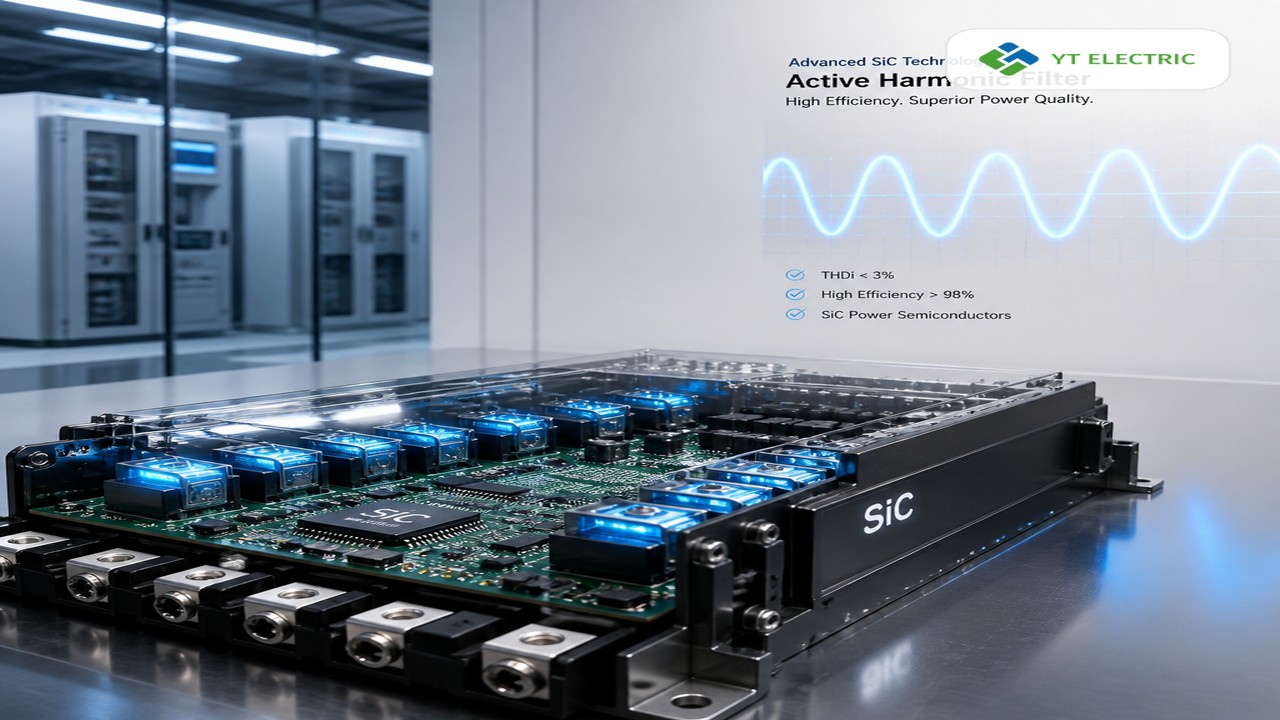
Silicon Carbide (SiC) Active Harmonic Filter Efficiency Benchmark: Why Sub-1% Loss Architecture Changes Industrial Power Quality Economics Quick Engineering Answer: Transitioning from traditional silicon IGBTs to wide-bandgap Silicon Carbide (SiC) MOSFET power architectures in Active Harmonic Filters (AHF) elevates power electronics efficiency to an unprecedented industry benchmark. Based on high-...


 English
 français
 Deutsch
 español
 العربية
 中文





 IPv6 network supported

