Even-order harmonics are current and voltage components at even multiples of the fundamental frequency — the 2nd, 4th, 6th and higher orders — that appear as asymmetric distortion in a three-phase power system. They behave differently from the familiar 3rd, 5th and 7th odd harmonics: balanced six-pulse rectifiers do not generate them, but asymmetry does. Half-controlled bridges, DC-off...
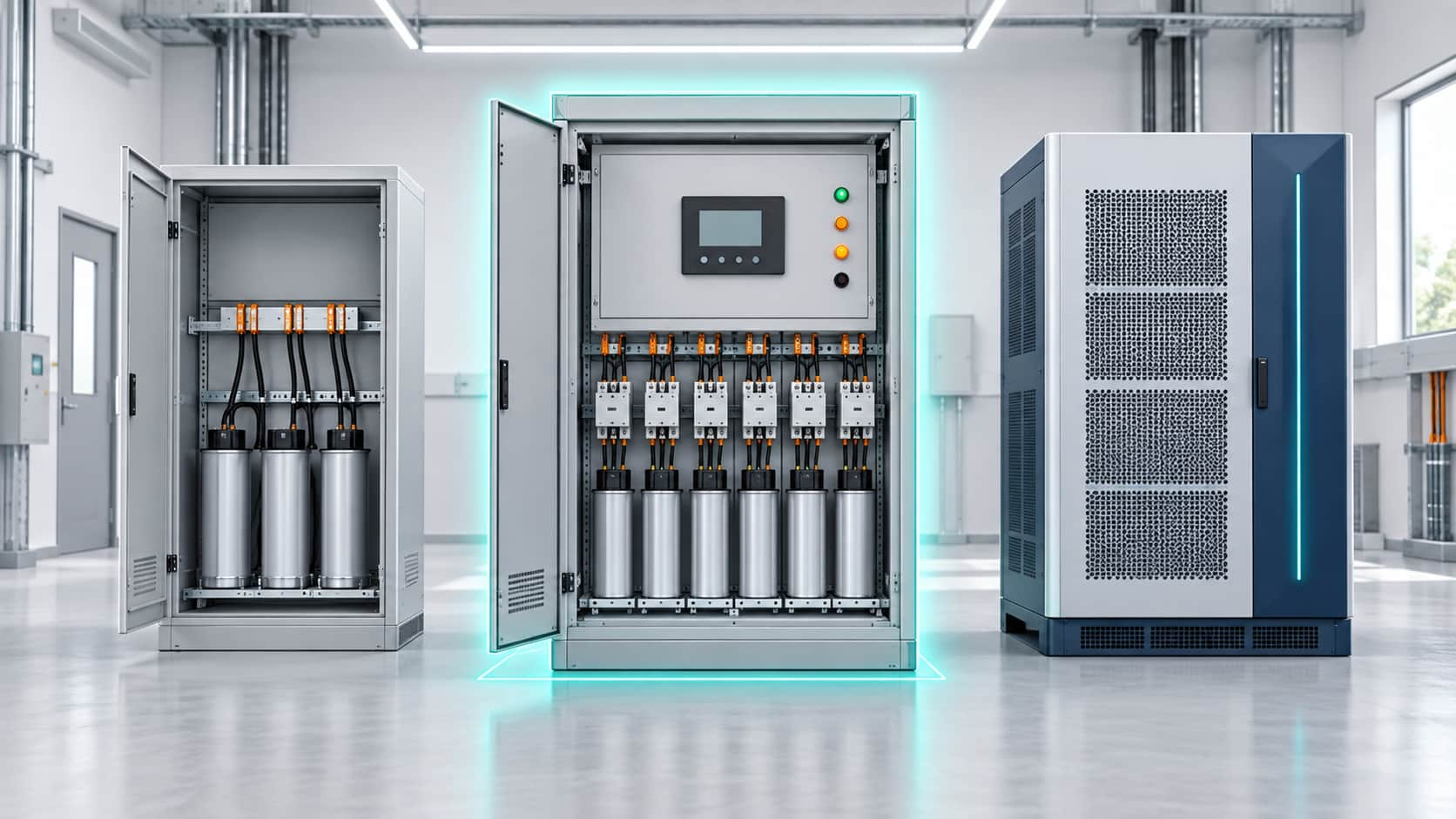
A fixed capacitor bank is often the most economical way to correct power factor — provided the load stays reasonably steady. When motors cycle or production changes by shift, it may overcompensate overnight and undercompensate at peak. An Automatic Power Factor Correction (APFC) panel switches capacitor steps as demand changes; a Static Var Generator (SVG) adjusts reactive power continuously...
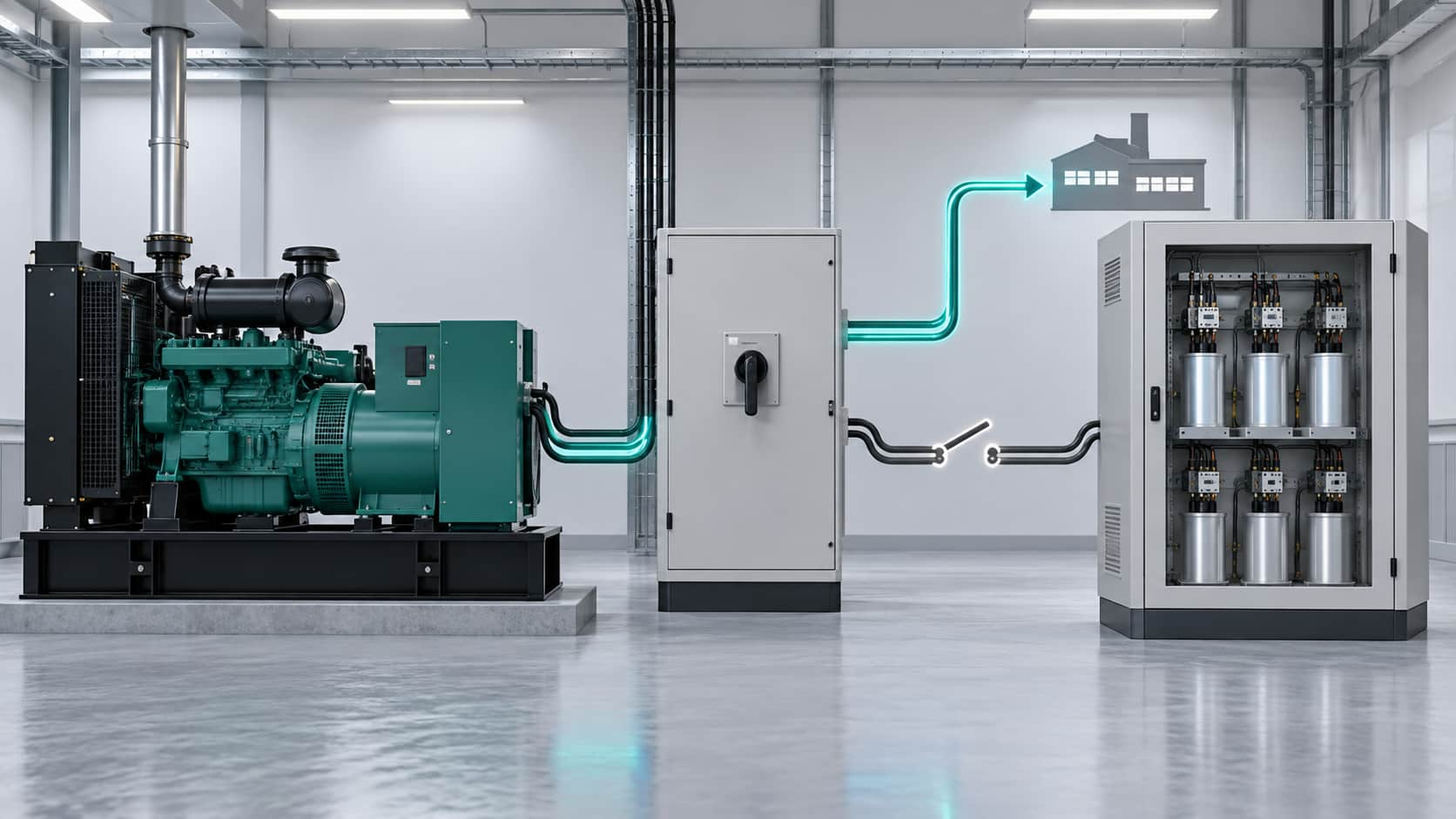
Quick Answer An APFC panel is not simply permitted or forbidden on generator power. Compatibility depends on generator capacity, the power factor of the load that stays online, the size of each load step, harmonic distortion, available short-circuit capacity, governor and excitation response, the generator manufacturer’s limits, and the logic inside the APFC controller. On many standby syste...
Transformer Overheating from Harmonics: K-Factor vs AHF Mitigation In heavy industry, large data centers, and plants packed with VFDs and six-pulse rectifiers, a distribution transformer can run within its nameplate kVA and still develop abnormal temperature rise, oil-temperature alarms, or accelerated winding insulation ageing. The usual load-current check misses the frequency content of that cur...
Why Does an APFC Panel Keep Switching? Causes of Capacitor Step Hunting and How to Stop It In commercial buildings, manufacturing plants, and distribution substations, Automatic Power Factor Correction (APFC) panels are deployed to maintain target power factor (typically 0.95 to 0.98 lagging) and avoid costly utility reactive power penalties. An APFC panel relies on a microprocessor-based power fa...
Harmonic Resonance in Data Center UPS Eco-Mode: AHF vs Active Line Conditioning Hyper-scale enterprise data centers and colocation cloud facilities are under relentless pressure to optimize Power Usage Effectiveness (PUE) and reduce megawatt-scale operational electricity costs. To capture energy savings of 2% to 4% across large uninterruptible power supply (UPS) fleets, engineering managers increa...
Three-Phase Unbalance in Heavy-Duty EV Fleet Depots: Active Load Balancer vs SVG The rapid global electrification of commercial transportation has accelerated the deployment of megawatt-scale electric bus and heavy-duty truck charging depots. A standard fleet charging hub routinely integrates 20 to 60 high-power DC fast chargers (rated at 120 kW to 360 kW each), megawatt-hour energy storage system...
Power Quality Architecture for Isolated Healthcare and Cleanroom Sub-Distributions: Preventing Microsecond Notching and Leakage Trips Quick Engineering Answer: Critical healthcare facilities (operating theaters, ICU isolated power IT systems under IEC 60364-7-710) and pharmaceutical cleanroom sub-distributions require specialized sub-tier power quality mitigation. Standard industrial harmonic filt...


 English
 français
 Deutsch
 español
 العربية
 中文




 IPv6 network supported