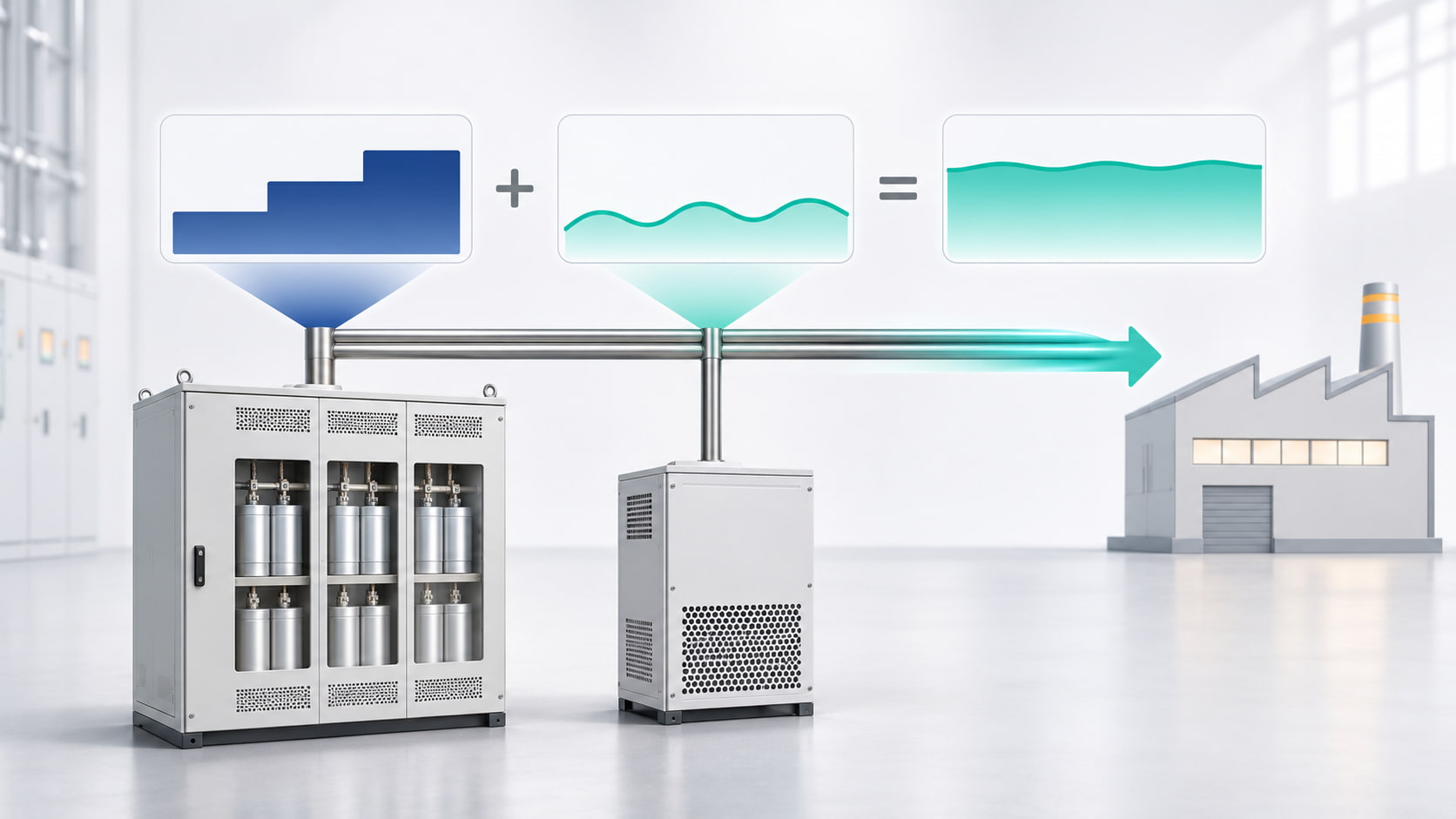
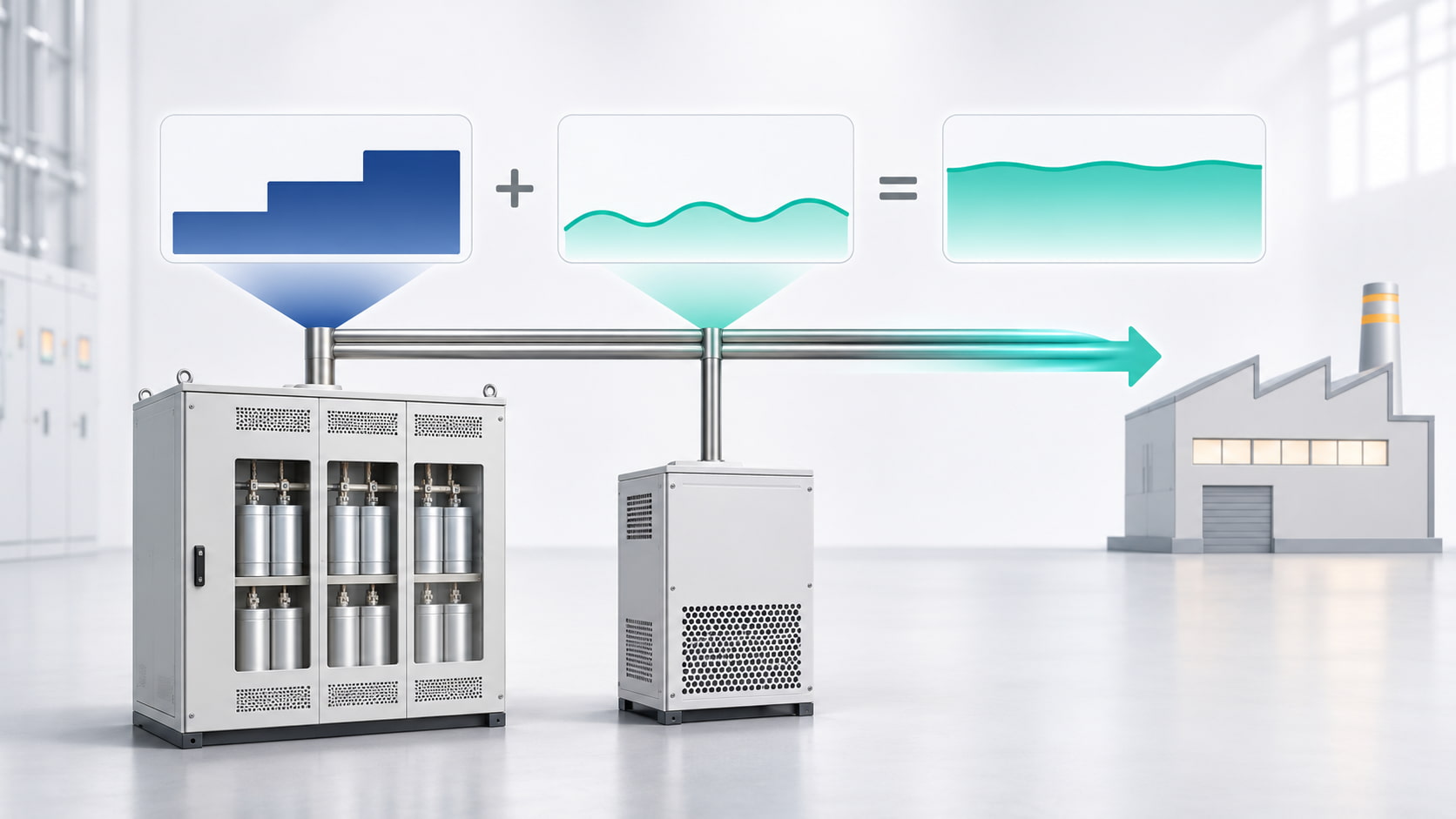
How to Size an SVG for an Existing Capacitor Bank: A Practical Hybrid PFC Guide An existing capacitor bank provides economical bulk reactive power but may struggle with rapidly changing loads, uneven phases, or coarse steps. Adding a Static Var Generator (SVG) can close this gap without replacing useful equipment. The SVG should not automatically match the facility’s entire reactive demand. ...
Can an SVG and Capacitor Bank Work Together? CT Placement, Control Logic, and Common Mistakes Yes. A well-designed hybrid arrangement combines economical capacitor-based bulk compensation with the speed and precision of a Static Var Generator (SVG). Connecting both devices to one busbar is not enough. Each controller needs the correct current signal and a defined priority. Incorrect CT placement o...
In continuous 24/7 industrial manufacturing and mission-critical power infrastructures, the operating electrical losses and heat dissipation of active power quality equipment represent a substantial, ongoing component of Total Cost of Ownership (TCO). YT Electric's next-generation Silicon Carbide (SiC) active filter and static var generator modules establish a sub-1% loss benchmark (0.8% average o...
In advanced semiconductor wafer fabs, medical imaging suites, precision CNC manufacturing, and mission-critical data centers, conventional Active Harmonic Filters (APFs) often introduce unwanted high-frequency switching ripple and distortion while mitigating grid harmonics. YT Electric's 3rd-generation Silicon Carbide (SiC) power quality platform leverages an ultra-high 80kHz switching frequency c...
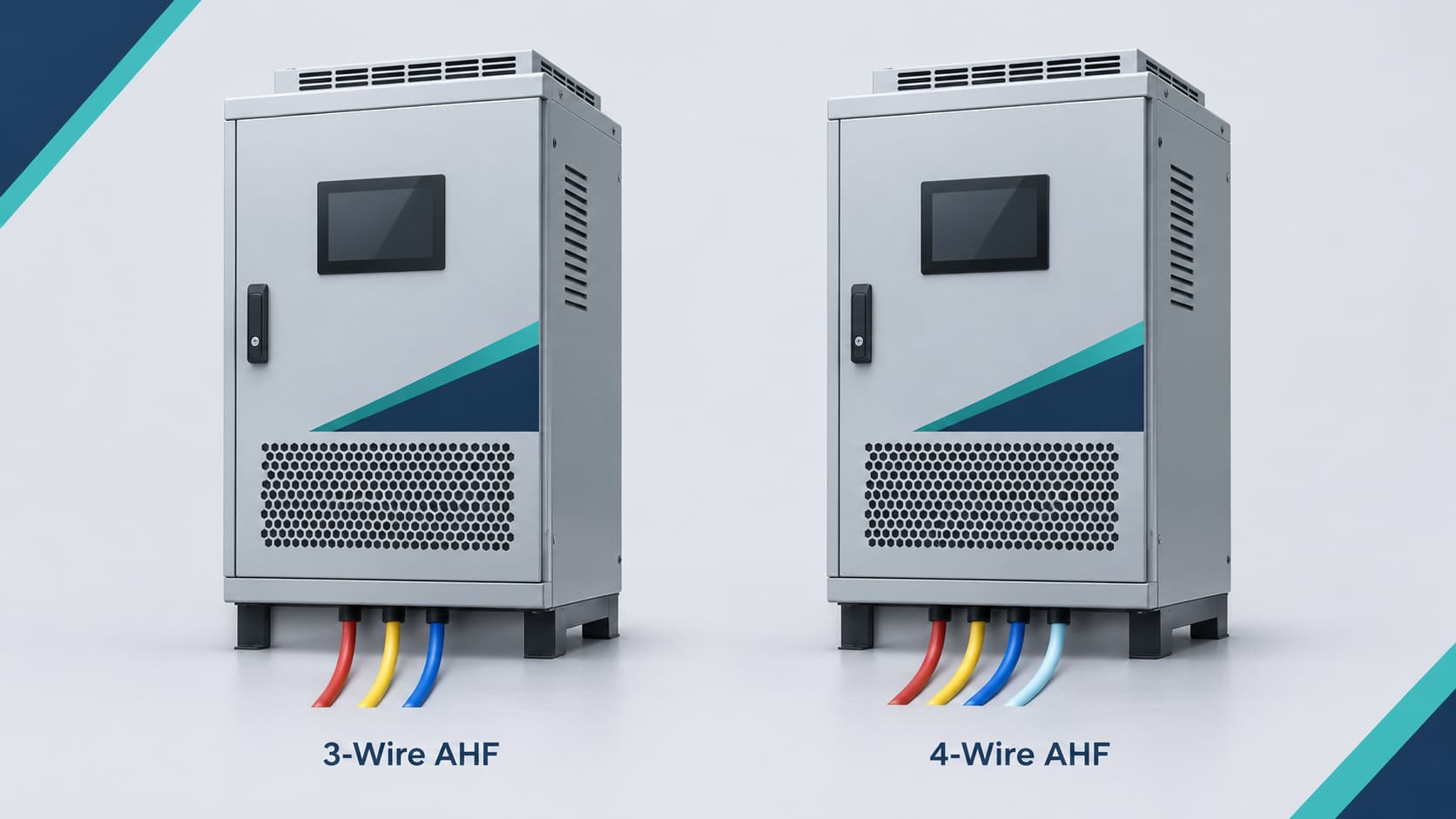
Direct Answer: 3-Wire vs. 4-Wire AHF Selection The core difference between 3-wire and 4-wire Active Harmonic Filters (AHFs) lies in neutral path compensation: 3-wire AHFs mitigate 3-phase balanced harmonics (5th, 7th, 11th, 13th) in 3P3W industrial grids, whereas 4-wire AHFs utilize a dedicated 4th inverter bridge leg or split-DC bus to neutralize heavy zero-sequence triplen harmonics (3rd, 9th, 1...


 English
 français
 Deutsch
 español
 العربية
 中文




 IPv6 network supported