

 English
 français
 Deutsch
 español
 العربية
 中文
中文
How Variable Frequency Drives Create Power Quality Problems
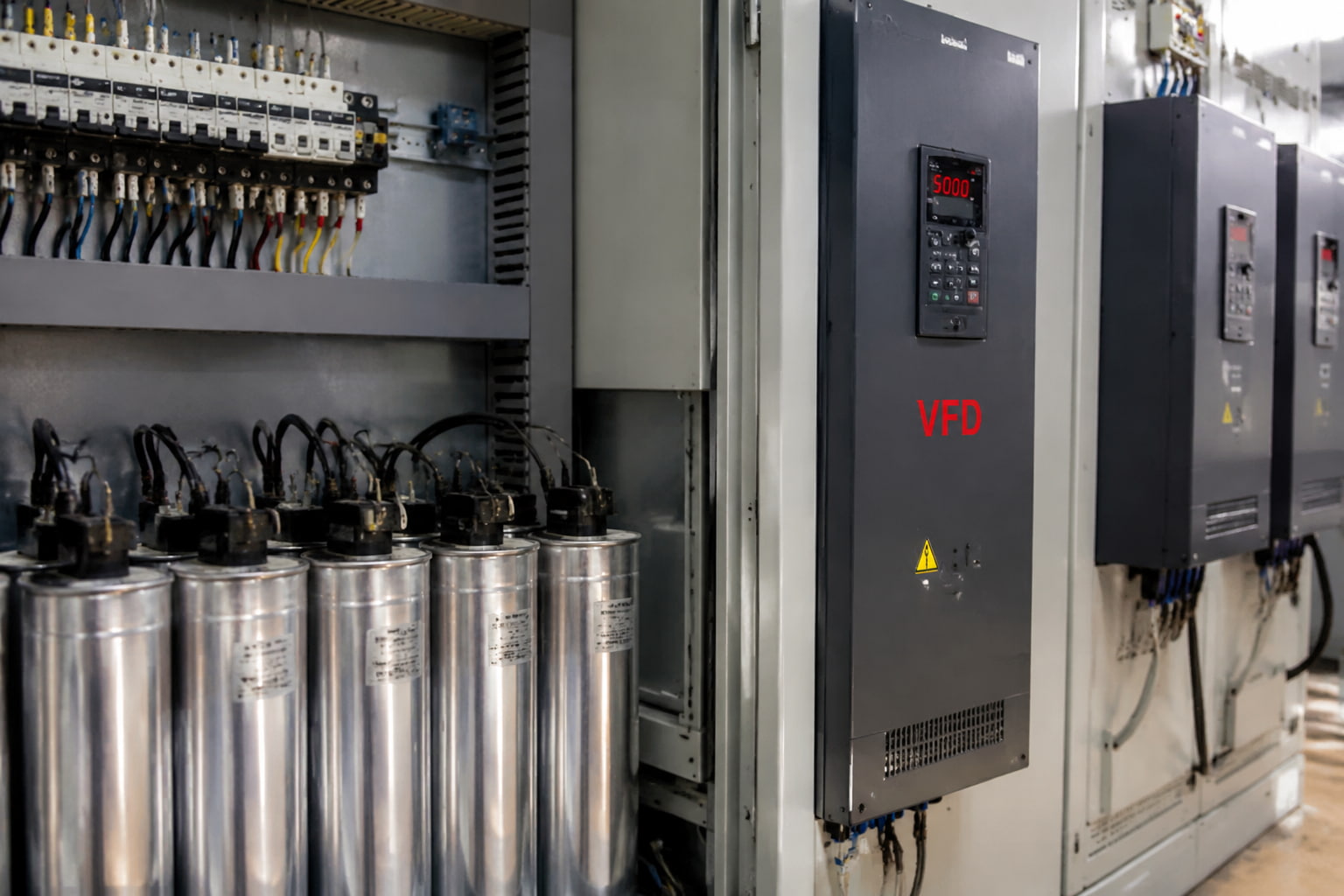
Variable frequency drives (VFDs) are widely used in modern industrial systems because they improve motor control, reduce energy consumption, and increase production efficiency. However, as more facilities install VFD systems, VFD power quality problems are becoming a major concern.
A variable frequency drive is a nonlinear load that changes the way electrical current is drawn from the power system. This creates harmonic distortion, increases electrical stress, and can affect transformers, cables, capacitors, and other connected equipment.
For factories, water treatment plants, mining sites, and commercial facilities, understanding how VFDs affect power quality is important for maintaining reliable operation and avoiding unexpected failures.
A variable frequency drive controls motor speed by converting incoming AC power into DC power and then recreating AC power at a controlled frequency. This process allows precise motor control, but it also changes the current waveform.
Unlike linear loads that draw current smoothly, VFDs draw current in pulses. These current pulses create additional frequencies called harmonics.
These harmonics distort the electrical waveform and create several issues:
The problem becomes more serious when many VFDs operate together in the same electrical network.
A single drive may have limited impact, but industrial facilities often operate hundreds of motors for pumps, fans, conveyors, compressors, and production equipment. The combined effect can significantly increase harmonic distortion.
The main reason variable frequency drive harmonics create problems is that harmonic currents circulate through the entire electrical system.
They do not remain inside the VFD.
The additional harmonic current can affect:
| Equipment | Effect of VFD Harmonics |
|---|---|
| Transformers | Increased heating and reduced capacity |
| Cables | Higher current losses and temperature rise |
| Capacitor Banks | Overheating and possible resonance problems |
| Motors | Additional losses and temperature increase |
| Protection Devices | Nuisance tripping |
| Sensitive Equipment | Communication and control interference |
When harmonic distortion increases, the electrical system must handle more current than required for useful power delivery. This increases losses and reduces overall efficiency.
In large industrial facilities, these losses can translate into higher operating costs and shorter equipment lifespan.
Harmonic distortion occurs when electrical current deviates from the normal sine wave.
A clean electrical system has a smooth waveform. A system with many nonlinear loads, including VFDs, creates distorted current patterns.
Common nonlinear loads that contribute to harmonic distortion include:
VFDs are one of the most common sources because their input rectifier stage draws current in short pulses.
The most common harmonic orders created by VFD systems are the 5th and 7th harmonics. These frequencies can create additional heating and stress throughout the electrical network.
When harmonic levels become too high, facilities may experience:
Many facilities attempt to solve VFD-related power quality problems using traditional capacitor banks or passive solutions.
However, these methods have limitations.
A capacitor bank improves reactive power and power factor, but it does not remove harmonic currents. In systems with high harmonic distortion, capacitor banks may even experience additional stress due to resonance.
Passive harmonic filters can reduce specific harmonic frequencies, but they are designed for a fixed operating condition. If the load changes, their performance may become less effective.
Modern industrial facilities usually have changing production conditions. Motor speeds change, machines start and stop, and electrical loads vary throughout the day.
This is why many facilities require a more flexible approach.
An active harmonic filter provides a dynamic solution for VFD power quality problems.
Instead of using fixed components, an active harmonic filter monitors the electrical waveform in real time. It detects harmonic currents and injects an opposite current to cancel unwanted distortion.
This allows the system to respond immediately when VFD loads change.
Key benefits include:
| Benefit | How It Helps |
|---|---|
| Real-time harmonic compensation | Reduces changing harmonic currents |
| Improved waveform quality | Lowers harmonic distortion |
| Protection of equipment | Reduces heat and electrical stress |
| Flexible operation | Works with changing industrial loads |
| Better system reliability | Reduces failures and downtime |
An active harmonic filter is especially useful in facilities with many VFD applications, including:
Before selecting a harmonic solution, engineers should measure the actual condition of the electrical system.
Important factors include:
The correct solution depends on measured harmonic current, not only the total motor capacity.
A common mistake is selecting equipment based only on connected load. Two facilities with the same motor capacity may require completely different solutions because their operating conditions and harmonic levels are different.
Facilities experiencing VFD-related issues often notice several warning signs:
These problems should not be treated as isolated equipment failures.
In many cases, the root cause is poor power quality created by nonlinear loads.
VFD power quality problems are mainly caused by the nonlinear current waveform created during the power conversion process inside the variable frequency drive. This creates harmonic distortion that affects the electrical system.
Not always. The impact depends on the number of VFDs, system design, transformer capacity, and overall electrical conditions. Large numbers of VFDs usually create a higher risk.
No. A capacitor bank can improve power factor but cannot remove harmonic distortion. In harmonic-rich environments, it may experience additional stress.
An active harmonic filter detects harmonic currents and injects compensation currents in real time. This reduces distortion and improves power quality.
Variable frequency drives improve industrial efficiency, but they can also create serious VFD power quality problems when installed in large numbers.
Because VFDs are nonlinear loads, they create harmonic distortion that can increase heating, losses, and equipment stress throughout the electrical system.
Traditional solutions may not provide enough flexibility for modern facilities with changing loads. An active harmonic filter provides dynamic harmonic mitigation by responding to real-time electrical conditions.
For factories, mining sites, water treatment plants, and other industrial applications, controlling VFD harmonics is essential for improving reliability, reducing maintenance costs, and protecting critical electrical equipment.



 IPv6 network supported